

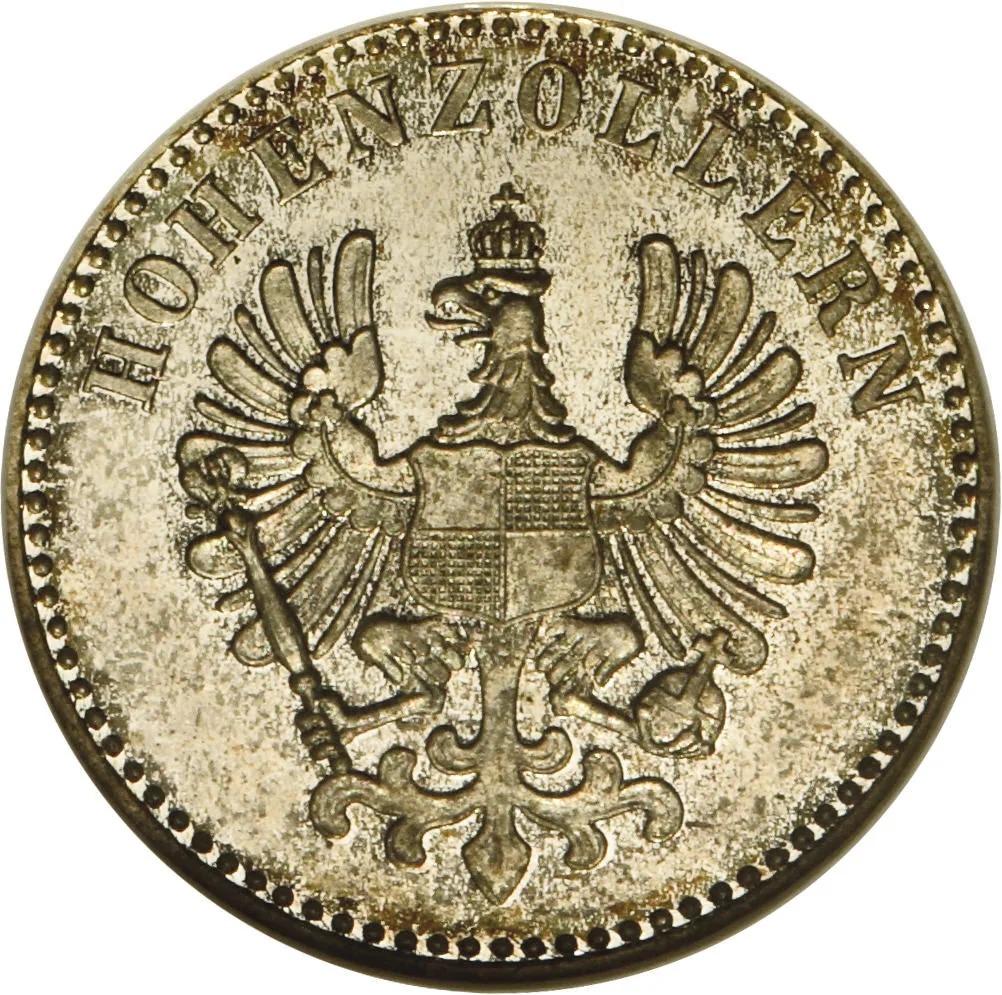
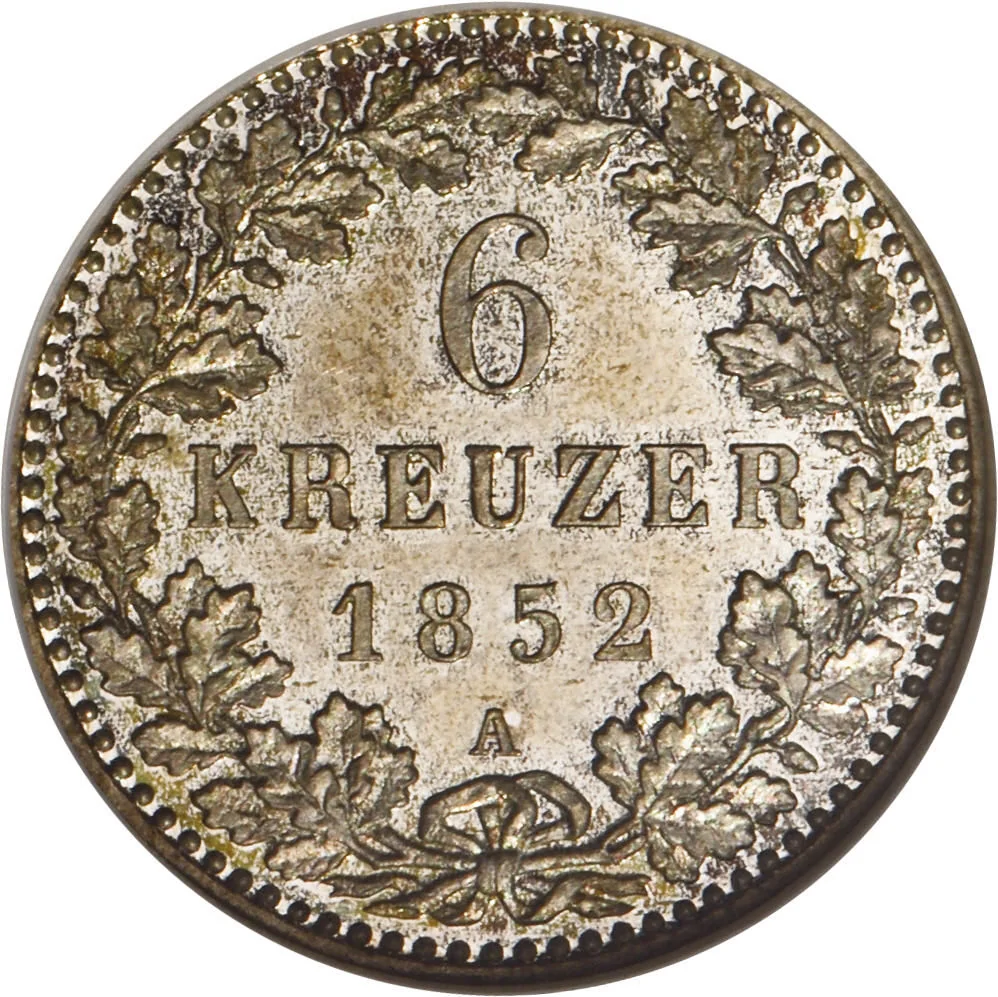
6 Kreuzers – Hohenzollern-Prussia
Germany
Context
Year: 1852
Country: Germany 
Issuer: Hohenzollern-Prussia
Ruler: Frederick William IV
Currency:
Demonetized: Yes
Total mintage: 27,440
Material
References
KM: #Click to copy to clipboard3
Numista: #31333
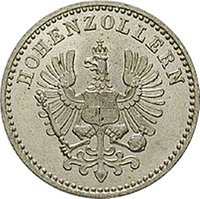
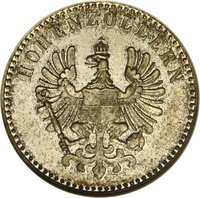
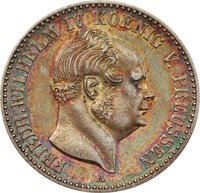
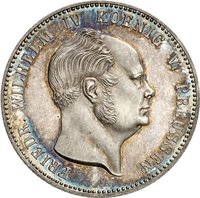
Obverse
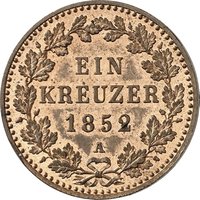
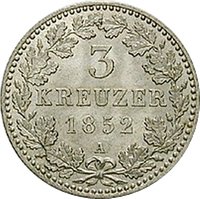
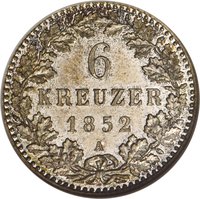
Reverse
Description:
Value, date, and mintmark within a four-line oak wreath.
Inscription:
6
KREUZER
1852
A
KREUZER
1852
A
Script: Latin
Edge
Reeded
Mints
| Name | Mark |
|---|---|
| Berlin | A |
Historical background
In 1852, the currency situation in Hohenzollern-Prussia was characterized by a complex and fragmented system, a legacy of the many independent German states that were in the process of being unified under Prussian leadership. The kingdom itself operated on the Vereinsthaler, a silver-based currency established by the Prussian Coinage Reform of 1821. However, this system coexisted with a multitude of other currencies from recently annexed or economically linked territories, as well as the lingering use of older Prussian Thalers and Groschen. This multiplicity created significant practical challenges for trade, administration, and daily commerce, requiring constant conversion and causing confusion.
The driving force for change was the Dresden Coinage Convention of 1838, a key agreement among several German states, including Prussia, to standardize currency relationships. The convention established a fixed exchange rate between the Prussian Vereinsthaler and the southern German Gulden, setting a crucial precedent for monetary integration. By 1852, this framework was actively facilitating inter-state trade within the Zollverein (the German Customs Union), but full standardization had not yet been achieved. Different states still minted their own coins, albeit to agreed-upon standards.
Therefore, the background in 1852 is one of transition and Prussian consolidation. The economic and political momentum was decisively moving toward a uniform, Prussia-dominated currency area, a necessary step for national unification. The existing fragmentation was widely seen as an obstacle to further economic growth and administrative efficiency, setting the stage for more comprehensive reforms that would culminate in the introduction of the unified Goldmark following the creation of the German Empire in 1871.
The driving force for change was the Dresden Coinage Convention of 1838, a key agreement among several German states, including Prussia, to standardize currency relationships. The convention established a fixed exchange rate between the Prussian Vereinsthaler and the southern German Gulden, setting a crucial precedent for monetary integration. By 1852, this framework was actively facilitating inter-state trade within the Zollverein (the German Customs Union), but full standardization had not yet been achieved. Different states still minted their own coins, albeit to agreed-upon standards.
Therefore, the background in 1852 is one of transition and Prussian consolidation. The economic and political momentum was decisively moving toward a uniform, Prussia-dominated currency area, a necessary step for national unification. The existing fragmentation was widely seen as an obstacle to further economic growth and administrative efficiency, setting the stage for more comprehensive reforms that would culminate in the introduction of the unified Goldmark following the creation of the German Empire in 1871.
✨ Legendary