

1000 Dram – Armenia
Armenia
Context

Material
Diameter: 26 mm
Weight: 15.55 g
Gold weight: 9.10 g
Shape: Round
Composition: 58.5% Gold
Standard: Silver half ounce
Magnetic: No
Technique: Milled
Alignment: Medal alignment
flip
References
KM: #Click to copy to clipboard109
Numista: #311810
Value
Exchange value: 1000 AMD
Bullion value: $1517.32
Obverse
Description:
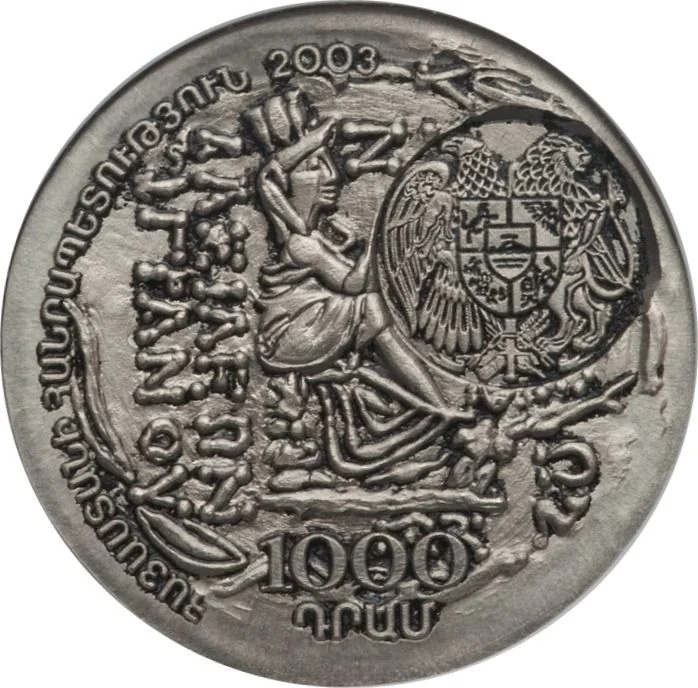
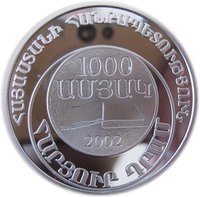
Modern coat of arms on a tetradrachm of Tigran design, with date above and value below.
Inscription:
ՀԱՅԱՍՏԱՆԻ ՀԱՆՐԱՊԵՏՈՒԹՅՈՒՆ
2003
1000 ԴՐԱՄ
ΒΑΣΙΛΕΩΝ ΙΓΡΑΝΟΥ
2003
1000 ԴՐԱՄ
ΒΑΣΙΛΕΩΝ ΙΓΡΑΝΟΥ
Translation:
REPUBLIC OF ARMENIA
2003
1000 DRAM
OF KING TIGRANES
2003
1000 DRAM
OF KING TIGRANES
Engraver: Karapet Abraamyan
Reverse
Description:
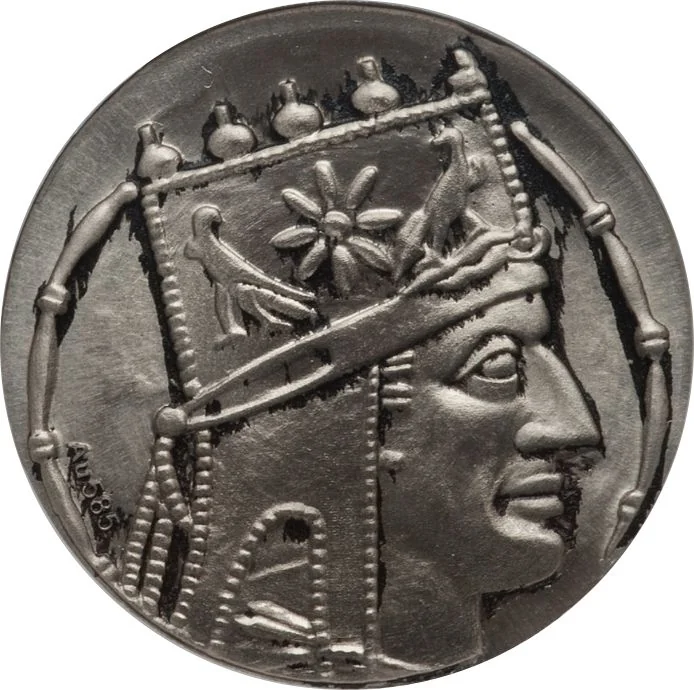
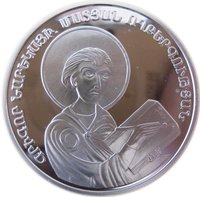
Tigran the Great crowned, facing right.
Inscription:
Au 585
Script: Latin
Engraver: Karapet Abraamyan
Edge
Plain
Categories
| Symbols> Coat of Arms |
| Person> Monarch |
Mints
| Name | Mark |
|---|---|
| Münze Österreich | — |
Mintings
| Year | Mint Mark | Mintage | Quality | Collection |
|---|---|---|---|---|
| 2003 | — | 500 |
Historical background
In 2003, Armenia's currency situation was characterized by a period of remarkable stability and gradual appreciation of the national currency, the dram (AMD), under a managed floating exchange rate regime. This stability was a significant achievement following the severe economic contractions and hyperinflation of the early post-Soviet years. The Central Bank of Armenia (CBA) successfully maintained tight monetary control, with inflation falling to a manageable low single-digit level (around 3-4% by some estimates). This environment fostered growing public confidence in the dram, which had been introduced in 1993 to replace the Soviet ruble.
The dram's strength in 2003 was primarily driven by two sustained inflows: substantial remittances from the large Armenian diaspora and significant foreign direct investment (FDI), particularly in sectors like telecommunications and mining. These inflows created a consistent supply of foreign currency, chiefly US dollars and Russian rubles, which increased demand for the dram and allowed the CBA to build up its foreign exchange reserves. This reserve accumulation provided a crucial buffer against external shocks and reinforced monetary stability.
However, this stability was not without underlying vulnerabilities. The economy was heavily dollarized, with a large portion of savings and many major transactions conducted in US dollars, reflecting lingering public memory of past instability. Furthermore, the economy's dependence on remittances and a narrow export base (dominated by precious metals and diamonds) made it sensitive to external economic conditions in Russia and other key partner countries. Thus, while 2003 represented a calm and successful chapter in Armenia's monetary history, the currency situation remained exposed to potential regional economic shifts.
The dram's strength in 2003 was primarily driven by two sustained inflows: substantial remittances from the large Armenian diaspora and significant foreign direct investment (FDI), particularly in sectors like telecommunications and mining. These inflows created a consistent supply of foreign currency, chiefly US dollars and Russian rubles, which increased demand for the dram and allowed the CBA to build up its foreign exchange reserves. This reserve accumulation provided a crucial buffer against external shocks and reinforced monetary stability.
However, this stability was not without underlying vulnerabilities. The economy was heavily dollarized, with a large portion of savings and many major transactions conducted in US dollars, reflecting lingering public memory of past instability. Furthermore, the economy's dependence on remittances and a narrow export base (dominated by precious metals and diamonds) made it sensitive to external economic conditions in Russia and other key partner countries. Thus, while 2003 represented a calm and successful chapter in Armenia's monetary history, the currency situation remained exposed to potential regional economic shifts.

✨ Legendary