

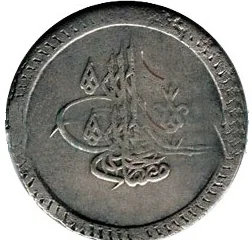
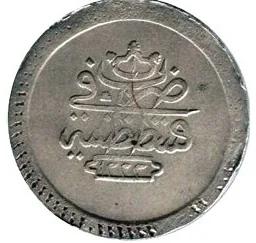
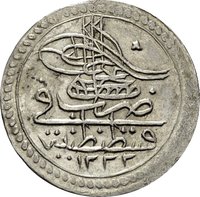
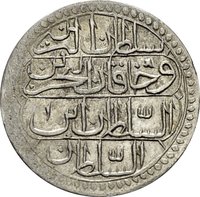
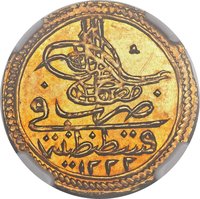
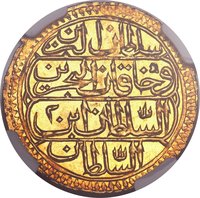
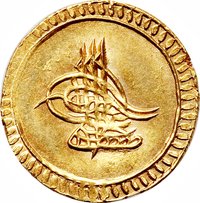
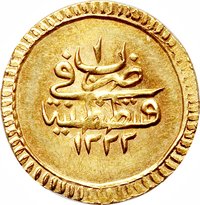
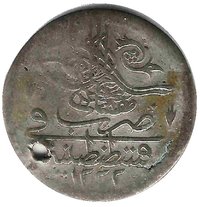
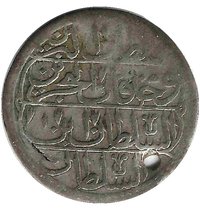
2 kuruș – Ottoman Empire
Add to wishlist
Turkey
Context
Year: 1807
Islamic (Hijri) Year:: 1222
Country: Turkey
Issuer: Ottoman Empire
Ruler: Mustafa IV
Currency:
(1688—1844)
Demonetized: Yes
Material
References
KM: #
Numista: #31181
Value
Bullion value: $65.52
Mints
| Name | Mark |
|---|---|
| Constantinople | — |
Mintings
| Year | Mint Mark | Mintage | Quality | Collection |
|---|---|---|---|---|
| 1807 | — | — |
Historical background
By 1807, the Ottoman Empire’s currency system was in a state of profound crisis, a direct result of prolonged fiscal mismanagement and relentless military expenditure. The empire had been debasing its primary silver coin, the akçe, for centuries, but the process accelerated dramatically in the late 18th and early 19th centuries to finance wars with Russia and internal rebellions. The state’s solution was to mint vast quantities of heavily debased kuruş (piasters), which contained a fraction of the silver of their nominal value. This led to a chaotic monetary environment where the official value of coins bore little relation to their intrinsic metal worth, causing widespread loss of confidence.
The situation was further complicated by the circulation of a multitude of foreign currencies, particularly the Austrian thalers and Spanish/Mexican "pieces of eight," which were trusted for their consistent silver content and dominated large-scale trade. Within the empire, various provincial authorities and local power-holders also issued their own coinage, creating a fragmented and confusing monetary landscape. The simultaneous existence of these "good" foreign coins and "bad" debased Ottoman coins led to Gresham’s Law in action: people hoarded or exported full-weight silver, while the inferior Ottoman currency flooded the markets, driving up prices and causing severe inflation that crippled the fixed salaries of soldiers and bureaucrats.
Sultan Selim III (r. 1789-1807), who was deposed in May 1807, had recognized the monetary chaos as a root cause of imperial weakness. His ambitious reform program, the Nizam-ı Cedid (New Order), included attempts at fiscal and monetary reform, but these were largely thwarted by entrenched interests and the constant drain of warfare. Thus, in 1807, the empire found itself at a monetary nadir. The currency instability eroded central authority, undermined the economy, and fueled social unrest, symbolizing the broader struggle of the Ottoman state to adapt its ancient financial structures to the pressures of the modern world.
The situation was further complicated by the circulation of a multitude of foreign currencies, particularly the Austrian thalers and Spanish/Mexican "pieces of eight," which were trusted for their consistent silver content and dominated large-scale trade. Within the empire, various provincial authorities and local power-holders also issued their own coinage, creating a fragmented and confusing monetary landscape. The simultaneous existence of these "good" foreign coins and "bad" debased Ottoman coins led to Gresham’s Law in action: people hoarded or exported full-weight silver, while the inferior Ottoman currency flooded the markets, driving up prices and causing severe inflation that crippled the fixed salaries of soldiers and bureaucrats.
Sultan Selim III (r. 1789-1807), who was deposed in May 1807, had recognized the monetary chaos as a root cause of imperial weakness. His ambitious reform program, the Nizam-ı Cedid (New Order), included attempts at fiscal and monetary reform, but these were largely thwarted by entrenched interests and the constant drain of warfare. Thus, in 1807, the empire found itself at a monetary nadir. The currency instability eroded central authority, undermined the economy, and fueled social unrest, symbolizing the broader struggle of the Ottoman state to adapt its ancient financial structures to the pressures of the modern world.
✨ Legendary