

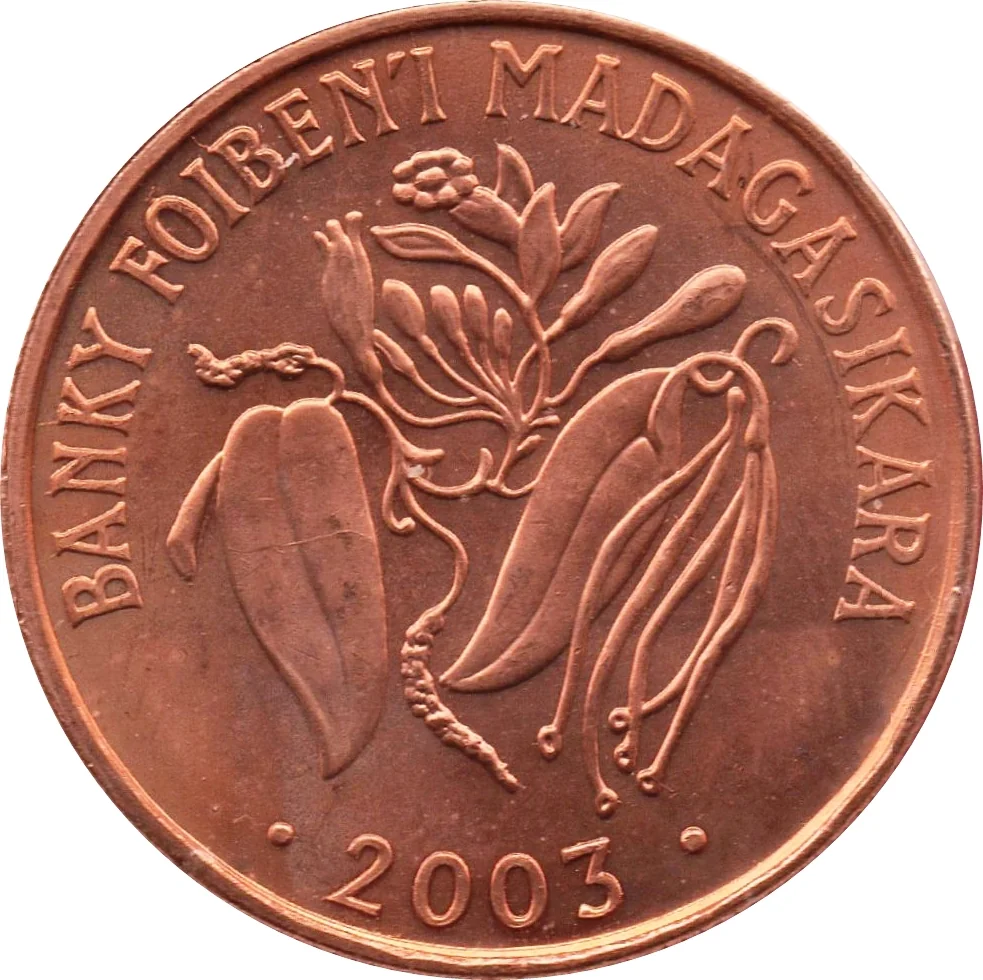
Obverse
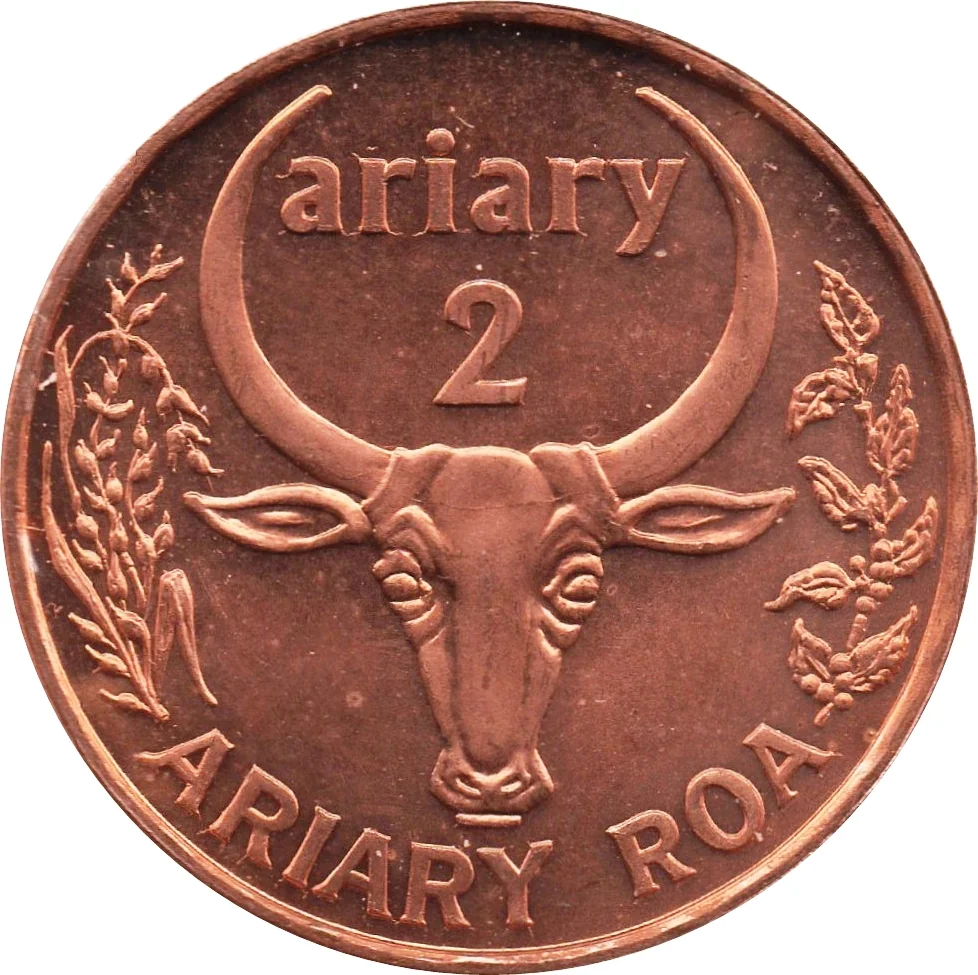
Reverse
Description:
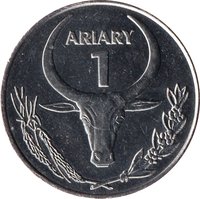
Steer horns framing a value, flanked by sprigs.
Inscription:
ariary
2
ARIARY ROA
2
ARIARY ROA
Script: Latin
Edge
Reeded
Mints
| Name | Mark |
|---|---|
| Royal Canadian Mint of Winnipeg | — |
Mintings
| Year | Mint Mark | Mintage | Quality | Collection |
|---|---|---|---|---|
| 2003 | — | — |
Historical background
In 2003, Madagascar's currency situation was characterized by significant volatility and depreciation, deeply intertwined with a severe political crisis. The year began in the aftermath of a contentious presidential election in late 2001, which led to a standoff and months of unrest. This political instability shattered investor confidence, crippled the vital tourism industry, and disrupted key exports like vanilla and textiles. Consequently, the Malagasy Ariary (MGA), which had been relatively stable, came under intense pressure, losing substantial value against major currencies like the US dollar and the euro throughout 2002 and into 2003.
The economic toll of the crisis was profound. Foreign exchange reserves dwindled as the Central Bank of Madagascar intervened in a futile attempt to prop up the Ariary. Inflation surged, driven by the rising cost of imported goods, particularly fuel and essential commodities, which severely eroded household purchasing power. The government, led by Marc Ravalomanana following his eventual international recognition in mid-2002, faced the daunting task of stabilizing the economy while also seeking to restore severed international financial relationships and secure aid.
By late 2003, the situation began to stabilize cautiously as the political environment normalized. The Ravalomanana administration, with support from the International Monetary Fund (IMF) and the World Bank, implemented economic reforms aimed at fiscal discipline and liberalization. These steps, including a shift to a floating exchange rate regime, helped to rebuild reserves and slow the Ariary's freefall, setting a fragile foundation for recovery. However, the population continued to grapple with the lingering effects of high inflation and economic contraction precipitated by the preceding years of turmoil.
The economic toll of the crisis was profound. Foreign exchange reserves dwindled as the Central Bank of Madagascar intervened in a futile attempt to prop up the Ariary. Inflation surged, driven by the rising cost of imported goods, particularly fuel and essential commodities, which severely eroded household purchasing power. The government, led by Marc Ravalomanana following his eventual international recognition in mid-2002, faced the daunting task of stabilizing the economy while also seeking to restore severed international financial relationships and secure aid.
By late 2003, the situation began to stabilize cautiously as the political environment normalized. The Ravalomanana administration, with support from the International Monetary Fund (IMF) and the World Bank, implemented economic reforms aimed at fiscal discipline and liberalization. These steps, including a shift to a floating exchange rate regime, helped to rebuild reserves and slow the Ariary's freefall, setting a fragile foundation for recovery. However, the population continued to grapple with the lingering effects of high inflation and economic contraction precipitated by the preceding years of turmoil.
🌱 Common