


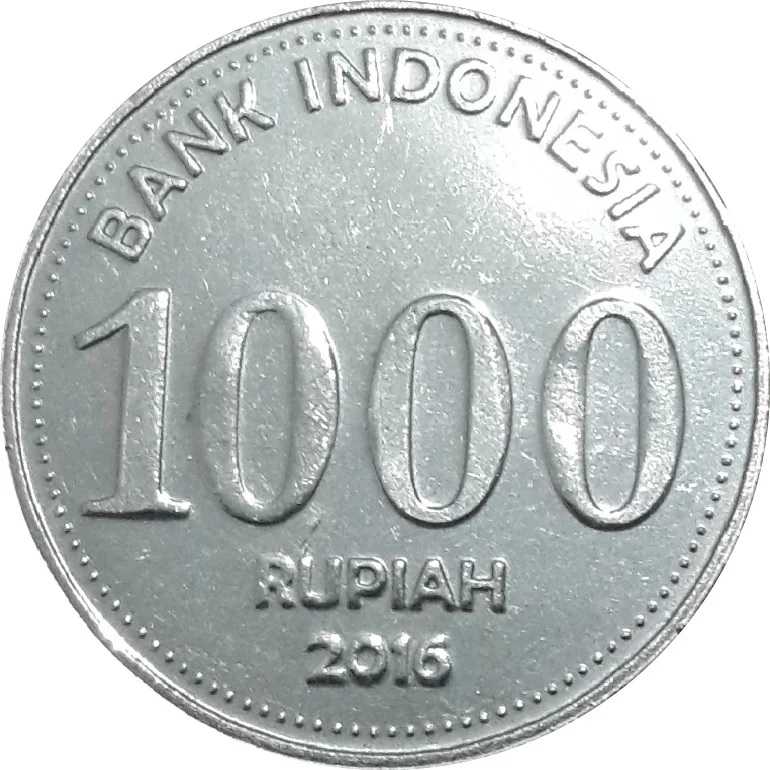
1000 rupiah – Indonesia
Add to wishlist
Indonesia
Context
Year: 2016
Issuer: Indonesia
Issuing organization: Bank Indonesia
Period:
(since 1950)
Currency:
(since 1965)
Material


References
KM: #
Numista: #102251
Value
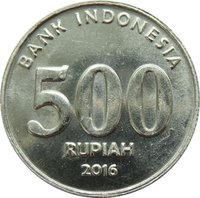
Exchange value: 1000 IDR
Inflation-adjusted value: 1310.83 IDR
Obverse
Description:
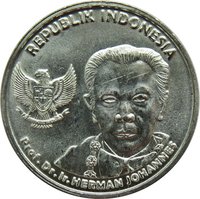
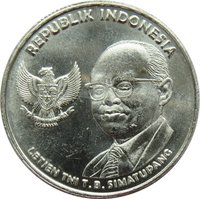
Indonesia's national emblem (Garuda Pancasila) and a portrait of its national hero facing right.
Inscription:
REPUBLIK INDONESIA
Mr. I GUSTI KETUT PUDJA
Mr. I GUSTI KETUT PUDJA
Translation:
REPUBLIC OF INDONESIA
Mr. I GUSTI KETUT PUDJA
Mr. I GUSTI KETUT PUDJA
Script: Latin
Language: Indonesian
Reverse
Edge
Plain
Mints
| Name | Mark |
|---|---|
| Perum Peruri | — |
Mintings
| Year | Mint Mark | Mintage | Quality | Collection |
|---|---|---|---|---|
| 2016 | — | — |
Historical background
In 2016, Indonesia's currency, the rupiah (IDR), faced significant pressure but demonstrated resilience compared to the severe volatility of the previous year. The year began with global headwinds, primarily China's economic slowdown and financial market turmoil, which triggered capital outflows from emerging markets like Indonesia. Furthermore, anticipation of further U.S. Federal Reserve interest rate hikes strengthened the U.S. dollar globally, putting downward pressure on the rupiah. Domestically, concerns lingered over sluggish commodity exports and the pace of economic reforms, contributing to investor caution.
Despite these challenges, the rupiah's performance in 2016 was notably more stable than in 2015, when it had depreciated over 10%. It traded in a range of roughly 13,000 to 13,800 per US dollar for much of the year, ending slightly stronger than it began. This relative stability was underpinned by decisive action from Bank Indonesia (BI), the central bank. BI maintained a relatively high benchmark interest rate to defend the currency and attract capital inflows, while also actively intervening in the foreign exchange and bond markets to smooth excessive volatility. Prudent fiscal management and a narrowing current account deficit also provided fundamental support.
Overall, 2016 was a year of cautious stabilization for the rupiah. While external uncertainties persisted, coordinated policy measures helped shield the currency from the extreme pressures witnessed in the recent past. The situation highlighted Indonesia's ongoing vulnerability to global financial shifts but also its improved macroeconomic buffers and the central bank's commitment to maintaining stability as a prerequisite for sustainable economic growth.
Despite these challenges, the rupiah's performance in 2016 was notably more stable than in 2015, when it had depreciated over 10%. It traded in a range of roughly 13,000 to 13,800 per US dollar for much of the year, ending slightly stronger than it began. This relative stability was underpinned by decisive action from Bank Indonesia (BI), the central bank. BI maintained a relatively high benchmark interest rate to defend the currency and attract capital inflows, while also actively intervening in the foreign exchange and bond markets to smooth excessive volatility. Prudent fiscal management and a narrowing current account deficit also provided fundamental support.
Overall, 2016 was a year of cautious stabilization for the rupiah. While external uncertainties persisted, coordinated policy measures helped shield the currency from the extreme pressures witnessed in the recent past. The situation highlighted Indonesia's ongoing vulnerability to global financial shifts but also its improved macroeconomic buffers and the central bank's commitment to maintaining stability as a prerequisite for sustainable economic growth.
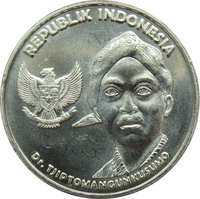
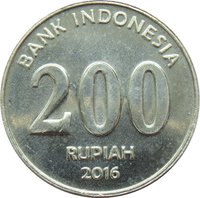
Series: 2016 Indonesia circulation coins

🌱 Very Common