

1 sol – Peru
Add to wishlist
Circulating commemorative coins
Commemoration: Toribio Rodríguez de Mendoza
Peru
Context
Year: 2021
Issuer: Peru
Issuing organization: Central Reserve Bank of Peru
Period:
(since 1822)
Total mintage: 10,000,000
Material
Diameter: 25.5 mm
Weight: 7.32 g
Thickness: 2 mm
Shape: Round
Composition: Nickel-zinc
Technique: Milled
Alignment: Coin alignment
flip
References
KM: #
Numista: #311035
Value
Exchange value: 1 PEN
Obverse
Description:
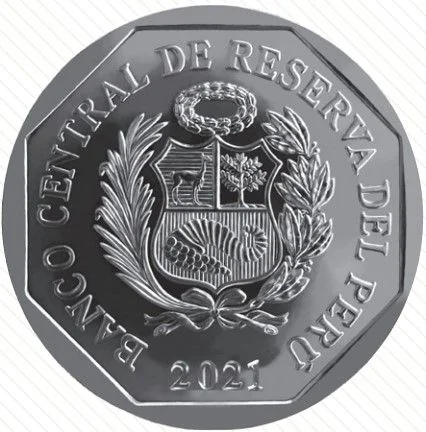
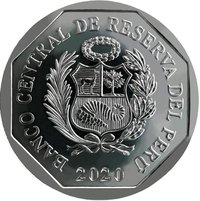
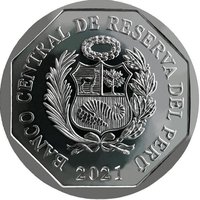
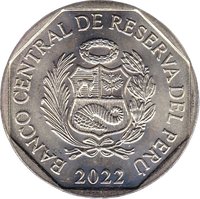
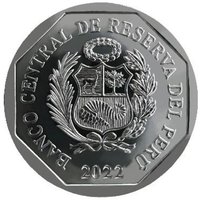
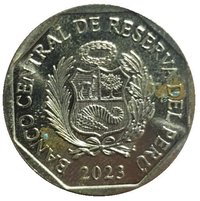
Coat of arms over date.
Inscription:
BANCO CENTRAL DE RESERVA DEL PERÚ
2021
2021
Translation:
Central Reserve Bank of Peru
2021
2021
Script: Latin
Language: Spanish
Engraver: Felipe Escalante Chuñocca
Reverse
Description:
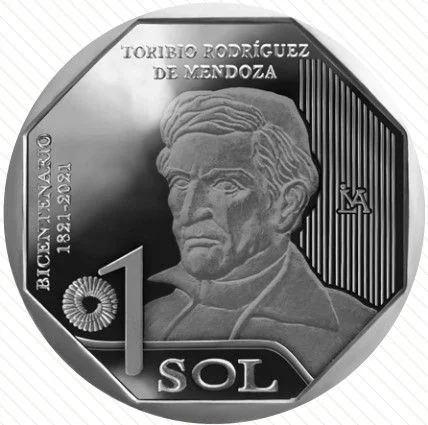
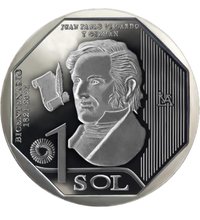
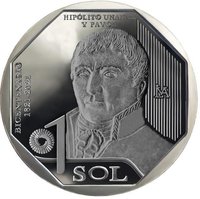
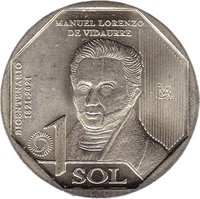
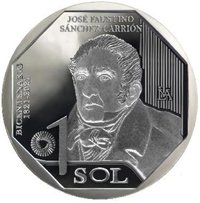
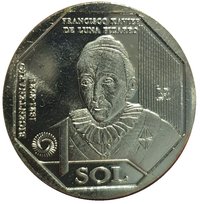
Portrait of Toribio Rodríguez de Mendoza, with value beneath.
Inscription:
TORIBIO RODRÍGUEZ DE MENDOZA
BICENTENARIO 1821-2021
1 SOL
BICENTENARIO 1821-2021
1 SOL
Translation:
TORIBIO RODRÍGUEZ DE MENDOZA
BICENTENNIAL 1821-2021
1 SOL
BICENTENNIAL 1821-2021
1 SOL
Script: Latin
Language: Spanish
Engraver: Felipe Escalante Chuñocca
Edge
Reeded
Categories
| Event> Independence |
Mints
| Name | Mark |
|---|---|
| Lima | LIMA |
Mintings
| Year | Mint Mark | Mintage | Quality | Collection |
|---|---|---|---|---|
| 2021 | LIMA | 10,000,000 |
Historical background
In 2021, Peru's currency, the sol (PEN), navigated a period of significant volatility and depreciation pressure, largely driven by profound political instability. The year began with the inauguration of President Francisco Sagasti, who provided a measure of short-term stability after the tumultuous end of 2020. However, the presidential election in June and the subsequent narrow, polarizing victory of Pedro Castillo in July injected sustained uncertainty into financial markets. Castillo's left-wing platform and proposals for constitutional reform and greater state intervention in the economy sparked investor concern, leading to capital outflows and consistent pressure on the sol, which weakened from around 3.61 to the US dollar at the start of the year to approximately 4.08 by year's end.
This currency depreciation occurred despite generally strong macroeconomic fundamentals, including a rapid post-pandemic GDP rebound and high international reserves, which the Central Reserve Bank of Peru (BCRP) actively deployed. The BCRP intervened heavily in the foreign exchange market throughout the year, selling billions of dollars to smooth volatility and curb excessive depreciation. Simultaneously, it raised its benchmark interest rate multiple times, starting in August, in a cycle aimed primarily at controlling rising inflation—which exceeded 6% by December—partly fueled by the weaker sol increasing import costs. These measures provided a buffer but could not fully offset the persistent political risk premium.
Ultimately, the sol's trajectory in 2021 was a clear reflection of domestic political shocks overriding traditional economic indicators. While external factors like global commodity prices (Peru is a major copper exporter) provided some support, the dominant narrative was one of a currency battered by investor apprehension over government policy direction and institutional uncertainty. The year concluded with the sol at historic lows against the dollar, setting the stage for continued economic challenges as the Castillo administration faced a hostile congress and deep social divisions, with inflation and currency management remaining primary concerns for policymakers.
This currency depreciation occurred despite generally strong macroeconomic fundamentals, including a rapid post-pandemic GDP rebound and high international reserves, which the Central Reserve Bank of Peru (BCRP) actively deployed. The BCRP intervened heavily in the foreign exchange market throughout the year, selling billions of dollars to smooth volatility and curb excessive depreciation. Simultaneously, it raised its benchmark interest rate multiple times, starting in August, in a cycle aimed primarily at controlling rising inflation—which exceeded 6% by December—partly fueled by the weaker sol increasing import costs. These measures provided a buffer but could not fully offset the persistent political risk premium.
Ultimately, the sol's trajectory in 2021 was a clear reflection of domestic political shocks overriding traditional economic indicators. While external factors like global commodity prices (Peru is a major copper exporter) provided some support, the dominant narrative was one of a currency battered by investor apprehension over government policy direction and institutional uncertainty. The year concluded with the sol at historic lows against the dollar, setting the stage for continued economic challenges as the Castillo administration faced a hostile congress and deep social divisions, with inflation and currency management remaining primary concerns for policymakers.
🌱 Common