

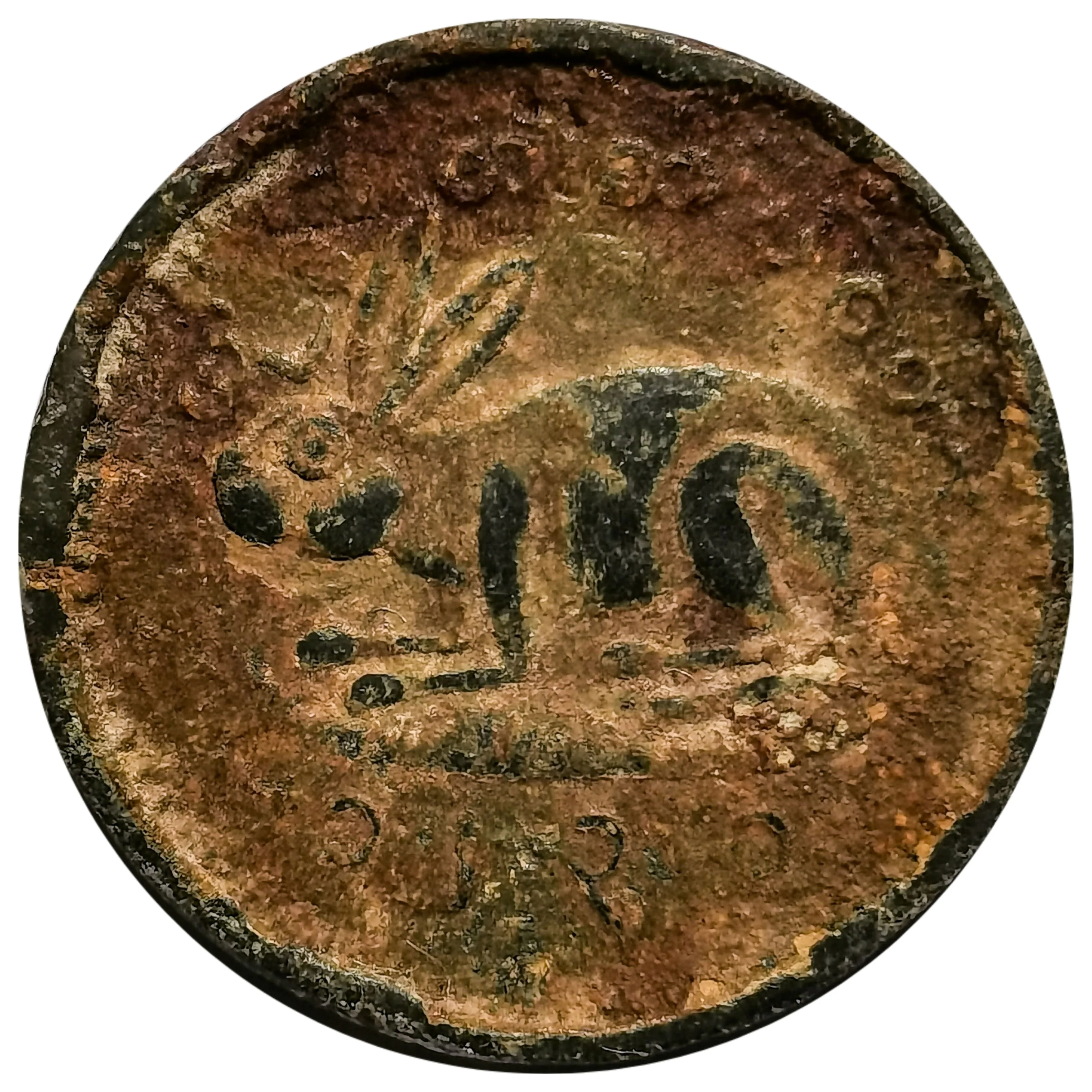
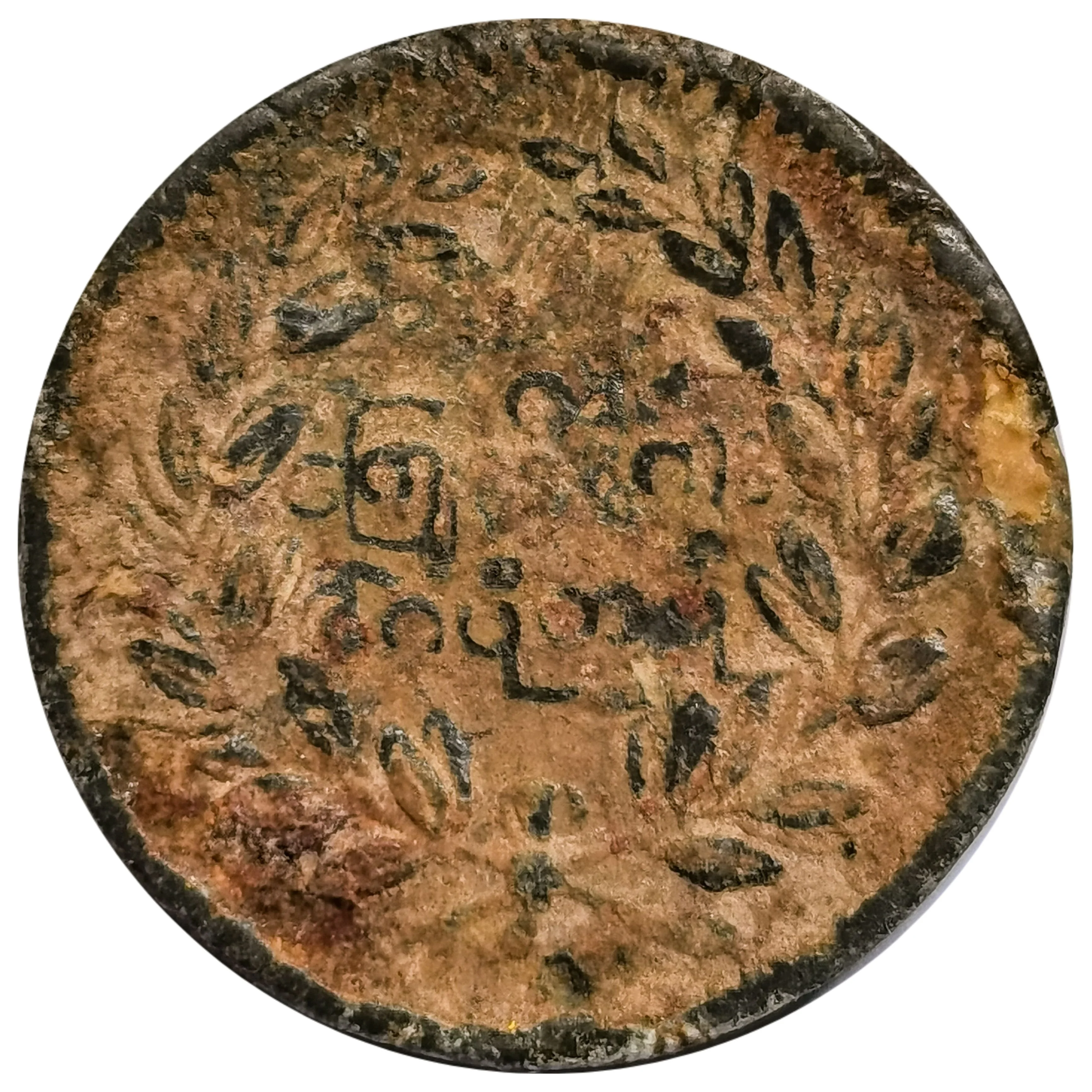
⅛ Pya – Myanmar
Myanmar
Context
Year: 1869
Buddhist (Chulasakarat) Year: 1231
Issuer: Myanmar 
Ruler: Mindon Min
Currency:
(1852—1889)
Demonetized: Yes
Material
References
KM: #Click to copy to clipboard22.2
Numista: #310288
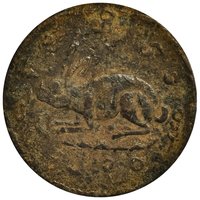
Obverse
Description:
Swift, clever, and always racing.
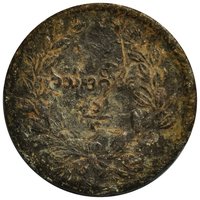
Reverse
Edge
Mintings
| Year | Mint Mark | Mintage | Quality | Collection |
|---|---|---|---|---|
| 1869 | — | — |
Historical background
In 1869, the currency situation in the Kingdom of Burma under King Mindon Min was a complex tapestry of traditional, royal, and foreign systems operating in parallel. The primary unit was the silver kyat, a flat, disc-shaped coin minted by the royal treasury, but the economy also heavily relied on silver bullion measured in the traditional unit of weight, the tical (approximately 16.3 grams). This created a system where value was often determined by weight and purity rather than a simple face value, leading to inefficiency in larger transactions.
Crucially, the period was marked by significant foreign incursion, particularly from British India. Indian Rupees and Company coins circulated widely, especially in coastal and border regions, due to extensive trade. Furthermore, the local use of lead, tin, and copper coins for smaller, everyday transactions created a multi-tiered monetary environment. This fragmentation was problematic for both the royal administration and international merchants, as exchange rates between these various mediums were fluid and often locally determined.
King Mindon, a modernizer, was acutely aware of these challenges. In the late 1860s, he had initiated reforms, establishing the Royal Mint in Mandalay and introducing machine-struck silver and gold coins to standardize the currency and assert sovereignty. However, by 1869, these modern coins were still competing with the older systems. The situation was a clear reflection of Burma’s broader position: a kingdom striving for centralized, modern control while its economy was increasingly penetrated by colonial currency and regional trade networks, a pressure that would culminate in the full British annexation just over a decade later.
Crucially, the period was marked by significant foreign incursion, particularly from British India. Indian Rupees and Company coins circulated widely, especially in coastal and border regions, due to extensive trade. Furthermore, the local use of lead, tin, and copper coins for smaller, everyday transactions created a multi-tiered monetary environment. This fragmentation was problematic for both the royal administration and international merchants, as exchange rates between these various mediums were fluid and often locally determined.
King Mindon, a modernizer, was acutely aware of these challenges. In the late 1860s, he had initiated reforms, establishing the Royal Mint in Mandalay and introducing machine-struck silver and gold coins to standardize the currency and assert sovereignty. However, by 1869, these modern coins were still competing with the older systems. The situation was a clear reflection of Burma’s broader position: a kingdom striving for centralized, modern control while its economy was increasingly penetrated by colonial currency and regional trade networks, a pressure that would culminate in the full British annexation just over a decade later.
✨ Legendary