

2 Pyas – Myanmar
Myanmar
Context
Year: 1870
Buddhist (Chulasakarat) Year: 1231
Issuer: Myanmar 
Ruler: Mindon Min
Currency:
(1852—1889)
Demonetized: Yes
References
KM: #Click to copy to clipboard24
Numista: #21323
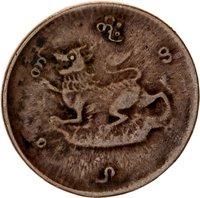
Obverse
Description:
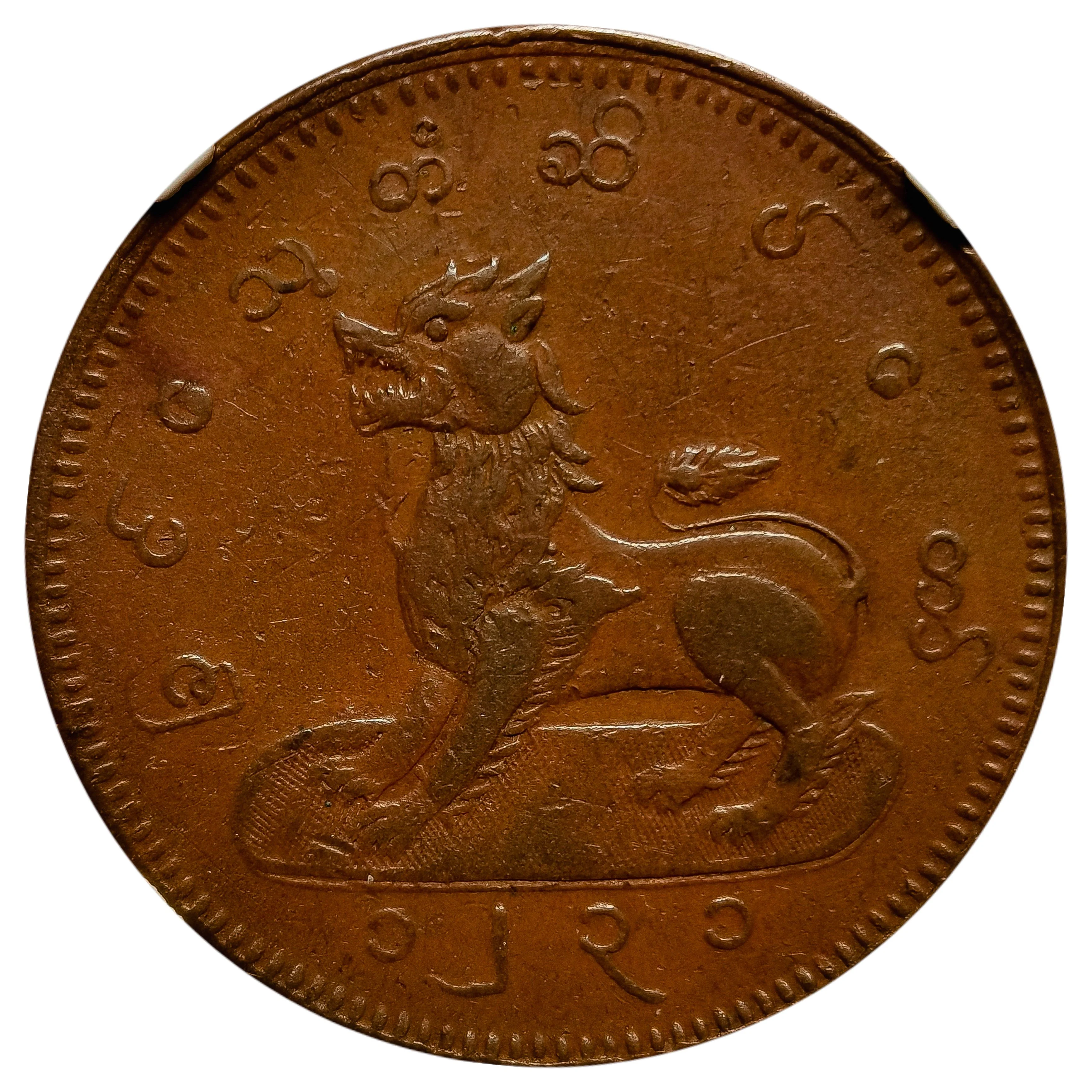
Majestic golden lion
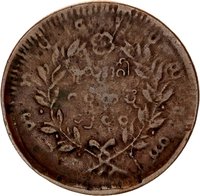
Reverse
Description:
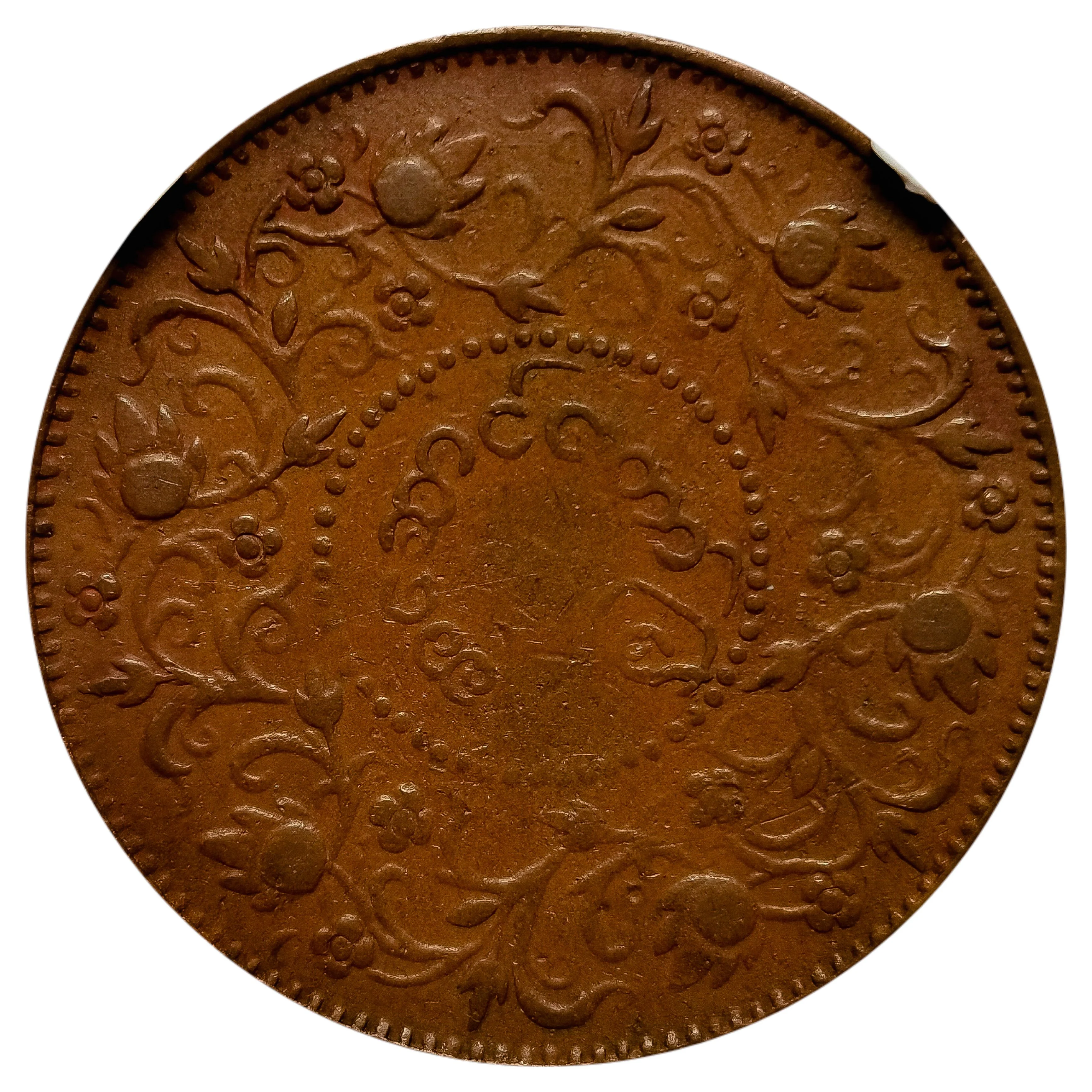
Floral wreath encircling beaded ring
Edge
Mintings
| Year | Mint Mark | Mintage | Quality | Collection |
|---|---|---|---|---|
| 1870 | — | — |
Historical background
In 1870, the currency situation in the Kingdom of Burma under King Mindon Min was a complex tapestry of traditional, royal, and foreign systems. The primary unit was the royal kyat, a silver coin often minted in denominations like one kyat and its fractions (pe, mu). However, the system was not decimalized and coexisted with a centuries-old practice of using silver lumps (known as "bullet money" or ngwe gan) as both a store of value and a medium for larger transactions. This indigenous silver was measured by weight in the tical (approximately 16.3 grams), creating a system where value was intrinsically tied to the metal's purity and mass rather than a purely symbolic state guarantee.
Simultaneously, the economy was heavily influenced by foreign currencies due to extensive regional trade. Most significant was the Indian rupee, a consequence of British India's economic dominance following the annexation of Lower Burma after the Second Anglo-Burmese War (1852). Rupees circulated widely, especially in southern ports and border areas, alongside other regional coins. Furthermore, King Mindon, seeking to modernize the state and assert sovereignty, had established the Royal Mint in Mandalay in the 1860s. It produced standardized silver and gold coins, but these new royal issues struggled to displace the deeply entrenched habits of using silver by weight and the convenient, trade-linked Indian rupees.
Thus, the monetary landscape was one of transition and competition. The royal court in Upper Burma promoted its own coinage to centralize authority, while in practice, the economy operated on a dual system: a weight-based silver standard for traditional and high-value dealings, and a growing circulation of foreign coinage, particularly the Indian rupee, driven by cross-border commerce and British colonial influence. This fragmentation reflected the broader political tensions of a kingdom navigating modernization while facing the encroaching pressure of European imperial power.
Simultaneously, the economy was heavily influenced by foreign currencies due to extensive regional trade. Most significant was the Indian rupee, a consequence of British India's economic dominance following the annexation of Lower Burma after the Second Anglo-Burmese War (1852). Rupees circulated widely, especially in southern ports and border areas, alongside other regional coins. Furthermore, King Mindon, seeking to modernize the state and assert sovereignty, had established the Royal Mint in Mandalay in the 1860s. It produced standardized silver and gold coins, but these new royal issues struggled to displace the deeply entrenched habits of using silver by weight and the convenient, trade-linked Indian rupees.
Thus, the monetary landscape was one of transition and competition. The royal court in Upper Burma promoted its own coinage to centralize authority, while in practice, the economy operated on a dual system: a weight-based silver standard for traditional and high-value dealings, and a growing circulation of foreign coinage, particularly the Indian rupee, driven by cross-border commerce and British colonial influence. This fragmentation reflected the broader political tensions of a kingdom navigating modernization while facing the encroaching pressure of European imperial power.
✨ Legendary