

5000 rials (Iranian capital market) – Iran
Add to wishlist
Circulating commemorative coins
Commemoration: 50th anniversary of the Iranian capital market
Iran
Context
Year: 2017
Iranian - Persian Year:: 1396
Issuer: Iran
Issuing organization: Central Bank of the Islamic Republic of Iran
Period:
(since 1979)
Currency:
(since 1932)
Total mintage: 20,000,000
Material
Diameter: 29.3 mm
Weight: 10.1 g
Shape: Round
Composition: Nickel brass
Magnetic: No
Technique: Milled
Alignment: Coin alignment
flip
References
KM: #
Numista: #136210
Value
Exchange value: 5000 IRR
Obverse
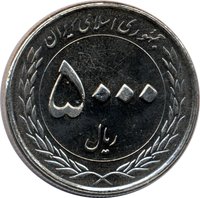
Description:
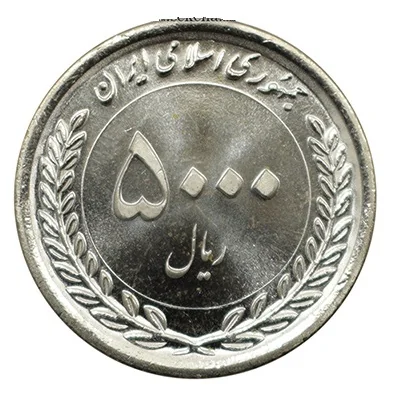
Centre currency, olive leaves encircling.
Inscription:
جُمهوری اسلامی ایران
۵۰۰۰
ريال
۵۰۰۰
ريال
Translation:
Islamic Republic of Iran
5000
Rials
5000
Rials
Script: Persian (nastaliq)
Language: Persian
Reverse
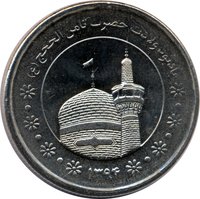
Description:
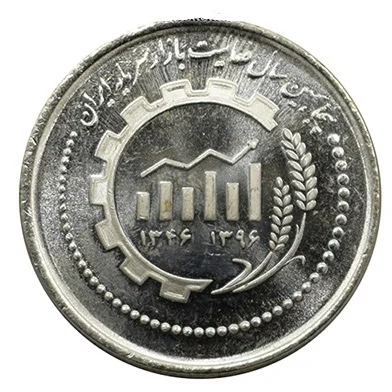
Three-quarters of a gear, two wheat stalks, a rising chart, and fifty counterclockwise dots.
Inscription:
پنجاهمین سال فعالیت بازار سرمایه ایران
۱۳۴۶-۱۳۹۶
۱۳۴۶-۱۳۹۶
Translation:
Fiftieth Year of Activity of Iran's Capital Market
1346-1396
1346-1396
Script: Persian (nastaliq)
Language: Persian
Edge
Reeded
Mints
| Name | Mark |
|---|---|
| Tehran | — |
Mintings
| Year | Mint Mark | Mintage | Quality | Collection |
|---|---|---|---|---|
| 2017 | — | 20,000,000 |
Historical background
In 2017, Iran's currency situation was characterized by significant instability and a widening gap between the official government exchange rate and the unofficial market rate. The primary driver was the lingering impact of international sanctions, particularly those related to Iran's nuclear program, which severely restricted the country's access to the global financial system and oil revenues. While the landmark 2015 nuclear deal (JCPOA) had provided some relief, the anticipated flood of foreign investment and economic normalization had not fully materialized, leaving the economy strained and the rial under persistent pressure.
Throughout the year, the Iranian rial depreciated steadily on the open market, reflecting deep-seated economic anxieties. Inflation remained high, and structural issues like banking sector weaknesses, corruption, and state control over key industries undermined confidence. The administration of President Hassan Rouhani, which had staked its reputation on the nuclear deal, faced growing public frustration over the slow pace of economic improvement. This pressure culminated in protests over economic grievances at the very end of 2017 and into early 2018.
Authorities attempted to manage the crisis through a multi-exchange rate system, pegging the official rate at around 42,000 rials to the US dollar for priority imports. However, the unofficial market rate told a different story, trading closer to 50,000 rials per dollar by mid-2017 and continuing to weaken. This dual system created opportunities for arbitrage and corruption, while making it difficult for businesses to plan. The currency volatility of 7 set the stage for a more severe crisis in 2018, when the US withdrawal from the JCPOA and the re-imposition of crushing sanctions would trigger a collapse in the rial's value.
Throughout the year, the Iranian rial depreciated steadily on the open market, reflecting deep-seated economic anxieties. Inflation remained high, and structural issues like banking sector weaknesses, corruption, and state control over key industries undermined confidence. The administration of President Hassan Rouhani, which had staked its reputation on the nuclear deal, faced growing public frustration over the slow pace of economic improvement. This pressure culminated in protests over economic grievances at the very end of 2017 and into early 2018.
Authorities attempted to manage the crisis through a multi-exchange rate system, pegging the official rate at around 42,000 rials to the US dollar for priority imports. However, the unofficial market rate told a different story, trading closer to 50,000 rials per dollar by mid-2017 and continuing to weaken. This dual system created opportunities for arbitrage and corruption, while making it difficult for businesses to plan. The currency volatility of 7 set the stage for a more severe crisis in 2018, when the US withdrawal from the JCPOA and the re-imposition of crushing sanctions would trigger a collapse in the rial's value.
🌟 Uncommon