

1 Real – Guatemala
Circulating commemorative coins
Commemoration: Proclamation of the Adoption of the 1851 Constitution
Guatemala
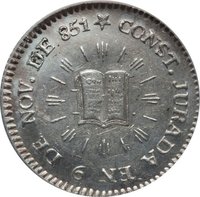
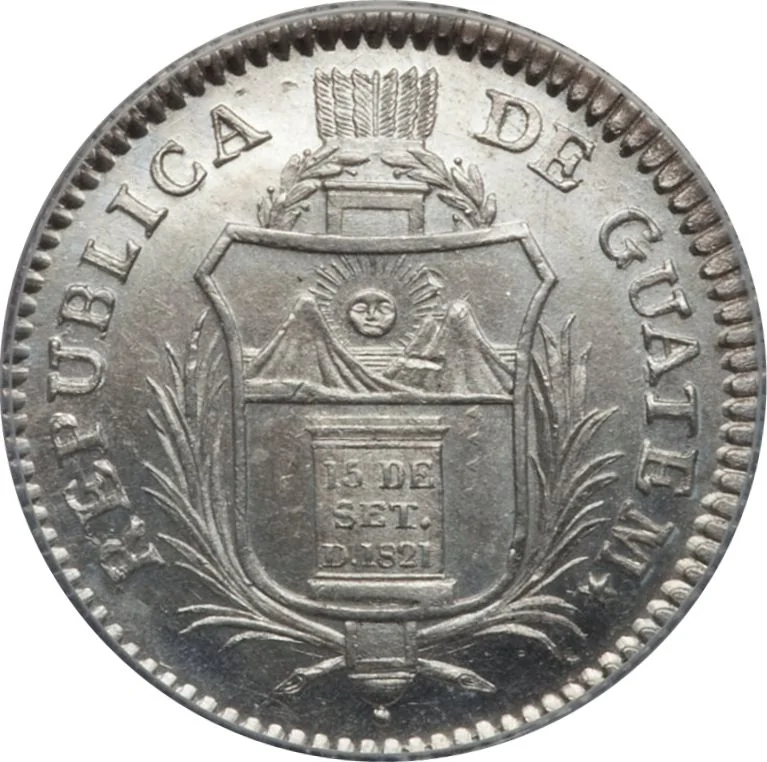
Obverse
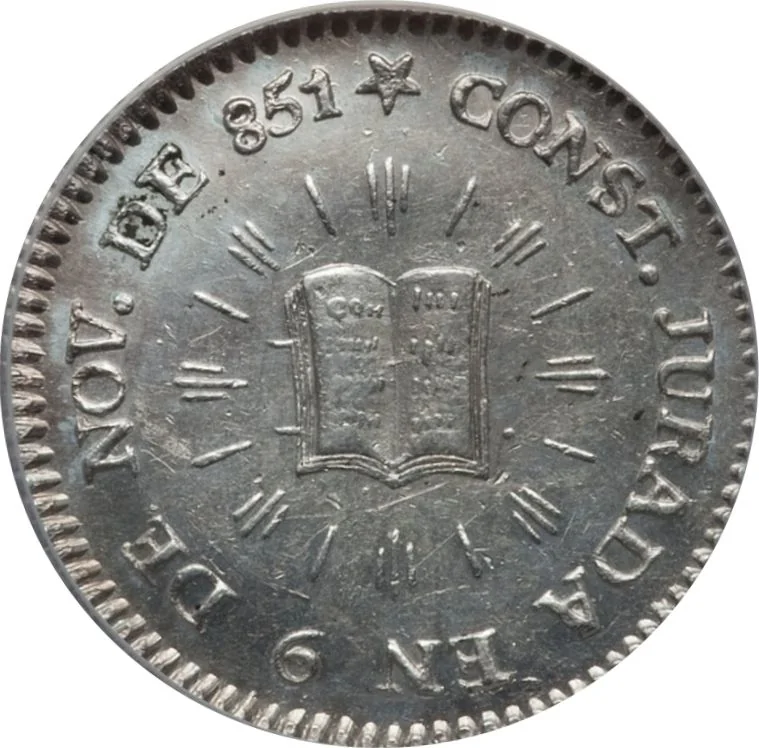
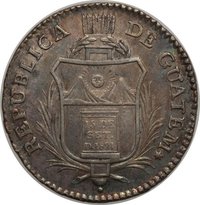
Reverse
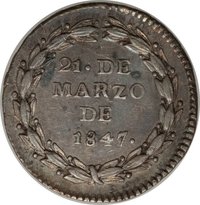
Edge
Categories
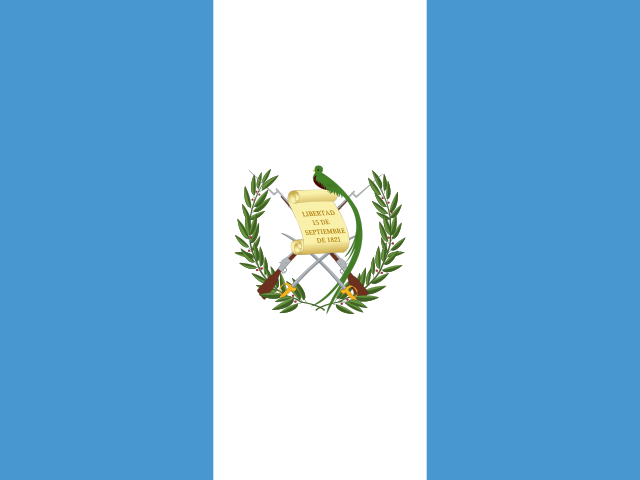
| Symbols> Coat of Arms |
Mints
| Name | Mark |
|---|---|
| Casa de Moneda de Guatemala | — |
Mintings
| Year | Mint Mark | Mintage | Quality | Collection |
|---|---|---|---|---|
| 1851 | — | — |
Historical background
In 1851, Guatemala’s currency situation was characterized by profound disorder and transition, a direct legacy of the post-independence period and the recent collapse of the Central American Federation. The monetary system was a chaotic mix of foreign and domestic coins circulating simultaneously. Spanish colonial coins (like reales and pesos), coins from other Central American republics, and even Peruvian and Mexican silver all competed for acceptance, with their values fluctuating based on metal content and local trust. This lack of a uniform national currency severely hampered commerce, as transactions required constant negotiation and assay, creating uncertainty for both government finance and everyday trade.
The government of President Rafael Carrera, who had taken firm control of the state, recognized this monetary anarchy as a major obstacle to economic stability and national sovereignty. In response, 1851 saw a pivotal reform: the official adoption of the Peso as Guatemala’s unit of account and the decimal system to organize it. The peso was divided into 100 centavos, a modernizing move that aligned Guatemala with broader international trends. While the state began minting its own coins, the practical reality was that foreign silver, particularly the Spanish colonial "peso fuerte" or "piece of eight," remained the dominant physical medium of exchange, now simply measured within the new decimal framework.
Thus, the situation in 1851 was one of foundational legal change attempting to tame a complex on-the-ground reality. The decree establishing the decimal peso provided a crucial legal and accounting standard for the future, aiming to phase out the monetary Balkanization of the past decades. However, the full implementation of a unified, state-controlled currency would take many more years, meaning that 1851 stands as the year Guatemala formally defined its monetary system, even as it continued to grapple with the circulation of a heterogeneous mix of coins in practice.
The government of President Rafael Carrera, who had taken firm control of the state, recognized this monetary anarchy as a major obstacle to economic stability and national sovereignty. In response, 1851 saw a pivotal reform: the official adoption of the Peso as Guatemala’s unit of account and the decimal system to organize it. The peso was divided into 100 centavos, a modernizing move that aligned Guatemala with broader international trends. While the state began minting its own coins, the practical reality was that foreign silver, particularly the Spanish colonial "peso fuerte" or "piece of eight," remained the dominant physical medium of exchange, now simply measured within the new decimal framework.
Thus, the situation in 1851 was one of foundational legal change attempting to tame a complex on-the-ground reality. The decree establishing the decimal peso provided a crucial legal and accounting standard for the future, aiming to phase out the monetary Balkanization of the past decades. However, the full implementation of a unified, state-controlled currency would take many more years, meaning that 1851 stands as the year Guatemala formally defined its monetary system, even as it continued to grapple with the circulation of a heterogeneous mix of coins in practice.
✨ Legendary