

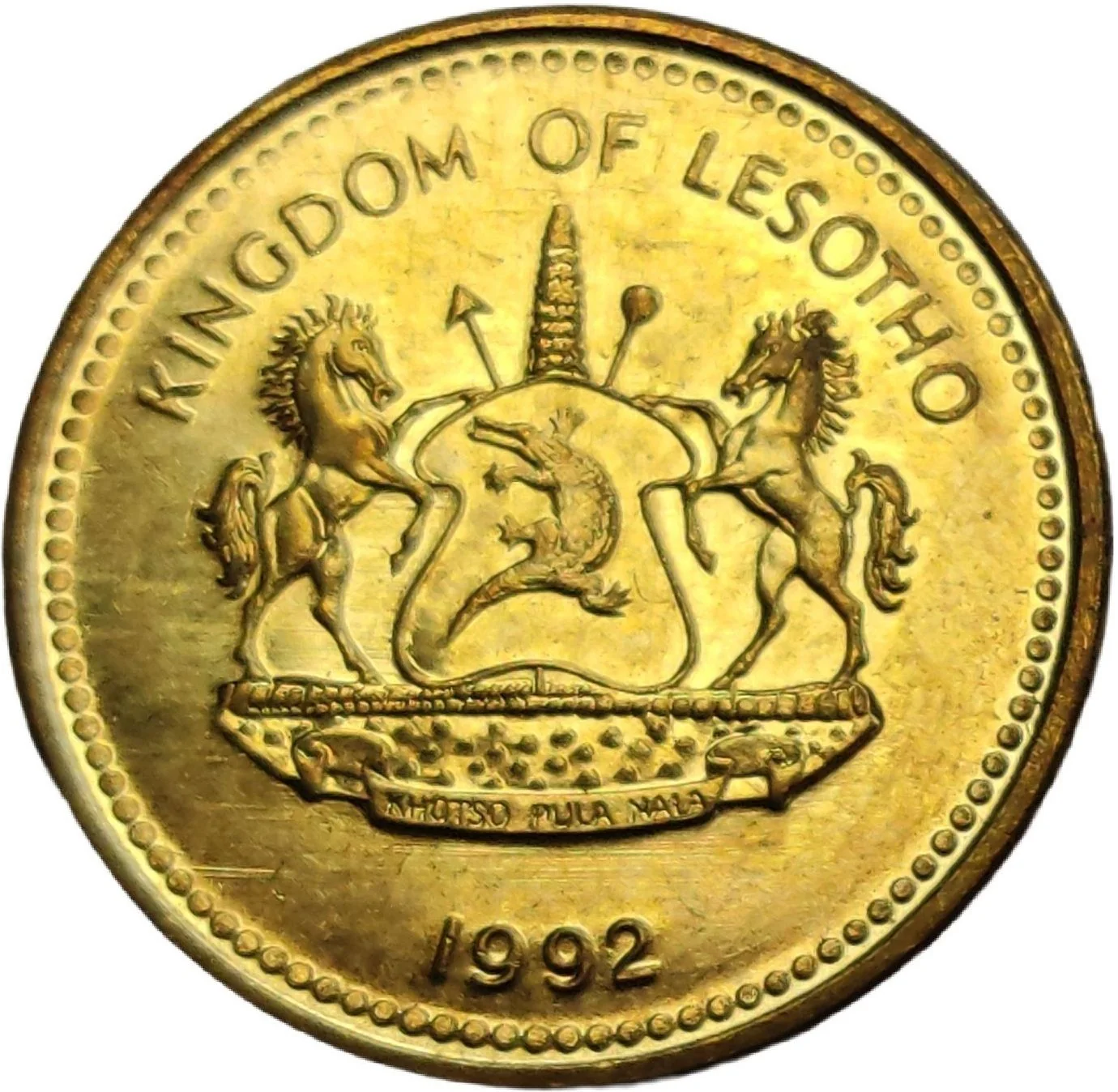
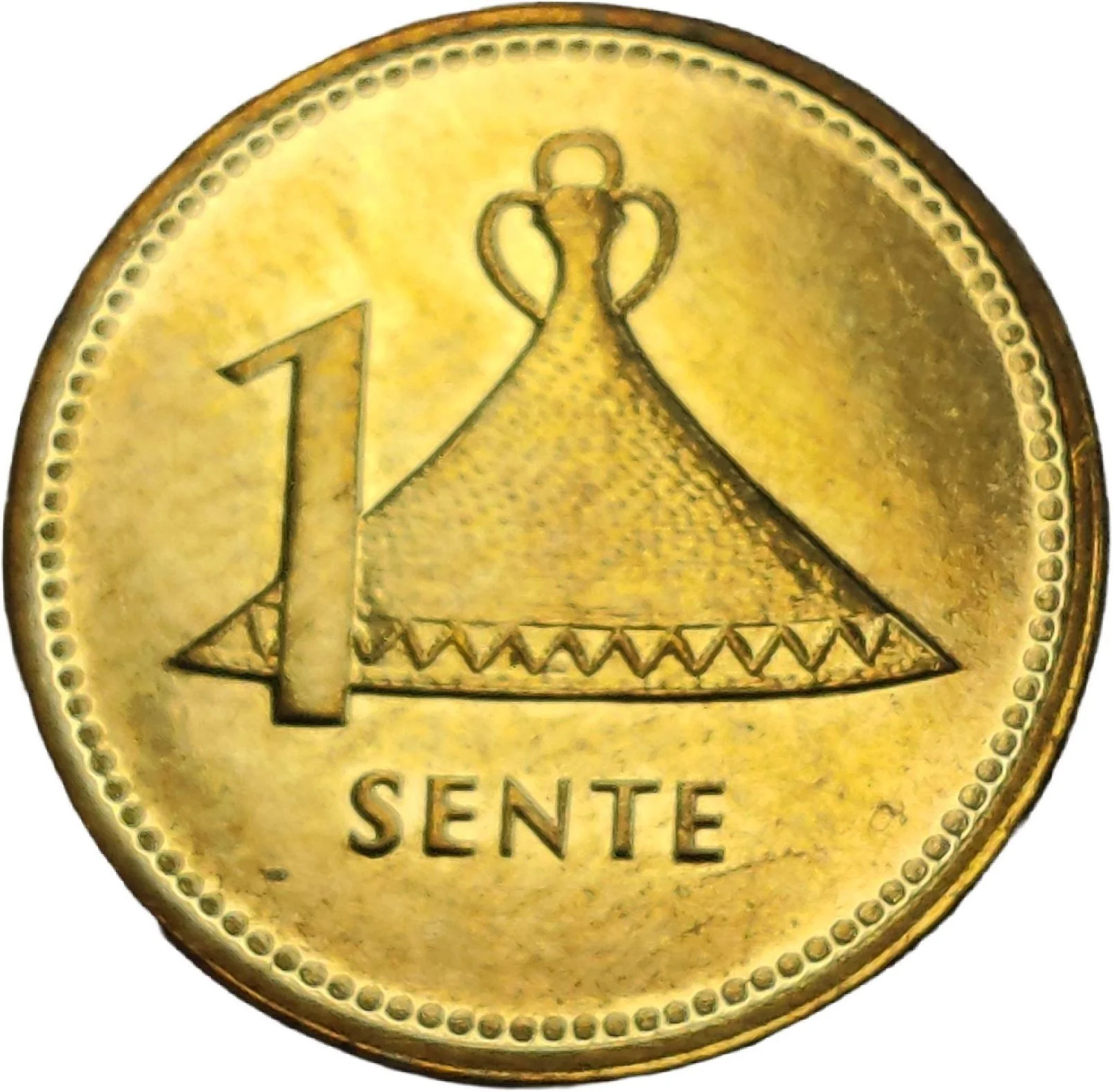

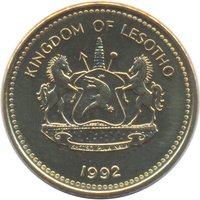
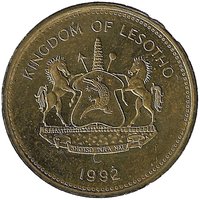
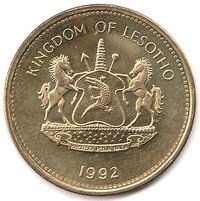
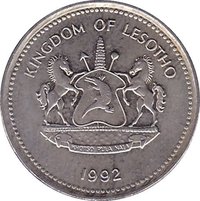
Obverse
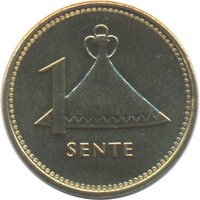
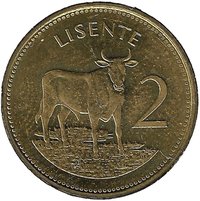
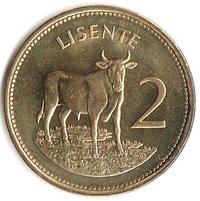
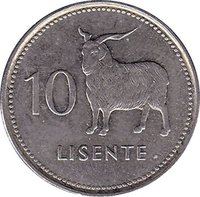
Reverse
Edge
Plain
Mints
| Name | Mark |
|---|---|
| Royal Mint | — |
Mintings
| Year | Mint Mark | Mintage | Quality | Collection |
|---|---|---|---|---|
| 1992 | — | — |
Historical background
In 1992, Lesotho's currency situation was defined by its deep and formalized monetary integration with South Africa. The country was a member of the Common Monetary Area (CMA), an arrangement that effectively pegged the Lesotho loti (LSL) at par with the South African rand (ZAR). The rand itself circulated legally alongside the loti, which was introduced in 1980 to assert national sovereignty but without monetary independence. This meant Lesotho's money supply, interest rates, and inflation were largely determined by the South African Reserve Bank's policies and the performance of the South African economy.
This arrangement presented a dual reality. On one hand, it provided significant stability by tethering Lesotho to a larger, more diversified economy, controlling inflation, and facilitating seamless trade and remittance flows with its dominant neighbor. On the other hand, it ceded critical economic policy tools, leaving Lesotho unable to devalue its currency to boost competitiveness or set independent interest rates to address domestic economic cycles. The system also inherently imported South Africa's economic shocks, a vulnerability keenly felt as the early 1990s were a period of political turmoil and international sanctions against the apartheid regime, with associated economic pressures.
Therefore, the currency situation in 1992 was one of entrenched dependency and managed stability. It reflected the broader geopolitical and economic reality of a small, landlocked kingdom whose financial system was a subsystem of South Africa's. While the post-apartheid transition in South Africa was underway, Lesotho's own political landscape was tense following the 1991 coup, but its fundamental monetary framework within the CMA remained unchanged, continuing to shape its economic prospects and constraints.
This arrangement presented a dual reality. On one hand, it provided significant stability by tethering Lesotho to a larger, more diversified economy, controlling inflation, and facilitating seamless trade and remittance flows with its dominant neighbor. On the other hand, it ceded critical economic policy tools, leaving Lesotho unable to devalue its currency to boost competitiveness or set independent interest rates to address domestic economic cycles. The system also inherently imported South Africa's economic shocks, a vulnerability keenly felt as the early 1990s were a period of political turmoil and international sanctions against the apartheid regime, with associated economic pressures.
Therefore, the currency situation in 1992 was one of entrenched dependency and managed stability. It reflected the broader geopolitical and economic reality of a small, landlocked kingdom whose financial system was a subsystem of South Africa's. While the post-apartheid transition in South Africa was underway, Lesotho's own political landscape was tense following the 1991 coup, but its fundamental monetary framework within the CMA remained unchanged, continuing to shape its economic prospects and constraints.
Series: 1992 Lesotho circulation coins
🌱 Common