Logo Title
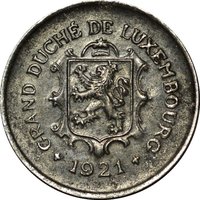
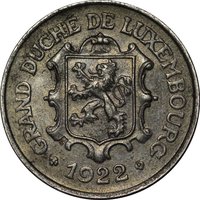
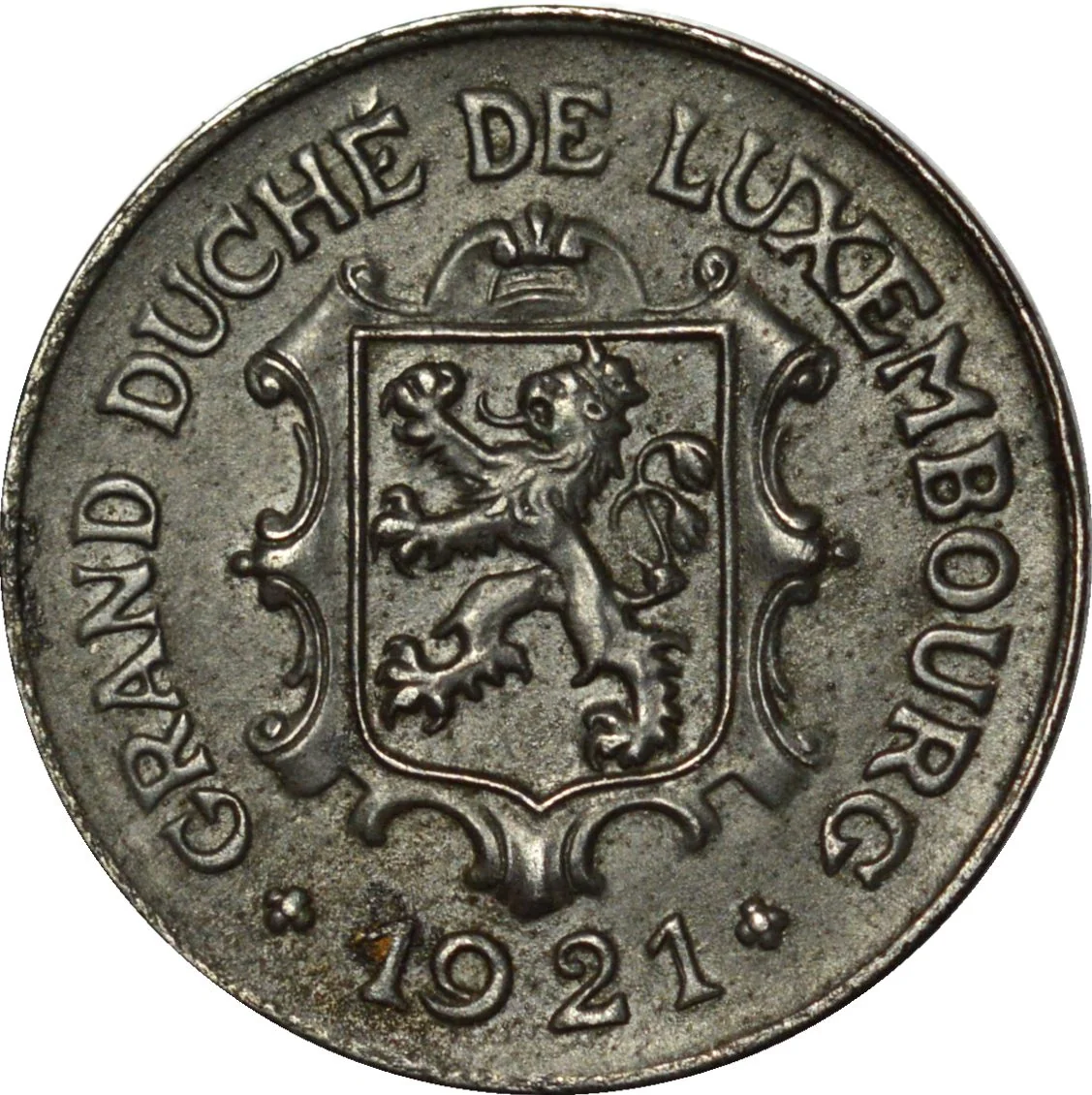
obverse
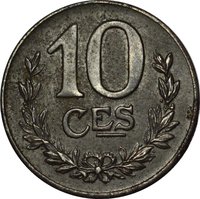
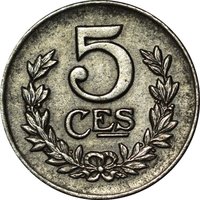
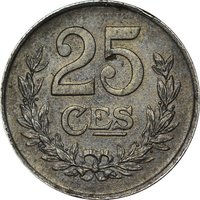
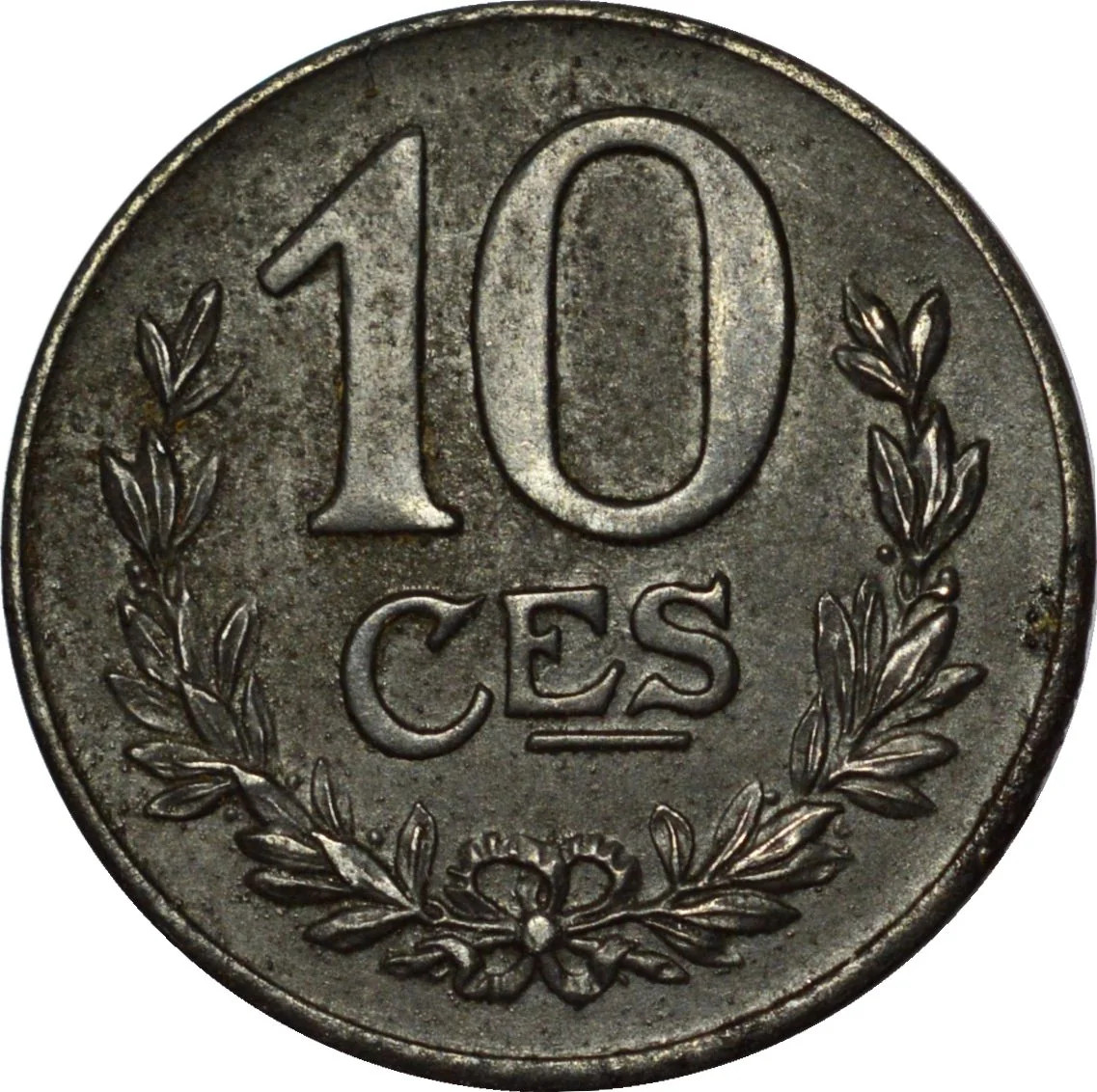
reverse
smy77 CC BY-NC-SA

10 Centimes – Grand Duchy of Luxembourg

Luxembourg
Context
Years: 1918–1923
Country: Luxembourg Country flag
Currency:
(1854—2001)
Demonetized: Yes
Total mintage: 2,579,000
Material
Diameter: 20 mm
Weight: 3.17 g
Thickness: 1.59 mm
Shape: Round
Composition: Iron
Technique: Milled
Alignment: Medal alignment
Obverse
OBVERSE ↑
flip
Reverse
REVERSE ↑
References
KM: #Click to copy to clipboard31
Numista: #3101
Value
Exchange value: 0.10 LUF

Obverse

Description:
Luxembourgish shield with a left-rampant, forked-tail lion on a plain field, encircled by a legend with the mint year below.
Inscription:
GRAND DUCHÉ DE LUXEMBOURG

+ 1921 +
Translation:
Grand Duchy of Luxembourg

+ 1921 +
Script: Latin
Language: French

Reverse

Description:
Face value
within an oak crown
Inscription:
10 CES
Script: Latin

Edge

Plain

Categories

Symbols> Coat of Arms


Mintings

YearMint MarkMintageQualityCollection
19181,603,000
1921626,000
1923350,000

Historical background

Following the Armistice of 1918, the Grand Duchy of Luxembourg faced a complex and precarious currency situation, a direct legacy of its wartime occupation by the German Empire. Since 1914, the German Reichsmark had been imposed as the sole legal tender, supplanting the Luxembourg franc and severing the Duchy’s monetary ties to its traditional partner, Belgium. This forced integration into the German monetary zone led to significant inflation and economic distortion, leaving the country flooded with rapidly depreciating Reichsmarks as the war concluded and the German military administration withdrew.

The immediate post-war period was characterized by monetary chaos and urgent debate. The government, led by Prime Minister Émile Reuter, needed to stabilize the economy and reassert monetary sovereignty. There were two primary options: formally joining the Belgian monetary union (as had been the pre-war arrangement under the Latin Monetary Union) or establishing an independent national currency. The political will leaned strongly toward independence, viewing a distinct currency as a powerful symbol of national sovereignty and a necessary break from the recent German domination.

Consequently, in late 1918, the groundwork was laid for the creation of the Luxembourg franc. The Chamber of Deputies passed a law on December 20th establishing the new currency, which would be at parity with the Belgian franc. This pragmatic decision maintained crucial economic links with Belgium for trade and stability while creating a separate, nationally issued currency. Thus, the currency situation of 1918 marked a critical transition—from the imposed and unstable Reichsmark to the birth of a sovereign monetary system, setting the stage for the official introduction of the Luxembourg franc in 1919.
🌱 Common