

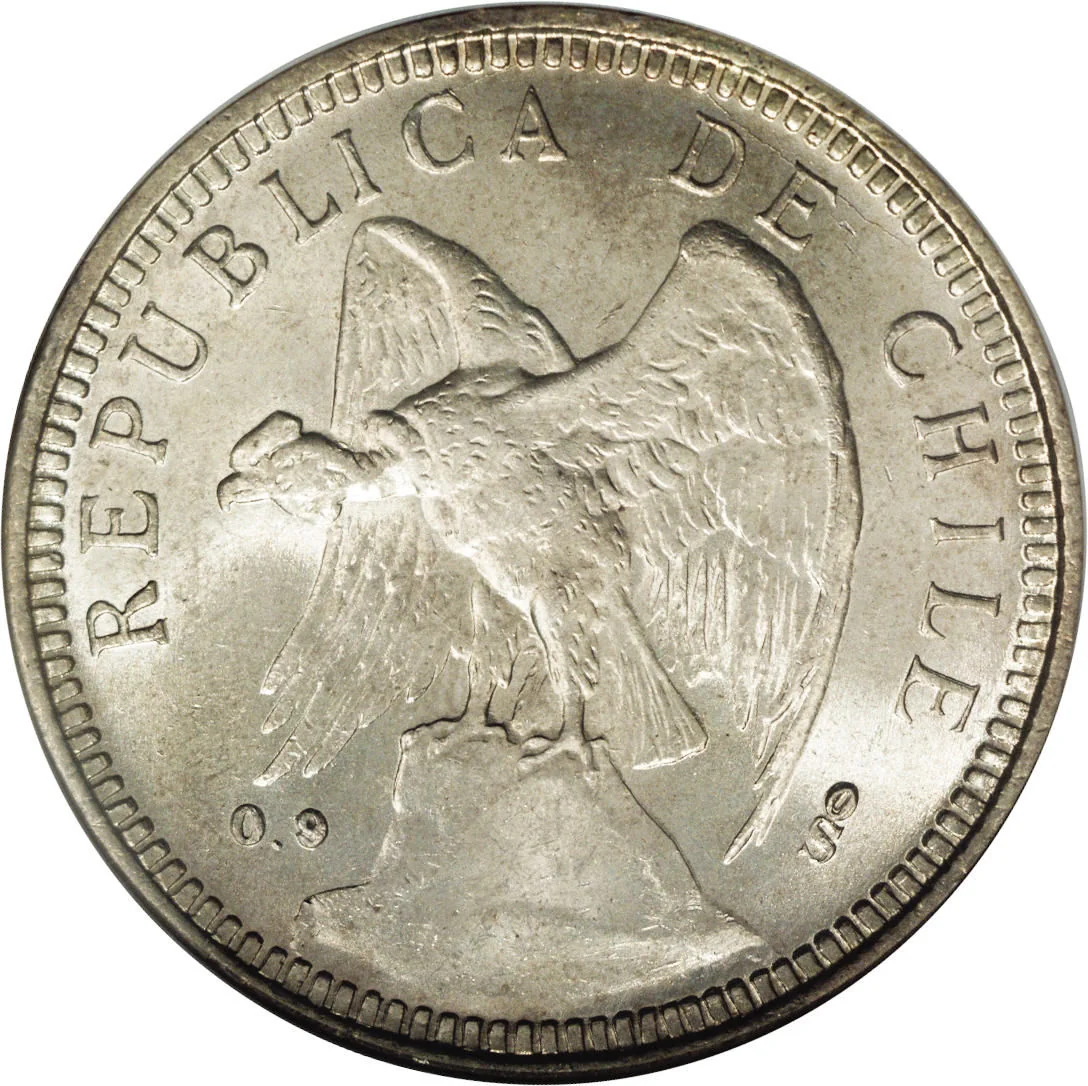
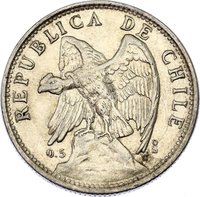
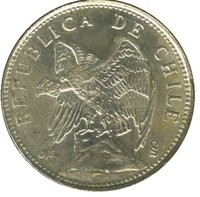
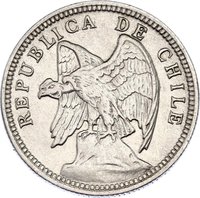
Obverse
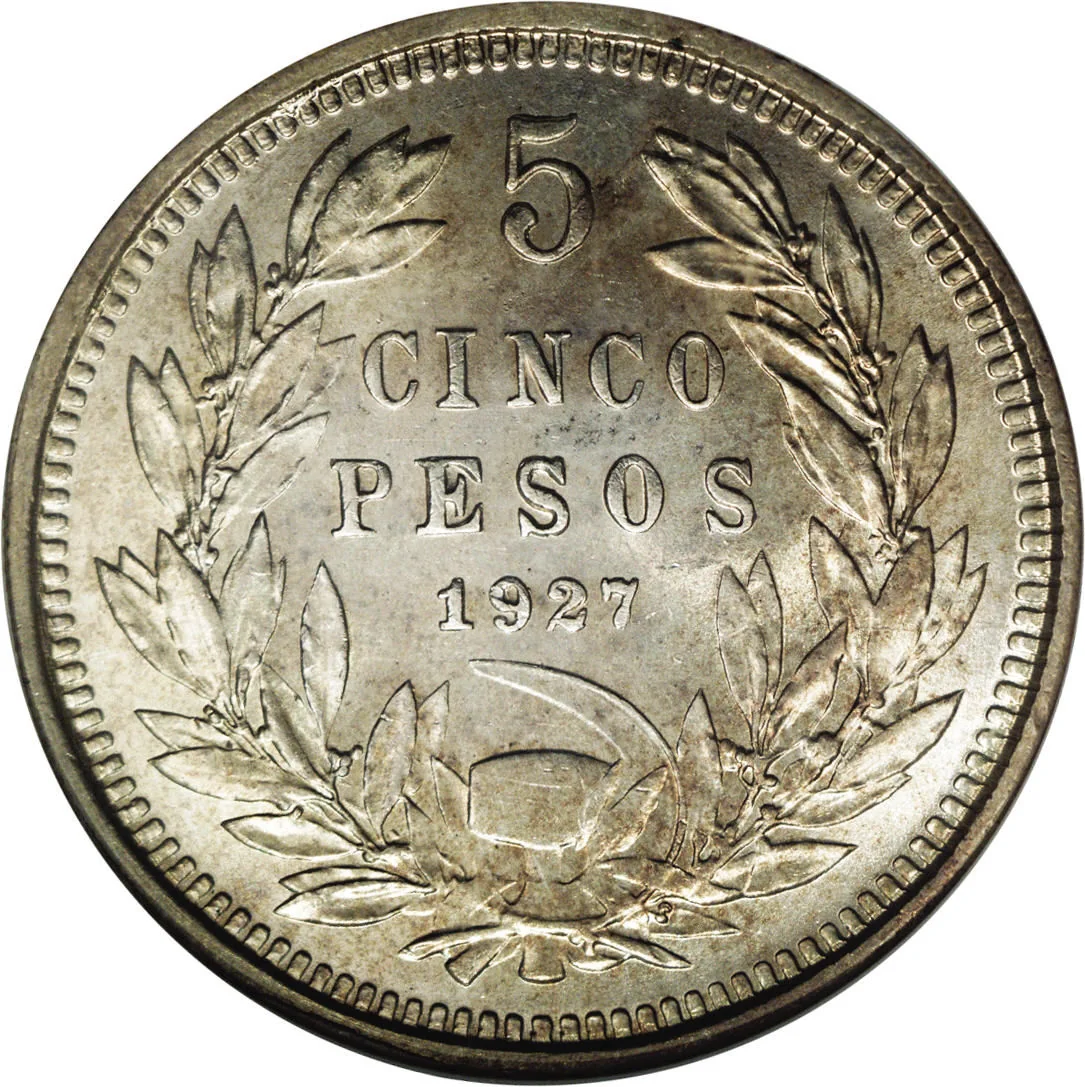
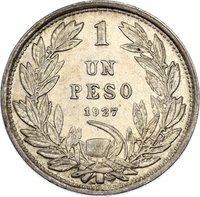
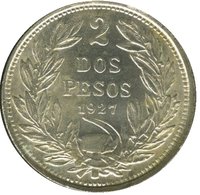
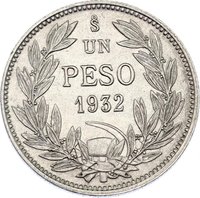
Reverse
Edge
Reeded
Categories
| Animal> Bird |
| Symbol> Hammer and sickle |
Mints
| Name | Mark |
|---|---|
| Casa de Moneda de Chile | (So) |
Mintings
| Year | Mint Mark | Mintage | Quality | Collection |
|---|---|---|---|---|
| 1927 | So | — |
Historical background
By 1927, Chile's currency situation was defined by a prolonged period of instability finally being brought under control by the authoritative government of General Carlos Ibáñez del Campo. For decades, the Chilean peso had suffered from severe depreciation and wild fluctuations, driven by excessive money printing to finance budget deficits, a reliance on volatile nitrate export revenues, and a general lack of fiscal discipline. This environment created uncertainty for both domestic business and foreign investment, hindering economic development.
The turning point came with the appointment of Pablo Ramírez Rodríguez as Minister of Finance in 1927. Under Ibáñez's directive, Ramírez implemented a radical stabilization plan. The cornerstone was the creation of the Central Bank of Chile (Banco Central de Chile) in 1925, which began operations in 1926, ending the era of uncontrolled issuance of paper money by private banks. The new institution was granted a monopoly on note issue and was tasked with maintaining the value of the currency. Furthermore, the government secured a large stabilization loan from the United States' Dillon, Read & Co. in 1927, which provided the gold and foreign exchange reserves needed to back the currency.
As a result, the peso was officially placed on a gold exchange standard in 1927, pegging it to the British pound and, indirectly, to gold. This move, known as the Condor reform, introduced a new unit, the condor, worth 10 pesos. The immediate effect was the successful stabilization of the exchange rate and a dramatic halt to inflation. While this provided much-needed monetary order and restored international confidence, it also imposed a rigid fiscal and monetary discipline that would later be tested by the collapse of nitrate markets during the Great Depression.
The turning point came with the appointment of Pablo Ramírez Rodríguez as Minister of Finance in 1927. Under Ibáñez's directive, Ramírez implemented a radical stabilization plan. The cornerstone was the creation of the Central Bank of Chile (Banco Central de Chile) in 1925, which began operations in 1926, ending the era of uncontrolled issuance of paper money by private banks. The new institution was granted a monopoly on note issue and was tasked with maintaining the value of the currency. Furthermore, the government secured a large stabilization loan from the United States' Dillon, Read & Co. in 1927, which provided the gold and foreign exchange reserves needed to back the currency.
As a result, the peso was officially placed on a gold exchange standard in 1927, pegging it to the British pound and, indirectly, to gold. This move, known as the Condor reform, introduced a new unit, the condor, worth 10 pesos. The immediate effect was the successful stabilization of the exchange rate and a dramatic halt to inflation. While this provided much-needed monetary order and restored international confidence, it also imposed a rigid fiscal and monetary discipline that would later be tested by the collapse of nitrate markets during the Great Depression.
🌟 Uncommon