

2 lire – Italy
Add to wishlist
Italy
Context
Years: 1936–1939
Issuer: Italy
Ruler: Vittorio Emanuele III
Currency:
(1861—2001)
Demonetized: Yes
Total mintage: 120,070
Material
References
KM: #
Numista: #3089
Value
Exchange value: 2 ITL
Obverse
Description:
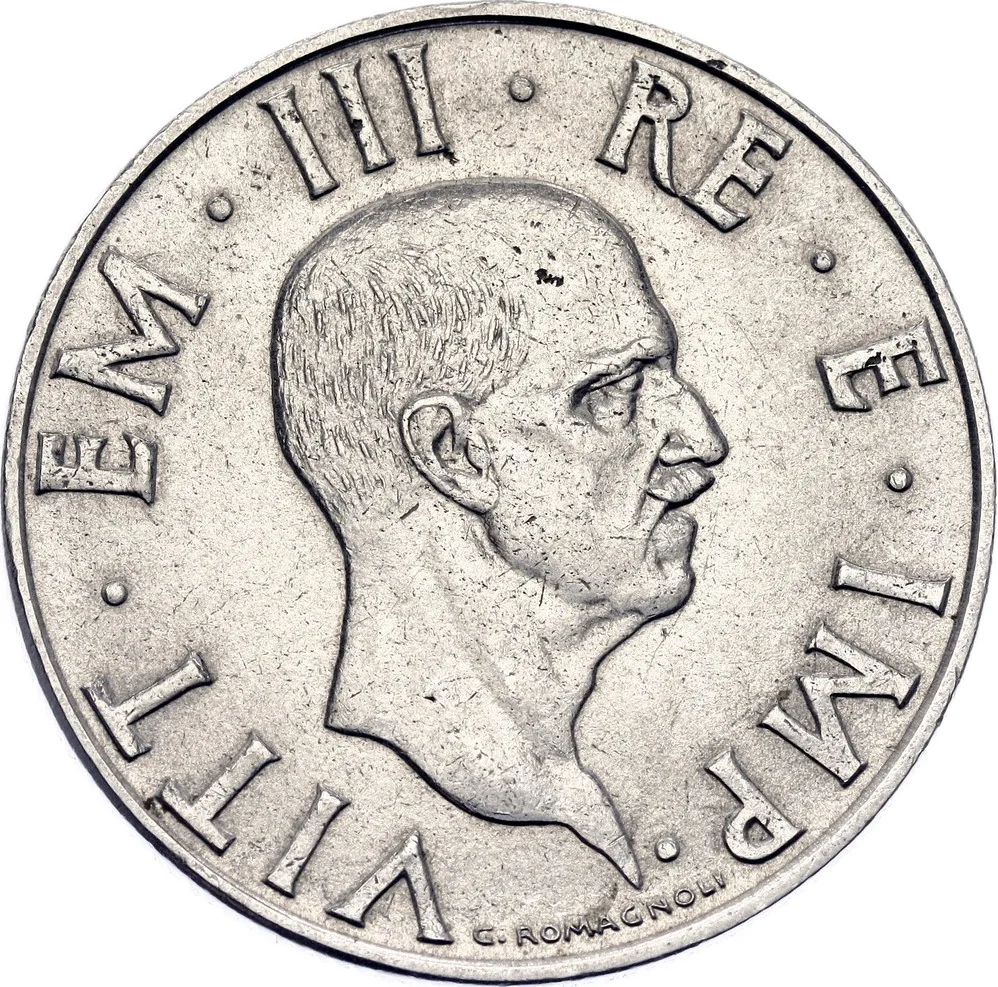
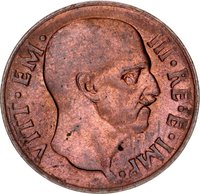
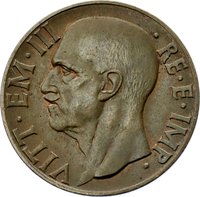
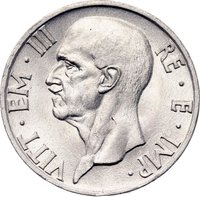
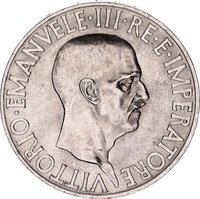
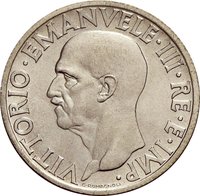
King Vittorio Emanuele III facing right. Engraver's name below.
Inscription:
VITT·EM·III·RE·E·IMP·
G. ROMAGNOLI
G. ROMAGNOLI
Translation:
To Victor Emmanuel III, King and Emperor, G. Romagnoli.
Script: Latin
Language: Latin
Engraver: Giuseppe Romagnoli
Reverse
Description:
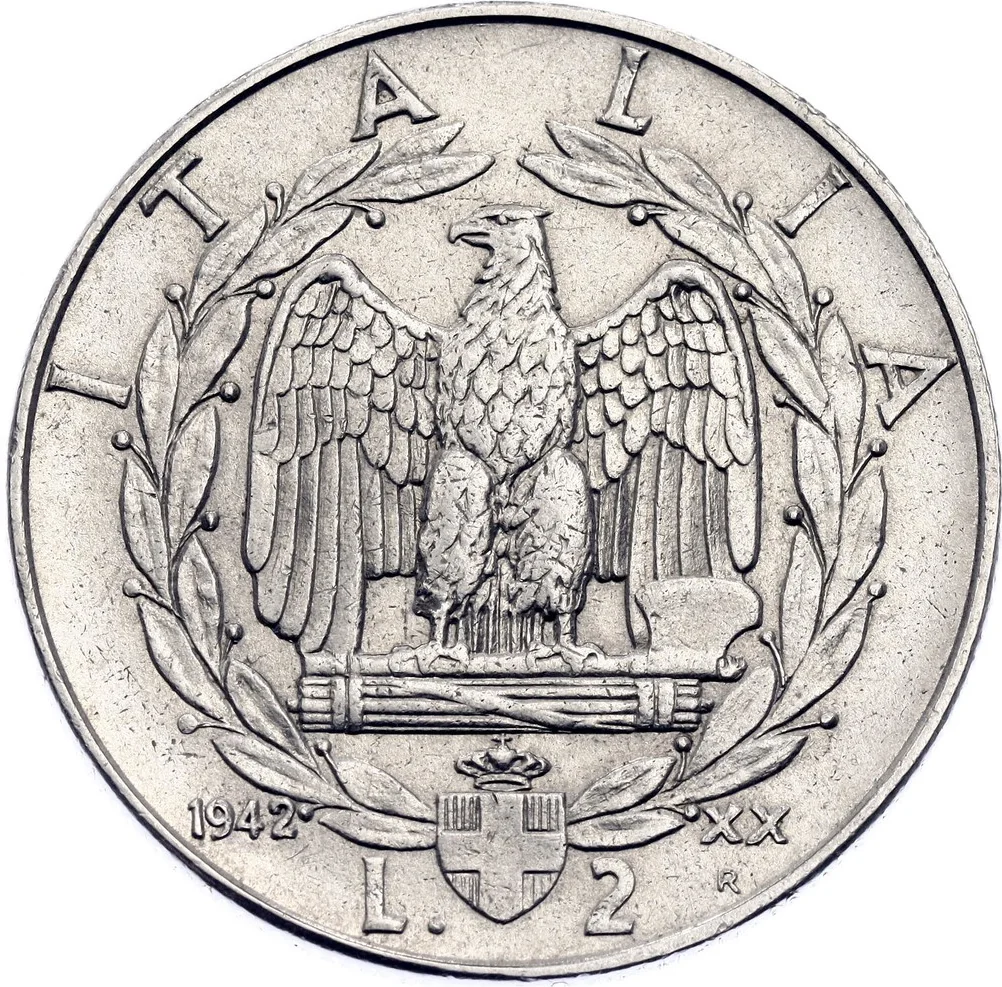
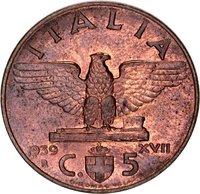
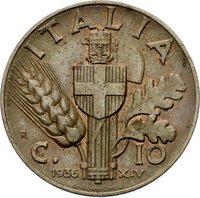
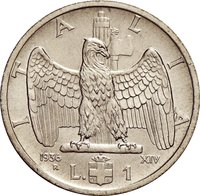
Profile eagle left, wings spread, clutching a fasces, within a laurel wreath. The Savoy shield at top divides the date and value; mint mark and Fascist Era year flank the value below.
Inscription:
ITALIA
1936
L. 2
XIV
R
1936
L. 2
XIV
R
Script: Latin
Engraver: Giuseppe Romagnoli
Edge
Plain
Mints
| Name | Mark |
|---|---|
| Rome | R |
Historical background
In 1936, Italy’s currency situation was fundamentally shaped by the pressures of autarky, international isolation, and the colossal costs of Mussolini’s imperial ambitions, most notably the invasion of Ethiopia in 1935. The League of Nations’ imposition of economic sanctions in late 1935 severely disrupted Italy’s foreign trade and access to key resources like gold and foreign exchange. In response, the Fascist regime intensified its drive for economic self-sufficiency, implementing strict currency controls to prevent capital flight and conserve dwindling gold reserves. The lira was effectively placed in a straitjacket, with its official rate artificially maintained by government fiat rather than market forces, creating a growing disconnect between its domestic purchasing power and international value.
This period saw the proliferation of multiple, confusing exchange rates—a "licit" official rate for essential imports and debt service, and various "quota" rates for other transactions, alongside a thriving black market. The government, through institutions like the “Ufficio Italiano Cambi” (Italian Exchange Office), exerted total control over all foreign currency transactions, mandating that exporters surrender their foreign earnings to the state. This complex system was designed to prioritize the regime’s political and military goals over economic stability, directing scarce foreign currency toward raw materials for industry and armaments, while severely restricting imports for civilian consumption.
Consequently, by 1936, the Italian lira was a heavily managed and increasingly unstable currency, propped up by controls rather than genuine economic strength. The strain of financing the Ethiopian war and the ongoing costs of military preparedness drained the treasury and set the stage for a significant devaluation. Indeed, in October 1936, shortly after the period in question, Mussolini was forced to officially devalue the lira by approximately 41%, adjusting the pound sterling exchange rate from £1 = 92 lire to £1 = 130 lire. This devaluation was a stark admission of the economic pressures that the regime’s policies had created, marking a currency crisis managed through authoritarian control rather than resolved.
This period saw the proliferation of multiple, confusing exchange rates—a "licit" official rate for essential imports and debt service, and various "quota" rates for other transactions, alongside a thriving black market. The government, through institutions like the “Ufficio Italiano Cambi” (Italian Exchange Office), exerted total control over all foreign currency transactions, mandating that exporters surrender their foreign earnings to the state. This complex system was designed to prioritize the regime’s political and military goals over economic stability, directing scarce foreign currency toward raw materials for industry and armaments, while severely restricting imports for civilian consumption.
Consequently, by 1936, the Italian lira was a heavily managed and increasingly unstable currency, propped up by controls rather than genuine economic strength. The strain of financing the Ethiopian war and the ongoing costs of military preparedness drained the treasury and set the stage for a significant devaluation. Indeed, in October 1936, shortly after the period in question, Mussolini was forced to officially devalue the lira by approximately 41%, adjusting the pound sterling exchange rate from £1 = 92 lire to £1 = 130 lire. This devaluation was a stark admission of the economic pressures that the regime’s policies had created, marking a currency crisis managed through authoritarian control rather than resolved.
Series: 1936 Italy circulation coins
🌟 Uncommon