

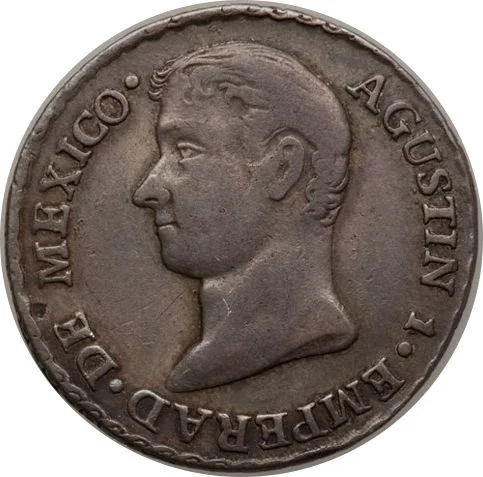
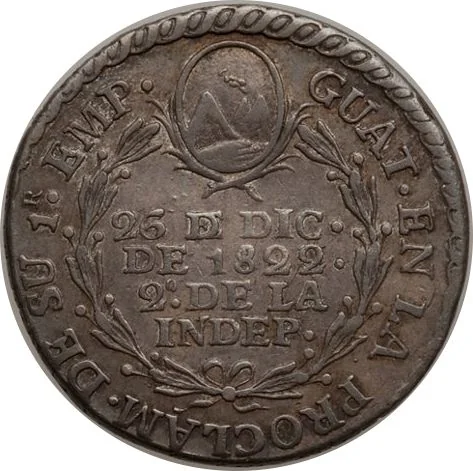
1 real – Guatemala
Add to wishlist
Circulating commemorative coins
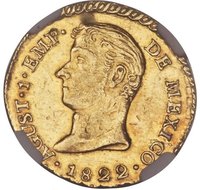
Commemoration: Proclamation of Agustín de Iturbide in Guatemala City
Guatemala
Obverse
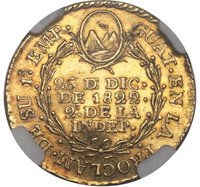
Reverse
Description:
Mountain view with date in wreath, encircled by legend.
Inscription:
GUAT · EN LA PROCLAM · DE · SU 1R. EMP ·
26 DE DIC ·
DE 1822 ·
2: DE LA
INDEP ·
26 DE DIC ·
DE 1822 ·
2: DE LA
INDEP ·
Script: Latin
Edge
Mintings
| Year | Mint Mark | Mintage | Quality | Collection |
|---|---|---|---|---|
| 1822 | — | — |
Historical background
In 1822, Guatemala was navigating the complex monetary transition from Spanish colonial rule to independence as part of the newly formed First Mexican Empire under Agustín de Iturbide. The currency situation was characterized by severe scarcity and confusion, a direct legacy of the colonial period. The economy relied heavily on a mix of physical commodities like cacao and Spanish colonial coinage, primarily silver reales and gold escudos, but these were in critically short supply due to decades of economic neglect, the disruption of the independence wars (1811-1821), and the cessation of regular shipments of minted coin from Mexico.
The shortage of official coinage led to the widespread circulation of a variety of substitute and foreign currencies. These included macacos—crude, locally cut and counterstamped silver discs or fragments—as well as coins from other Spanish American regions and even older, defaced coins. This heterogeneous mix created significant challenges for commerce, as the value and purity of these mediums of exchange were inconsistent and difficult to verify. The lack of a unified, trusted currency system stifled trade and economic recovery, fostering a climate of uncertainty just as the nascent state was attempting to establish its sovereignty.
Authorities within the Captaincy General of Guatemala, now integrated into Mexico, had little practical power to resolve the crisis immediately. While the Mexican Empire proclaimed a unified monetary system based on the peso, the practical implementation in distant Guatemala was slow and ineffective. Consequently, the monetary landscape of 1822 remained one of acute scarcity, makeshift solutions, and de facto localization, reflecting the broader political and economic instability of the post-independence period in Central America.
The shortage of official coinage led to the widespread circulation of a variety of substitute and foreign currencies. These included macacos—crude, locally cut and counterstamped silver discs or fragments—as well as coins from other Spanish American regions and even older, defaced coins. This heterogeneous mix created significant challenges for commerce, as the value and purity of these mediums of exchange were inconsistent and difficult to verify. The lack of a unified, trusted currency system stifled trade and economic recovery, fostering a climate of uncertainty just as the nascent state was attempting to establish its sovereignty.
Authorities within the Captaincy General of Guatemala, now integrated into Mexico, had little practical power to resolve the crisis immediately. While the Mexican Empire proclaimed a unified monetary system based on the peso, the practical implementation in distant Guatemala was slow and ineffective. Consequently, the monetary landscape of 1822 remained one of acute scarcity, makeshift solutions, and de facto localization, reflecting the broader political and economic instability of the post-independence period in Central America.
✨ Legendary