

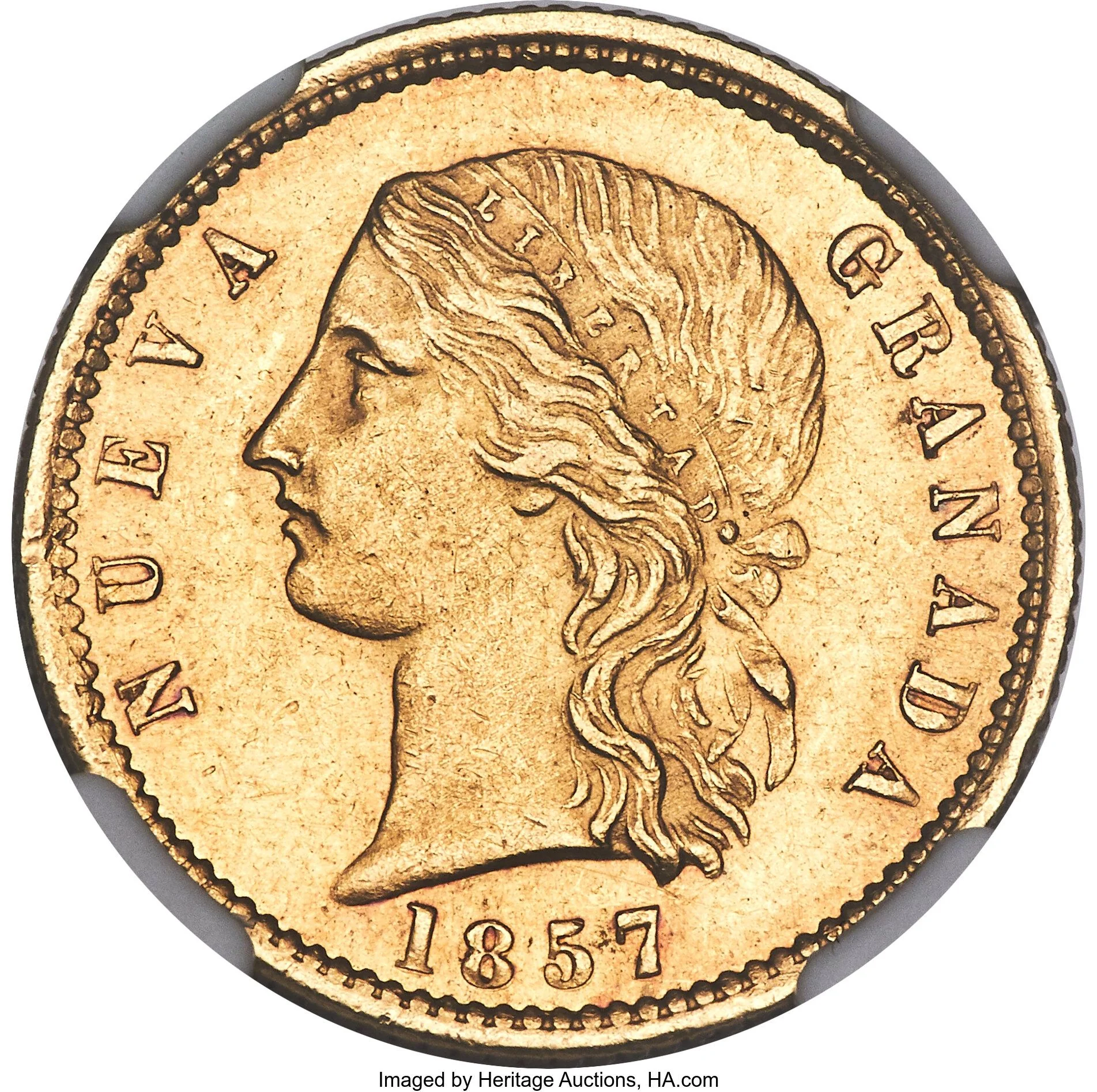
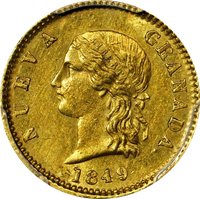
Obverse
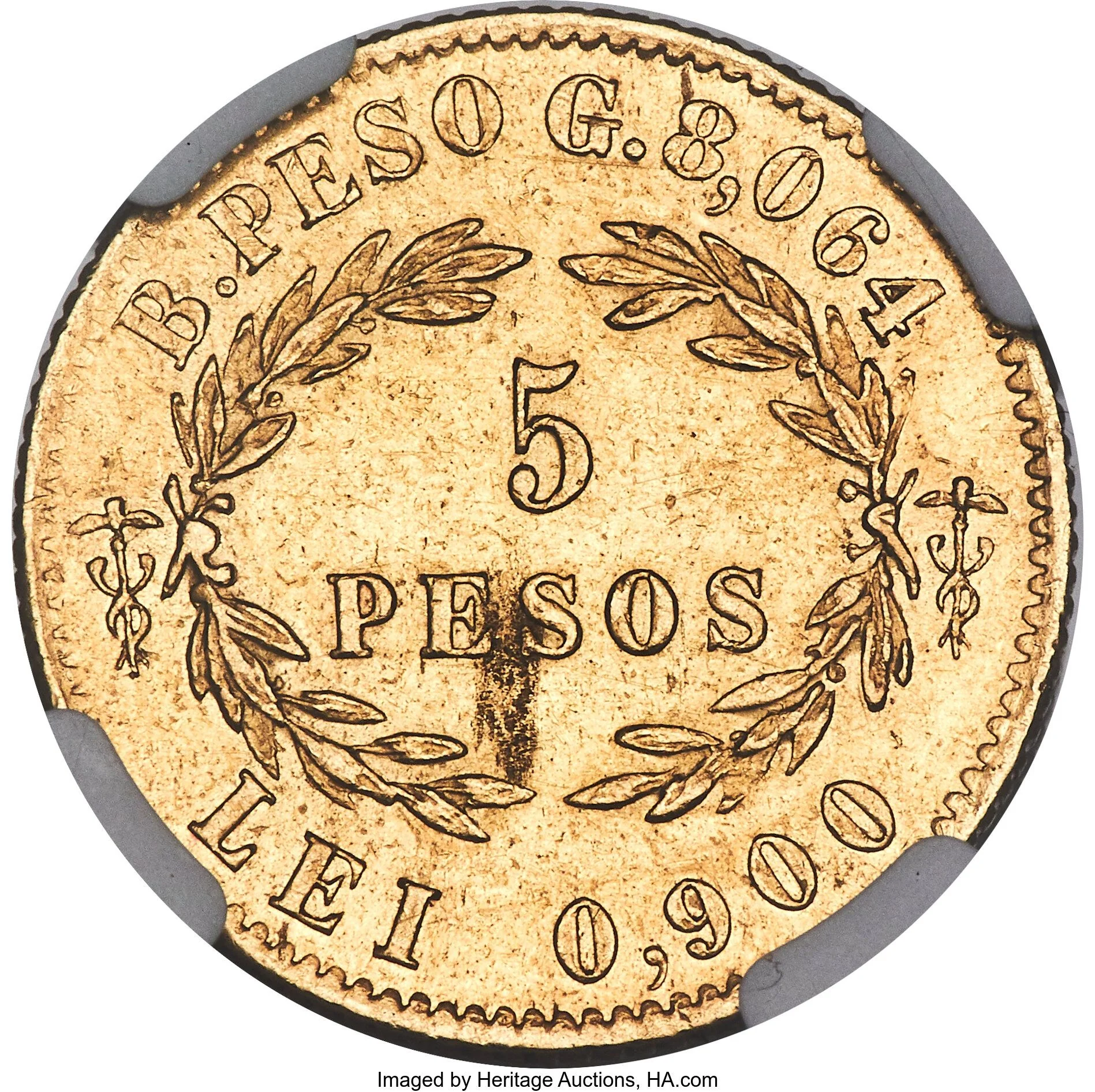
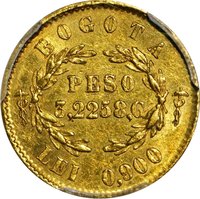
Reverse
Description:
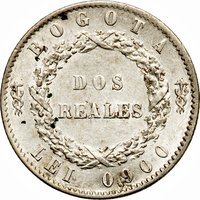
Denomination centered in wreath, weight above and fineness below. Caduceus on each side.
Inscription:
B.PESO G.8,064
5 PESOS
LEI 0,900
5 PESOS
LEI 0,900
Script: Latin
Edge
Mints
| Name | Mark |
|---|---|
| Bogota Mint | B |
Historical background
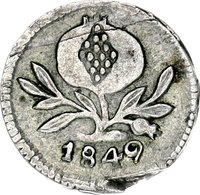
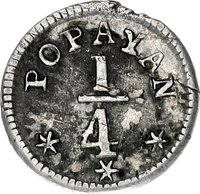
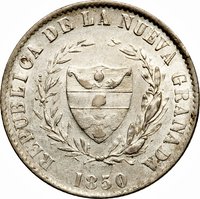
In 1849, Colombia was navigating a complex and fragmented currency landscape, a direct legacy of the post-independence era and the recent dissolution of Gran Colombia. The nation, then known as the Republic of New Granada, lacked a unified monetary system. Circulation was dominated by a chaotic mix of foreign coins, primarily Spanish colonial reales and British sovereigns, alongside a limited and uneven supply of domestically minted coinage from the Bogotá and Popayán mints. This heterogeneity stifled internal trade, complicated taxation, and reflected the weak central authority of the federalist government under President Tomás Cipriano de Mosquera.
The fundamental economic policy dividing the country was the intense debate between Protectionistas and Librecambistas (Free Traders). The currency issue was deeply entangled in this conflict. Protectionists advocated for a controlled, national currency to protect domestic industry, while Librecambistas, who gained influence in the late 1840s, pushed for free trade and the unrestricted circulation of stable foreign coin, particularly British gold, to facilitate international commerce, especially for the burgeoning tobacco and quinine exports. This ideological clash paralyzed comprehensive monetary reform.
Consequently, the state's fiscal health was precarious. The government struggled to enforce its legal tender laws and faced constant budget shortfalls, partly due to the difficulty of collecting taxes in a reliable and uniform medium. While the 1846 monetary law had attempted to decimalize the system on a silver standard, its implementation was partial and ineffective. Thus, in 1849, Colombia remained without a trustworthy national currency, a situation that underscored its economic instability and hindered national integration, setting the stage for more decisive, but tumultuous, liberal reforms in the coming decade.
The fundamental economic policy dividing the country was the intense debate between Protectionistas and Librecambistas (Free Traders). The currency issue was deeply entangled in this conflict. Protectionists advocated for a controlled, national currency to protect domestic industry, while Librecambistas, who gained influence in the late 1840s, pushed for free trade and the unrestricted circulation of stable foreign coin, particularly British gold, to facilitate international commerce, especially for the burgeoning tobacco and quinine exports. This ideological clash paralyzed comprehensive monetary reform.
Consequently, the state's fiscal health was precarious. The government struggled to enforce its legal tender laws and faced constant budget shortfalls, partly due to the difficulty of collecting taxes in a reliable and uniform medium. While the 1846 monetary law had attempted to decimalize the system on a silver standard, its implementation was partial and ineffective. Thus, in 1849, Colombia remained without a trustworthy national currency, a situation that underscored its economic instability and hindered national integration, setting the stage for more decisive, but tumultuous, liberal reforms in the coming decade.
Series: 1849 Colombia circulation coins
✨ Legendary