

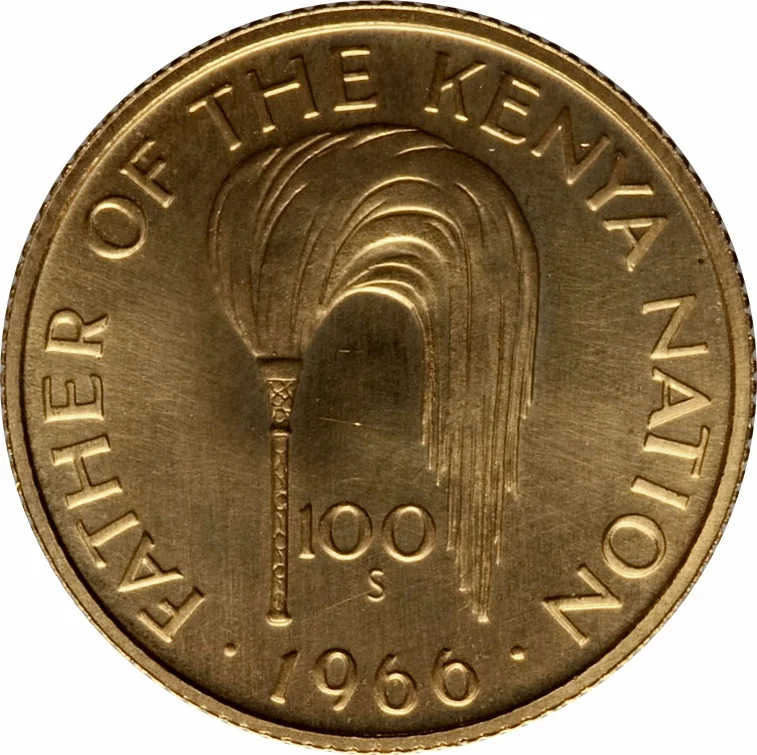
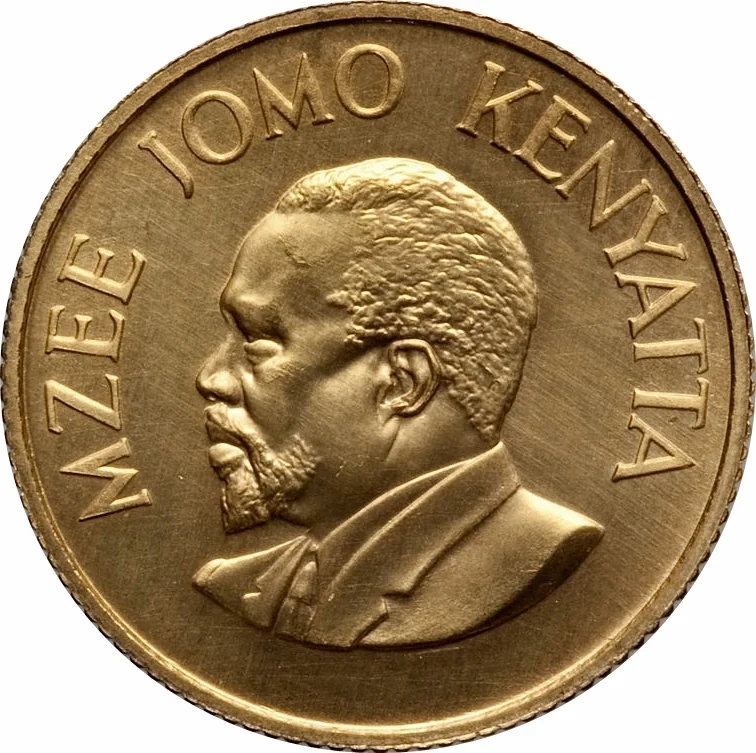
100 Shillings (Jomo Kenyatta) – Kenya
Non-circulating coins
Commemoration: 75th Anniversary of the Birthday of Mzee Jomo Kenyatta
Series: FIrst president of Kenya
Kenya
Context

Material
References
KM: #Click to copy to clipboard7
Numista: #30799
Value
Exchange value: 100 KES
Bullion value: $1163.82
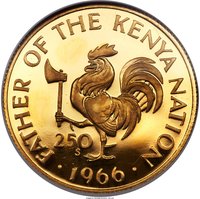
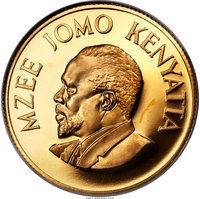
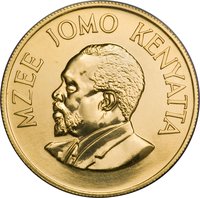
Obverse
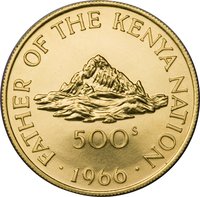
Reverse
Edge
Reeded
Categories
| Person> Politician |
Mints
| Name | Mark |
|---|---|
| Royal Mint (Tower Hill) | — |
Mintings
| Year | Mint Mark | Mintage | Quality | Collection |
|---|---|---|---|---|
| 1966 | — | — | ||
| 1966 | — | 7,500 | Proof |
Historical background
In 1966, Kenya faced a significant monetary transition as it moved to assert its economic sovereignty following independence in 1963. The nation was still part of the East African Currency Board (EACB), which issued a common shilling for Kenya, Uganda, and Tanzania. This arrangement, a colonial legacy, meant Kenya did not control its own money supply or central banking policy, limiting its ability to manage its economy independently. Pressure had been building to establish a distinct national currency as a symbol of identity and a tool for autonomous economic management.
Consequently, on September 14, 1966, the Kenyan government, under President Jomo Kenyatta, introduced the Kenyan shilling to replace the East African shilling. The new currency, issued by the newly established Central Bank of Kenya (founded in 1966), featured distinctly Kenyan imagery, including a portrait of Kenyatta and local wildlife. This move was not merely symbolic; it was a critical step in gaining control over monetary policy, allowing Kenya to set its own interest rates, manage foreign exchange reserves, and direct credit to priority domestic sectors.
The transition was executed smoothly over a short period, with the old EACB notes remaining legal tender for a brief window to ensure public confidence and avoid disruption. The 1966 currency change solidified Kenya's financial independence and laid the institutional foundation for its future economic development. It also marked the beginning of the end for the regional currency union, as Tanzania and Uganda soon followed with their own national currencies, leading to the eventual dissolution of the EACB.
Consequently, on September 14, 1966, the Kenyan government, under President Jomo Kenyatta, introduced the Kenyan shilling to replace the East African shilling. The new currency, issued by the newly established Central Bank of Kenya (founded in 1966), featured distinctly Kenyan imagery, including a portrait of Kenyatta and local wildlife. This move was not merely symbolic; it was a critical step in gaining control over monetary policy, allowing Kenya to set its own interest rates, manage foreign exchange reserves, and direct credit to priority domestic sectors.
The transition was executed smoothly over a short period, with the old EACB notes remaining legal tender for a brief window to ensure public confidence and avoid disruption. The 1966 currency change solidified Kenya's financial independence and laid the institutional foundation for its future economic development. It also marked the beginning of the end for the regional currency union, as Tanzania and Uganda soon followed with their own national currencies, leading to the eventual dissolution of the EACB.
✨ Legendary