

¼ dollar – United States
Add to wishlist
United States
Context
Years: 1873–1874
Issuer: United States
Period:
(since 1776)
Currency:
(since 1785)
Subdivision: ¼ dollar = 25 Cents
Total mintage: 2,304,062
Material
References
KM: #
Numista: #30784
Value
Exchange value: ¼ USD = $0.25
Bullion value: $14.37
Obverse
Description:
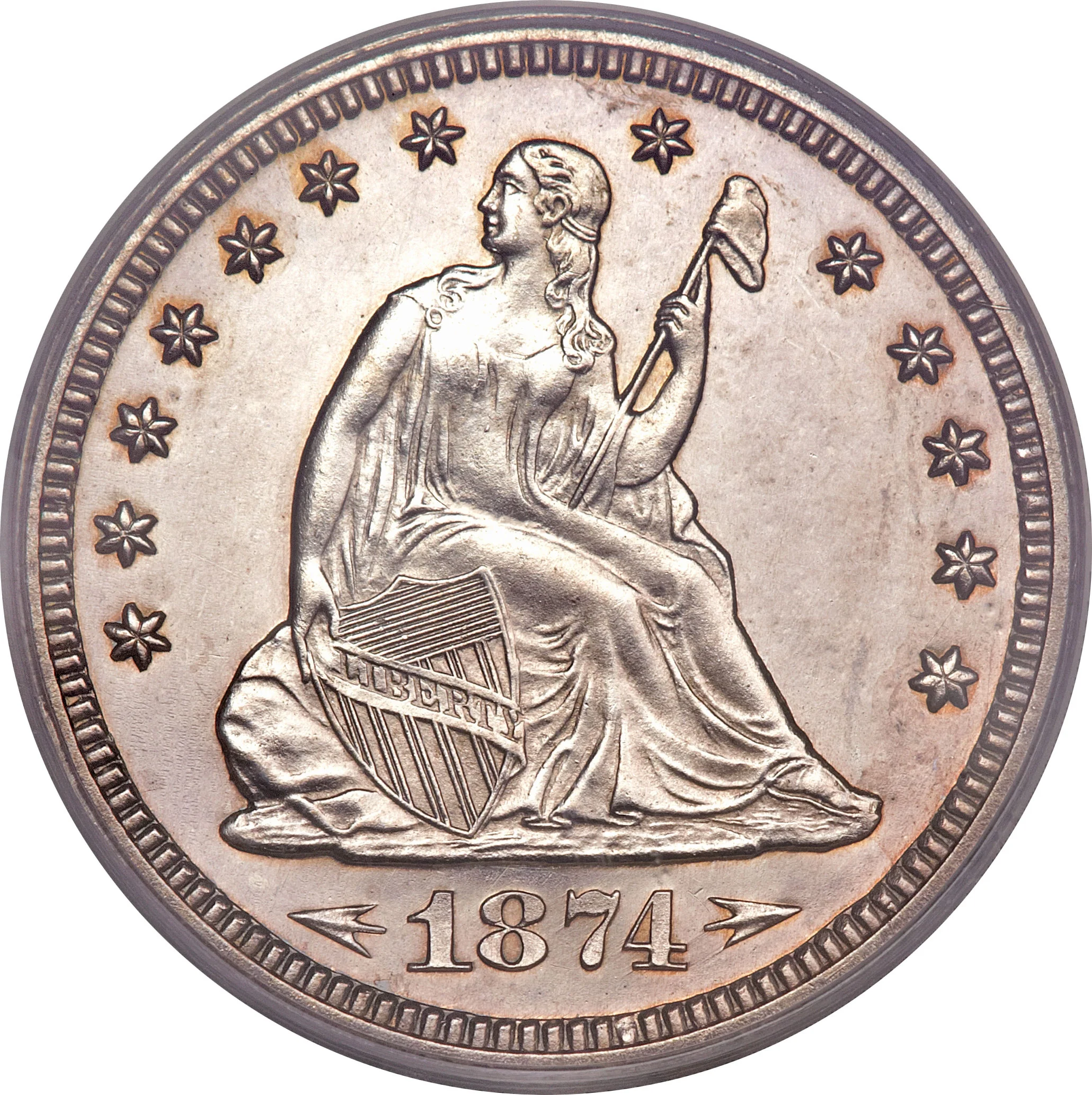
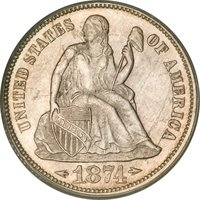
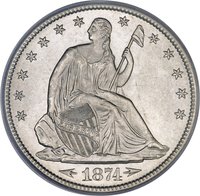
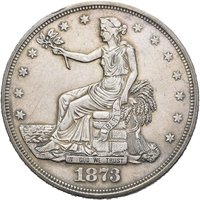
Seated Liberty facing right, holding cap on staff and shield, surrounded by 13 stars.
Inscription:
1874
Script: Latin
Engraver: Christian Gobrecht
Reverse
Description:
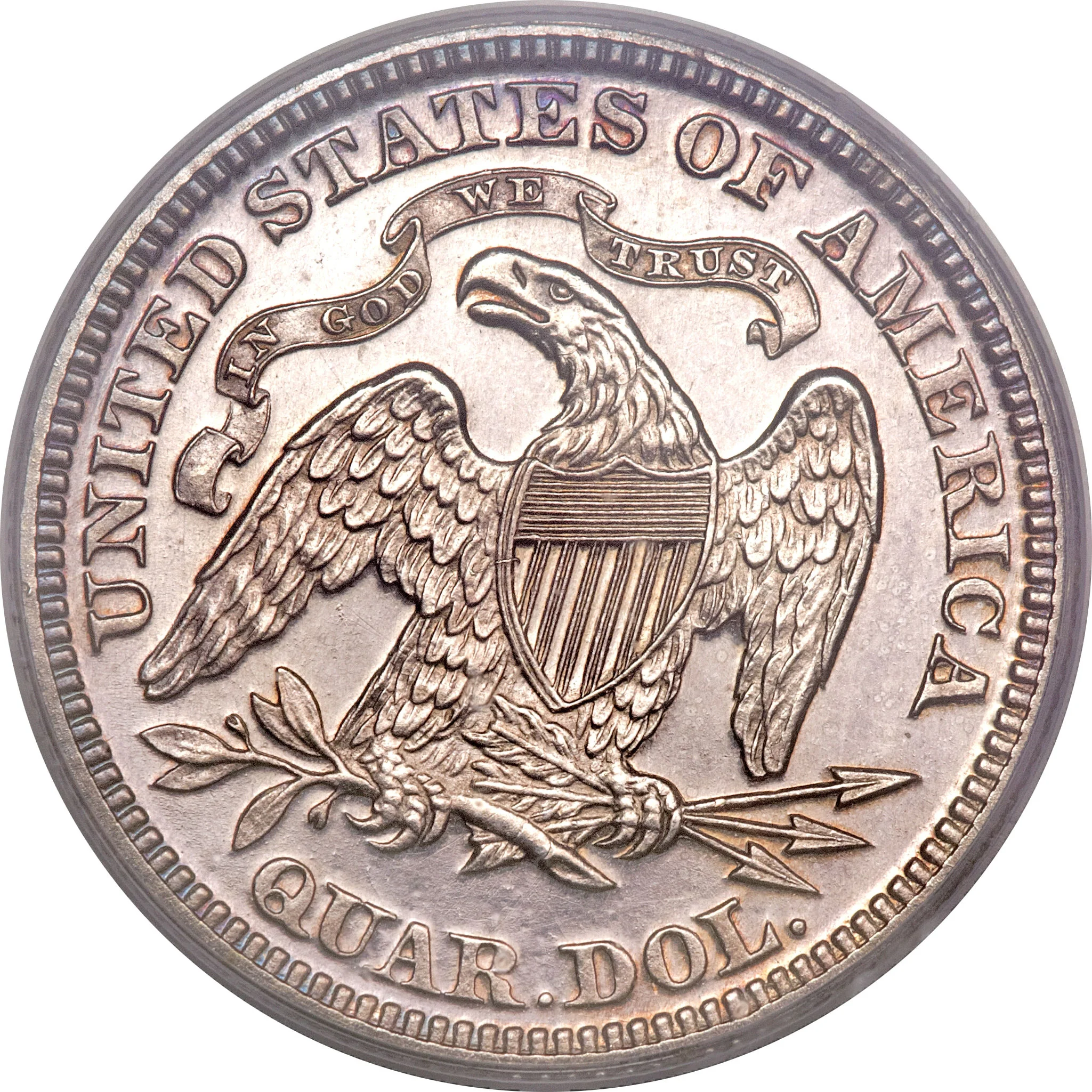
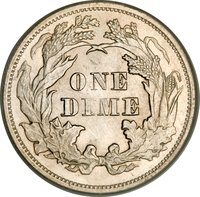
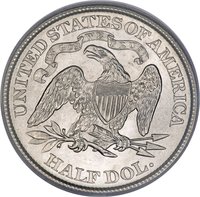
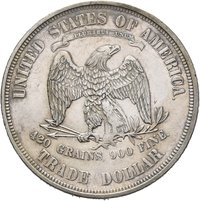
Eagle clutching arrows and an olive branch, with a motto banner above.
Inscription:
UNITED STATES OF AMERICA
IN GOD WE TRUST
QUAR. DOL.
IN GOD WE TRUST
QUAR. DOL.
Script: Latin
Engraver: Christian Gobrecht
Edge
Reeded
Categories
| Animal> Bird> Eagle |
| Symbol> Allegory |
| Symbol> Phrygian cap |
| Object> Cold weapons |
Mints
| Name | Mark |
|---|---|
| United States Mint of Philadelphia | — |
| United States Mint of Carson City | CC |
| United States Mint of San Francisco | S |
Mintings
Historical background
The year 1873 marked a pivotal moment in American monetary history with the passage of the Coinage Act, often condemned by its opponents as "The Crime of '73." This legislation fundamentally revised the nation's coinage system, most consequentially by ending the free coinage of silver. Prior to the act, the United States had operated on a bimetallic standard, where both gold and silver were minted into coins at a fixed ratio. The 1873 act demonetized the standard silver dollar, effectively placing the country on a de facto gold standard.
This legislative shift occurred in a complex economic context. A global oversupply of silver, particularly from new mines in the American West, was driving down its market value relative to gold, threatening the stability of the bimetallic system. Furthermore, the newly unified Germany had recently adopted a gold standard, influencing international financial trends. Proponents of the act, including Eastern financiers and industrialists, argued that a single gold standard was essential for stable currency, predictable contracts, and integration with the major financial centers of Europe. They framed the move as a necessary modernization of the nation's money.
The act's passage, however, ignited immediate and lasting political fury. It was seen by agrarian interests, debtors, and Western silver miners as a corrupt bargain that contracted the money supply to benefit creditors. They argued it caused deflation, making it harder to repay loans and depressing agricultural prices. This grievance fueled the rise of the "Free Silver" movement, becoming a central and explosive issue in American politics for the next quarter-century, culminating in William Jennings Bryan's famous "Cross of Gold" speech in 1896. Thus, 1873 set the stage for a deep sectional and economic divide over the very foundation of the nation's currency.
This legislative shift occurred in a complex economic context. A global oversupply of silver, particularly from new mines in the American West, was driving down its market value relative to gold, threatening the stability of the bimetallic system. Furthermore, the newly unified Germany had recently adopted a gold standard, influencing international financial trends. Proponents of the act, including Eastern financiers and industrialists, argued that a single gold standard was essential for stable currency, predictable contracts, and integration with the major financial centers of Europe. They framed the move as a necessary modernization of the nation's money.
The act's passage, however, ignited immediate and lasting political fury. It was seen by agrarian interests, debtors, and Western silver miners as a corrupt bargain that contracted the money supply to benefit creditors. They argued it caused deflation, making it harder to repay loans and depressing agricultural prices. This grievance fueled the rise of the "Free Silver" movement, becoming a central and explosive issue in American politics for the next quarter-century, culminating in William Jennings Bryan's famous "Cross of Gold" speech in 1896. Thus, 1873 set the stage for a deep sectional and economic divide over the very foundation of the nation's currency.
⭐ Somewhat Rare