

1000 Đồng – Vietnam
Vietnam
Context

Material
Diameter: 38.7 mm
Weight: 20 g
Thickness: 2.45 mm
Shape: Round
Composition: Nordic gold
Magnetic: No
Technique: Milled
References
Numista: #306958
Value
Exchange value: 1000 VND
Obverse
Description:
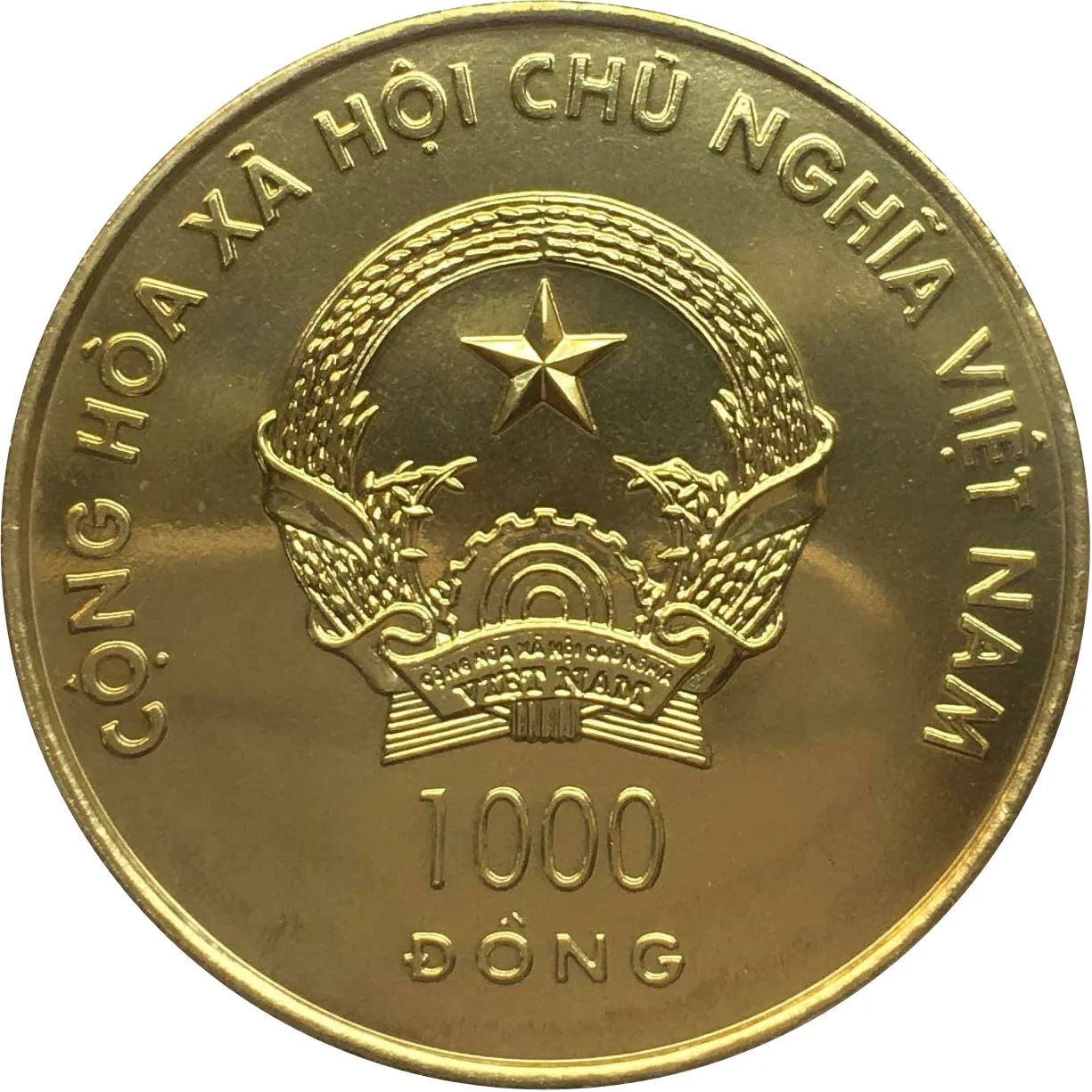
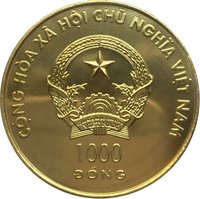
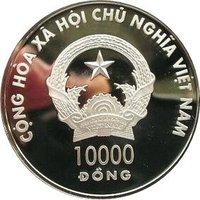
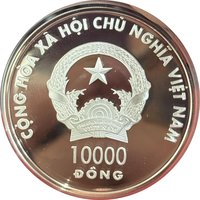
Coat of arms with text, denomination below.
Inscription:
CỘNG HÒA XÃ HỘI CHỦ NGHĨA VIỆT NAM
1000
ĐỒNG
1000
ĐỒNG
Translation:
SOCIALIST REPUBLIC OF VIETNAM
1000
DONG
1000
DONG
Script: Latin
Language: Vietnamese
Reverse
Description:
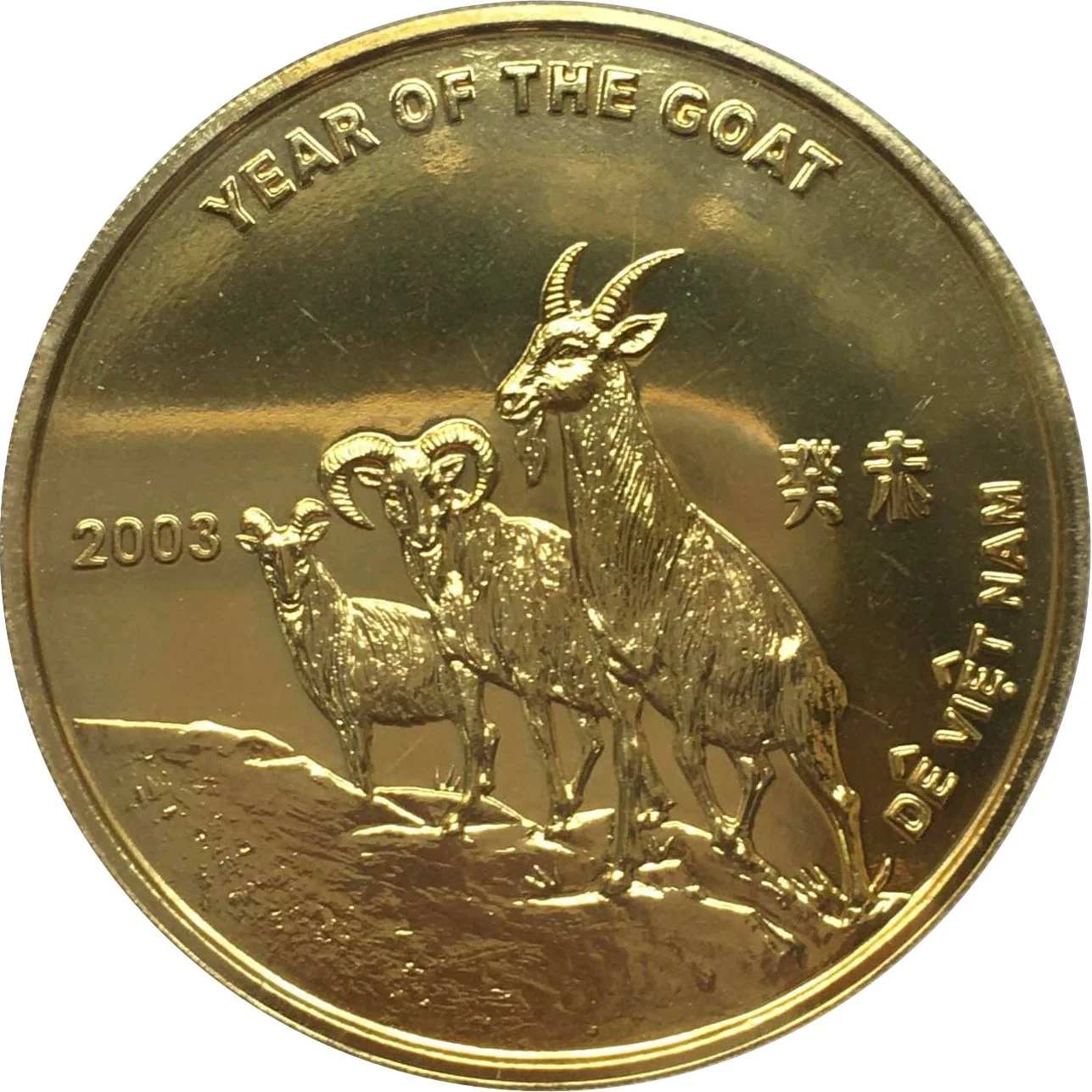
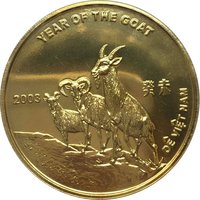
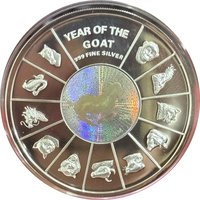
Three goats on a rock, encircled by inscription.
Inscription:
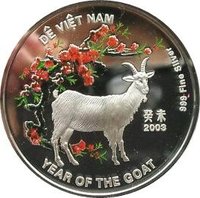
YEAR OF THE GOAT
2003 癸未
DÊ VIỆT NAM
2003 癸未
DÊ VIỆT NAM
Translation:
Year of the Goat
2003 Gui-Wei
Socialist Republic of Vietnam
2003 Gui-Wei
Socialist Republic of Vietnam
Script: Latin
Languages: Chinese, Vietnamese
Edge
Reeded
Mints
| Name | Mark |
|---|---|
| Singapore Mint | — |
Mintings
| Year | Mint Mark | Mintage | Quality | Collection |
|---|---|---|---|---|
| 2003 | — | 28,000 |
Historical background
In 2003, Vietnam's currency situation was characterized by a tightly managed exchange rate regime under the State Bank of Vietnam (SBV). The Vietnamese Dong (VND) was pegged to the US Dollar, but not at a rigidly fixed rate. Instead, the SBV set a daily reference rate and allowed the currency to trade within a narrow band, typically around 0.25% on either side. This system aimed to provide stability for trade and investment, which were growing rapidly as the economy continued its Đổi Mới (Renewal) transition, while still allowing the central bank a degree of control to manage external pressures.
The primary challenge for monetary authorities was balancing the goals of exchange rate stability, export competitiveness, and controlling inflation. A weak Dong helped boost exports, a key driver of economic growth, but also risked importing inflation by making foreign goods more expensive. Conversely, a stronger Dong could help curb inflation but might hurt the burgeoning export sector. In practice, the SBV often leaned towards a gradual, managed depreciation of the Dong against the Dollar throughout this period to support the export-oriented growth strategy, though this required careful management of domestic liquidity and foreign exchange reserves.
Furthermore, a significant parallel market for US Dollars existed alongside the official banking system. This black market thrived due to lingering public preference for holding hard currency, restrictions on capital flows, and sometimes a perceived gap between the official rate and market realities. The government and SBV viewed this dual system as a problem, undertaking efforts to bolster confidence in the Dong and tighten control over foreign exchange transactions. Overall, the 2003 currency landscape reflected a developing economy cautiously navigating integration into the global market while maintaining state control over its monetary framework.
The primary challenge for monetary authorities was balancing the goals of exchange rate stability, export competitiveness, and controlling inflation. A weak Dong helped boost exports, a key driver of economic growth, but also risked importing inflation by making foreign goods more expensive. Conversely, a stronger Dong could help curb inflation but might hurt the burgeoning export sector. In practice, the SBV often leaned towards a gradual, managed depreciation of the Dong against the Dollar throughout this period to support the export-oriented growth strategy, though this required careful management of domestic liquidity and foreign exchange reserves.
Furthermore, a significant parallel market for US Dollars existed alongside the official banking system. This black market thrived due to lingering public preference for holding hard currency, restrictions on capital flows, and sometimes a perceived gap between the official rate and market realities. The government and SBV viewed this dual system as a problem, undertaking efforts to bolster confidence in the Dong and tighten control over foreign exchange transactions. Overall, the 2003 currency landscape reflected a developing economy cautiously navigating integration into the global market while maintaining state control over its monetary framework.
Series: Oriental Calendar

✨ Legendary