

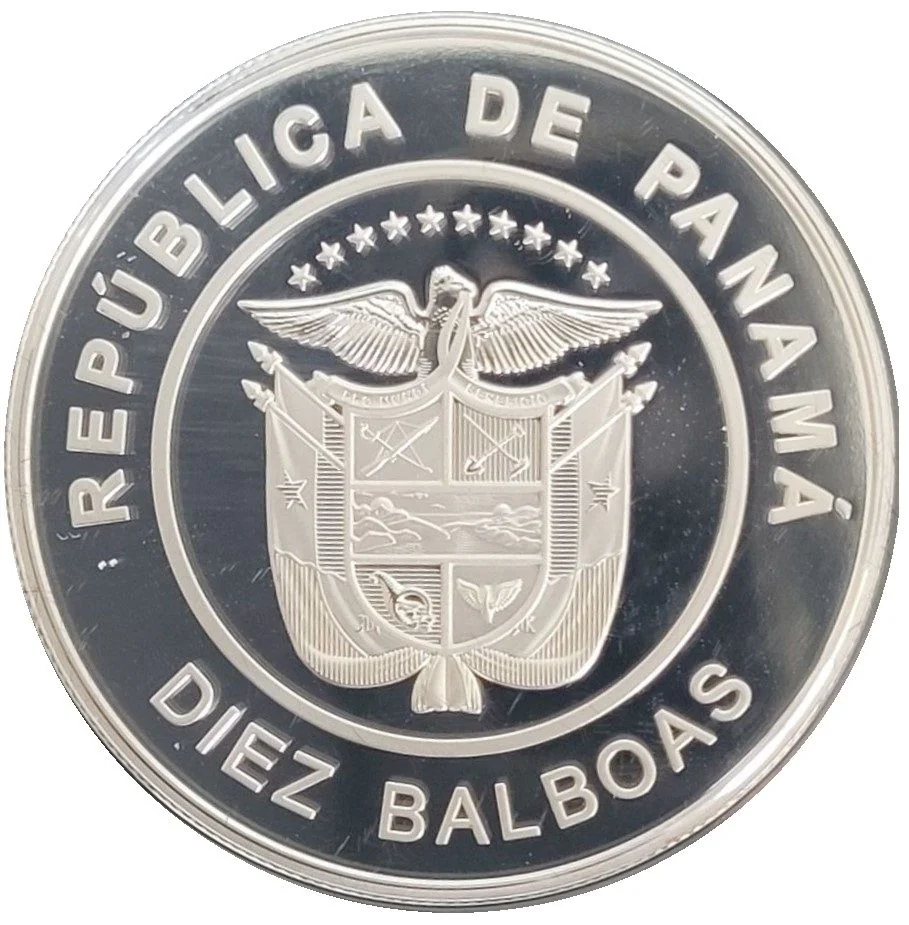
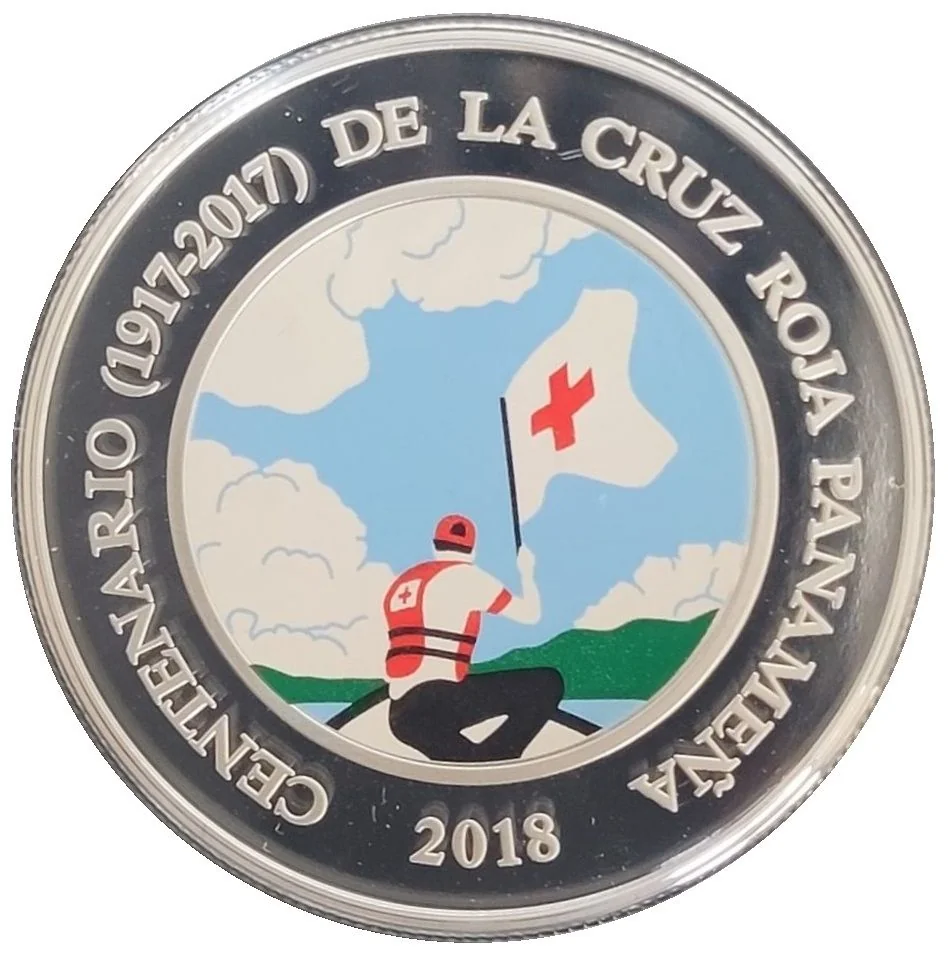
10 Balboas – Panama
Panama

Material
References
KM: #Click to copy to clipboard180
Numista: #306806
Value
Exchange value: 10 PAB
Bullion value: $45.39
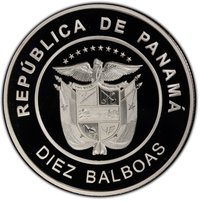
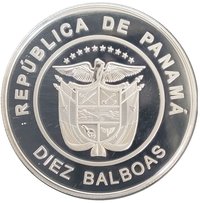
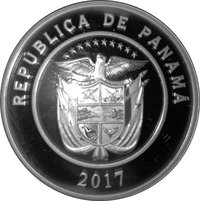
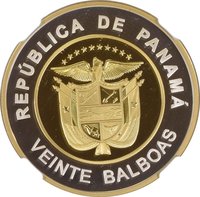
Obverse
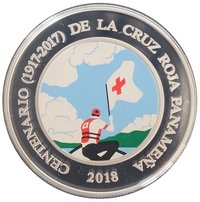
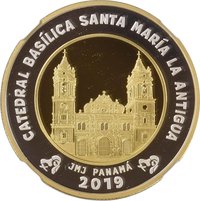
Reverse
Edge
Categories
| Symbol> Flag |
| Organization> Red Cross |
| Health |
| Symbols> Coat of Arms |
| Symbol> Cross |
Mints
| Name | Mark |
|---|---|
| Royal Canadian Mint of Ottawa | — |
Mintings
| Year | Mint Mark | Mintage | Quality | Collection |
|---|---|---|---|---|
| 2018 | — | — | Proof |
Historical background
Panama's currency situation in 2018 was defined by its unique and long-standing monetary framework, which remained a cornerstone of economic stability. Since 1904, the country has used the US dollar as its official legal tender, a system known as full dollarization. This means the US dollar is used for all daily transactions, contracts, and financial accounts, while Panama mints its own subsidiary coinage, the Panamanian balboa, which is pegged at parity with the dollar. Consequently, Panama does not have a central bank or an independent monetary policy, relinquishing control over interest rates and money supply to the US Federal Reserve.
This dollarized system provided significant benefits in 2018, including low inflation, which hovered around 1-2%, and a stable environment for foreign investment and international trade. The stability of the US dollar shielded the economy from the currency volatility experienced by many of its regional neighbors. However, the system also presented notable constraints. Panama could not devalue its currency to boost competitiveness, and its fiscal policy was the primary tool for managing the economy. Furthermore, the country's banking sector and overall liquidity remained heavily dependent on US monetary policy and the inflow of dollars from global trade, particularly through the Panama Canal.
The year 2018 saw this framework operating against a backdrop of steady economic growth, projected at over 4%, driven by construction, logistics, and Canal-related services. There were no major shifts or crises in the currency regime itself, as its legitimacy was not in political question. The primary financial discussions in Panama that year focused less on currency and more on fiscal discipline, infrastructure spending, and maintaining transparency in its financial sector to safeguard its international reputation and the continued inflow of dollars necessary to sustain its dollarized economy.
This dollarized system provided significant benefits in 2018, including low inflation, which hovered around 1-2%, and a stable environment for foreign investment and international trade. The stability of the US dollar shielded the economy from the currency volatility experienced by many of its regional neighbors. However, the system also presented notable constraints. Panama could not devalue its currency to boost competitiveness, and its fiscal policy was the primary tool for managing the economy. Furthermore, the country's banking sector and overall liquidity remained heavily dependent on US monetary policy and the inflow of dollars from global trade, particularly through the Panama Canal.
The year 2018 saw this framework operating against a backdrop of steady economic growth, projected at over 4%, driven by construction, logistics, and Canal-related services. There were no major shifts or crises in the currency regime itself, as its legitimacy was not in political question. The primary financial discussions in Panama that year focused less on currency and more on fiscal discipline, infrastructure spending, and maintaining transparency in its financial sector to safeguard its international reputation and the continued inflow of dollars necessary to sustain its dollarized economy.



✨ Legendary