

½ crown (The Queen and Prince Philip) – Gibraltar
Add to wishlist
Non-circulating coins
Commemoration: The Queen and Prince Philip's 70th wedding anniversary
United Kingdom
Context
Material
Diameter: 32 mm
Weight: 14.14 g
Shape: Round
Composition: Copper-nickel
Alignment: Medal alignment
flip
References
KM: #
Numista: #304815
Obverse
Description:
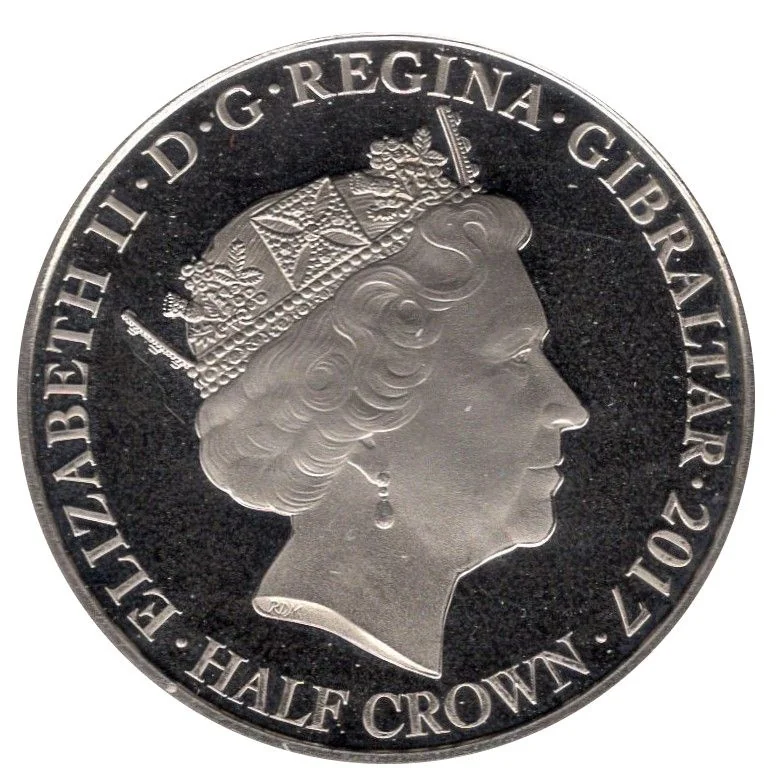
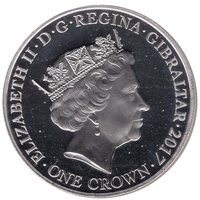
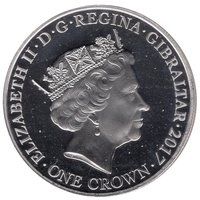
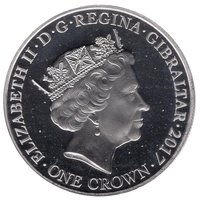
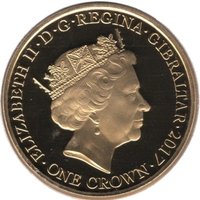
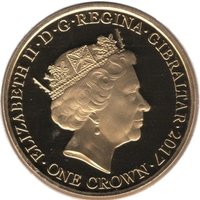
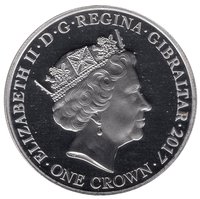
Queen Elizabeth II facing right, wearing the George IV State Diadem, with legend, date, and denomination.
Inscription:
ELIZABETH II · D · G · REGINA · GIBRALTAR · 2017
· HALF CROWN ·
· HALF CROWN ·
Script: Latin
Engraver: Raphael David Maklouf
Reverse
Description:
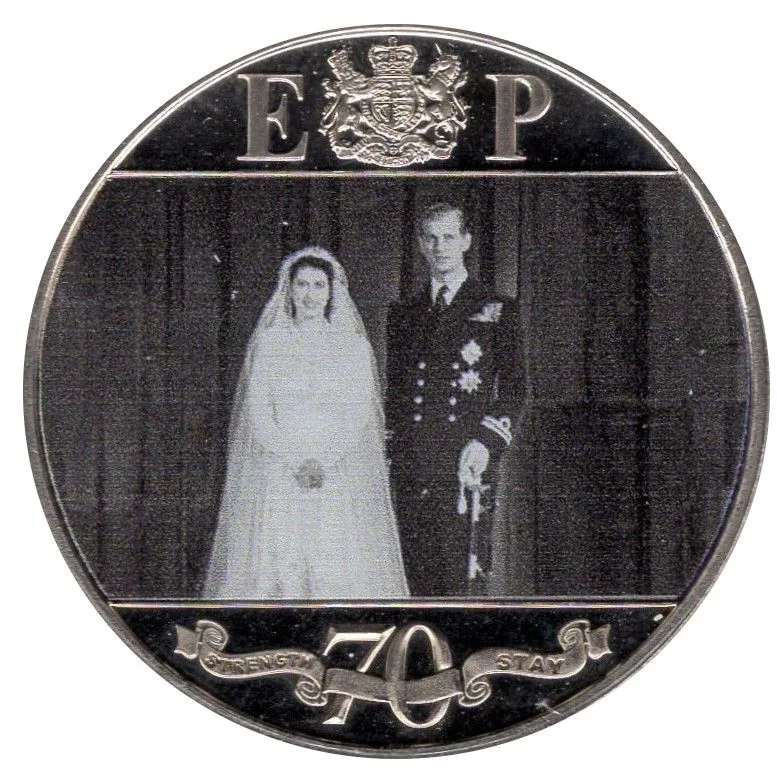
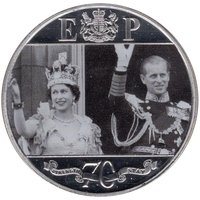
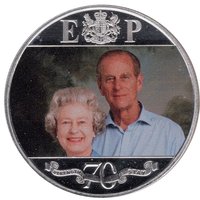
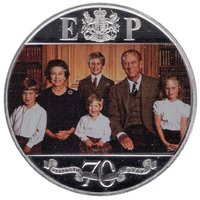
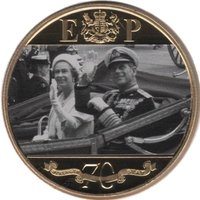
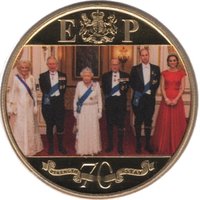
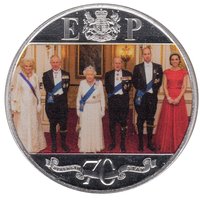
A portrait of Princess Elizabeth and Lieutenant Philip Mountbatten on their wedding day by Alexander Bassano. Above, the letters 'E' and 'P' flank the Royal Coat of Arms. Below, the number 70 is entwined with a ribbon bearing the words 'Strength' and 'Stay'—her description of him on their Golden Wedding Anniversary.
Inscription:
E P
STRENGTH 70 STAY
STRENGTH 70 STAY
Script: Latin
Edge
Alternating plain and reeded sections (6 each)
Categories
| Marriage |
Mints
| Name | Mark |
|---|---|
| Tower Mint | — |
Mintings
| Year | Mint Mark | Mintage | Quality | Collection |
|---|---|---|---|---|
| 2017 | — | — |
Historical background
In 2017, Gibraltar's currency situation remained defined by its longstanding and pragmatic use of Sterling (£) as its sole official currency, a status unchanged since the 1890s. As a British Overseas Territory, its economy is deeply integrated with the United Kingdom, making Sterling the logical choice for monetary stability and trade. However, Gibraltar retains the right to issue its own banknotes and coins, which are denominated in pounds sterling and circulate alongside Bank of England and Scottish notes at parity. These distinctive Gibraltar notes are legal tender only within the territory, symbolizing a degree of fiscal identity while being fully backed by Sterling reserves held at the Bank of England.
The year was particularly significant due to the unfolding implications of the UK's 2016 vote to leave the European Union ("Brexit"). Gibraltar, which had voted overwhelmingly to remain, faced considerable economic uncertainty, with the future of its financial services and online gaming sectors heavily dependent on EU passporting rights and cross-border fluidity with Spain. While the currency itself was not under immediate threat, the value and stability of the Pound Sterling were subject to wider Brexit-induced volatility. This created a climate of cautious monitoring, as Gibraltar's government sought assurances that any future UK-EU agreement would protect its economic model and, by extension, the purchasing power of its Sterling.
Consequently, 2017 was a year of strategic positioning rather than monetary change. The Gibraltar government consistently affirmed its commitment to Sterling, ruling out any adoption of alternative currencies like the Euro, and focused its efforts on securing a favourable post-Brexit arrangement. The currency situation thus reflected a dual reality: unwavering domestic stability in the day-to-day use of Gibraltar-issued Sterling, set against a backdrop of profound external economic and political negotiations that would determine the territory's future prosperity.
The year was particularly significant due to the unfolding implications of the UK's 2016 vote to leave the European Union ("Brexit"). Gibraltar, which had voted overwhelmingly to remain, faced considerable economic uncertainty, with the future of its financial services and online gaming sectors heavily dependent on EU passporting rights and cross-border fluidity with Spain. While the currency itself was not under immediate threat, the value and stability of the Pound Sterling were subject to wider Brexit-induced volatility. This created a climate of cautious monitoring, as Gibraltar's government sought assurances that any future UK-EU agreement would protect its economic model and, by extension, the purchasing power of its Sterling.
Consequently, 2017 was a year of strategic positioning rather than monetary change. The Gibraltar government consistently affirmed its commitment to Sterling, ruling out any adoption of alternative currencies like the Euro, and focused its efforts on securing a favourable post-Brexit arrangement. The currency situation thus reflected a dual reality: unwavering domestic stability in the day-to-day use of Gibraltar-issued Sterling, set against a backdrop of profound external economic and political negotiations that would determine the territory's future prosperity.
💎 Extremely Rare