

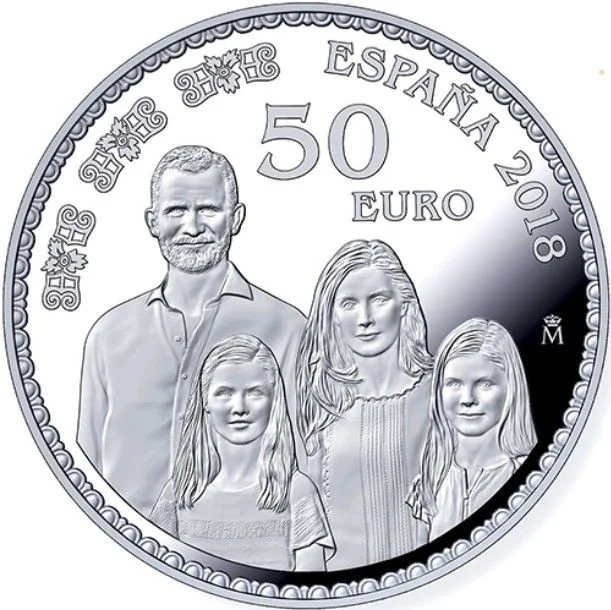
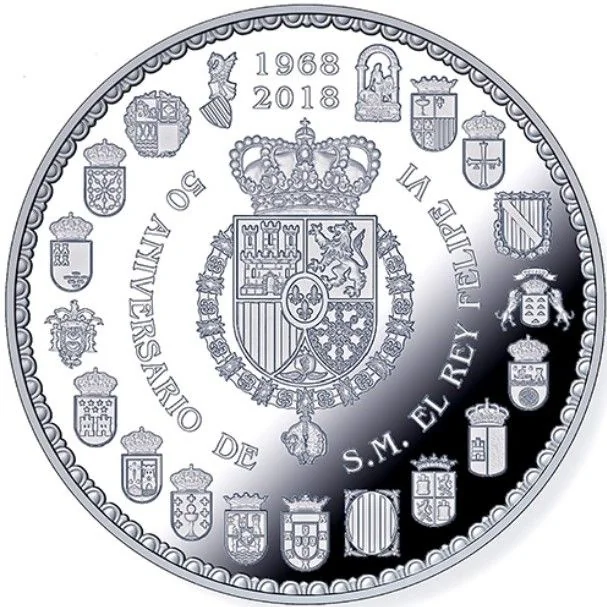
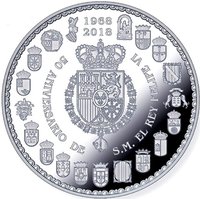
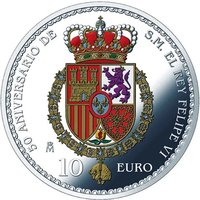
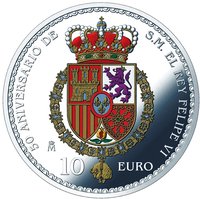
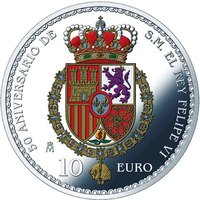
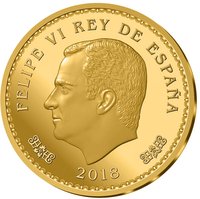
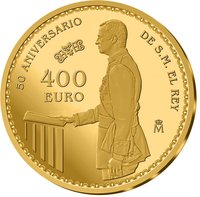
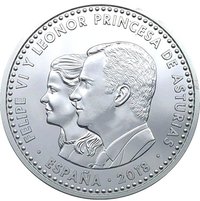
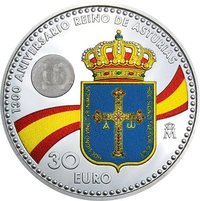
Obverse
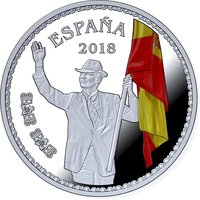
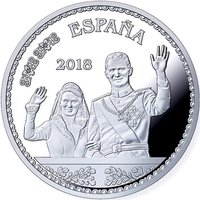
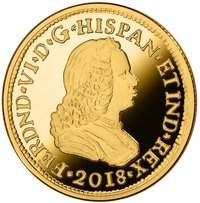
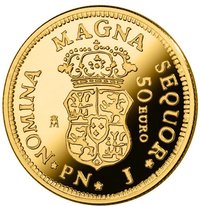
Reverse
Edge
Plain
Categories
| Symbols> Coat of Arms |
| Event> Birth anniversary |
| Symbol> Wreath |
| Person> Monarch |
Mints
| Name | Mark |
|---|---|
| Royal Mint of Madrid | (M) |
Mintings
| Year | Mint Mark | Mintage | Quality | Collection |
|---|---|---|---|---|
| 2018 | M | 2,000 | Proof |
Historical background
In 2018, Spain was a fully integrated member of the Eurozone, having used the euro as its sole legal tender since 2002. The country no longer had an independent monetary policy, as this was set by the European Central Bank (ECB) in Frankfurt. This framework provided macroeconomic stability and eliminated exchange rate risk within the single currency area, which was crucial for Spain's export-oriented tourism and manufacturing sectors. However, it also meant that Spain could not devalue its currency to regain competitiveness, a traditional tool it had used in past crises, placing the full burden of economic adjustment on fiscal policy and internal reforms.
The year fell within a period of sustained post-crisis recovery following the severe sovereign debt and banking crises of 2012-2013. A key focus was the reduction of Spain's high public debt, which peaked at over 100% of GDP in 2014 and remained elevated at around 97% in 2018. The government, led by Prime Minister Mariano Rajoy until a June no-confidence vote brought Pedro Sánchez to power, operated under the EU's Stability and Growth Pact rules, aiming to reduce its budget deficit. The ECB's ongoing accommodative monetary policy, including historically low interest rates and quantitative easing, helped keep Spanish sovereign borrowing costs low, facilitating this fiscal consolidation and supporting economic growth.
Domestically, there were no serious political movements to abandon the euro, as the currency enjoyed broad public support. The main financial debates centered not on currency choice but on how to manage the economy within the Eurozone's constraints. Key issues included addressing high structural unemployment (though falling), reducing regional economic disparities, and managing the fiscal tension between Brussels' deficit limits and domestic demands for increased social spending. The year ended with the economy growing at a solid pace, but with underlying vulnerabilities—particularly high public and private debt—persisting within the unalterable framework of the single currency.
The year fell within a period of sustained post-crisis recovery following the severe sovereign debt and banking crises of 2012-2013. A key focus was the reduction of Spain's high public debt, which peaked at over 100% of GDP in 2014 and remained elevated at around 97% in 2018. The government, led by Prime Minister Mariano Rajoy until a June no-confidence vote brought Pedro Sánchez to power, operated under the EU's Stability and Growth Pact rules, aiming to reduce its budget deficit. The ECB's ongoing accommodative monetary policy, including historically low interest rates and quantitative easing, helped keep Spanish sovereign borrowing costs low, facilitating this fiscal consolidation and supporting economic growth.
Domestically, there were no serious political movements to abandon the euro, as the currency enjoyed broad public support. The main financial debates centered not on currency choice but on how to manage the economy within the Eurozone's constraints. Key issues included addressing high structural unemployment (though falling), reducing regional economic disparities, and managing the fiscal tension between Brussels' deficit limits and domestic demands for increased social spending. The year ended with the economy growing at a solid pace, but with underlying vulnerabilities—particularly high public and private debt—persisting within the unalterable framework of the single currency.
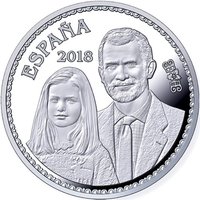
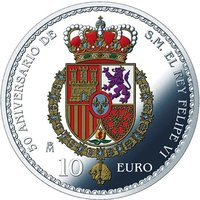
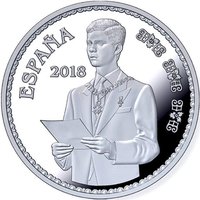
✨ Legendary