

5 zlotys – Congress Kingdom of Poland
Add to wishlist
Poland
Context
Years: 1833–1841
Country: Poland
Issuer: Congress Kingdom of Poland
Ruler: Nicholas I
Currency:
(1815—1841)
Demonetized: Yes
Total mintage: 12,287,927
Material
Diameter: 33 mm
Weight: 15.6 g
Silver Weight:: 13.54 g
Shape: Round
Composition: 86.8% Silver
Standard: Silver half ounce
Magnetic: No
Technique: Milled
Alignment: Medal alignment
flip
References
Numista: #30361
Value
Bullion value: $34.64
Obverse
Description:
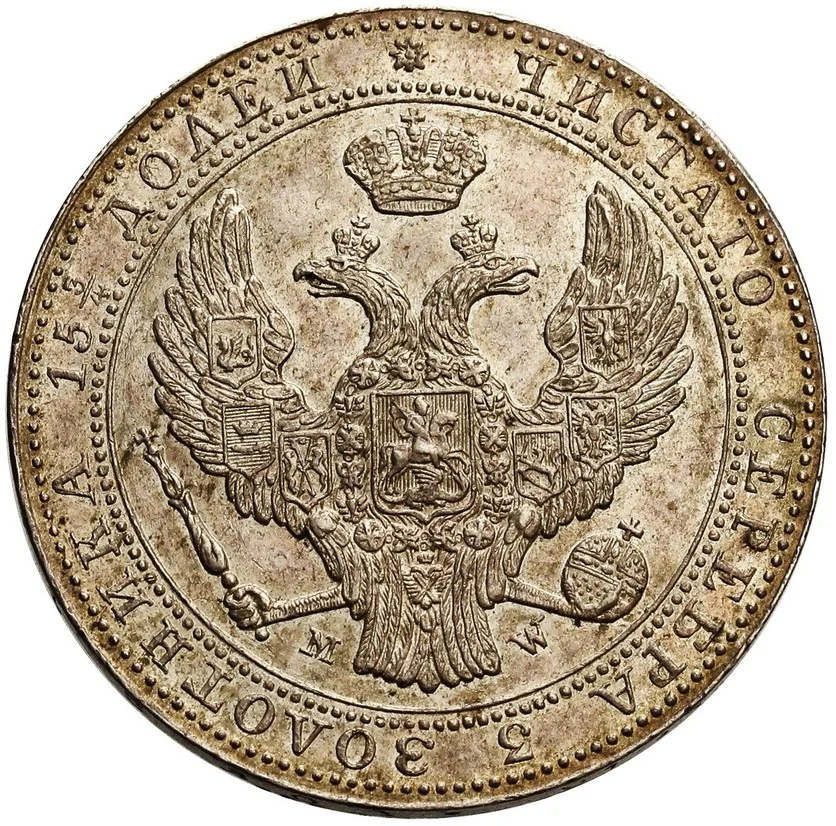
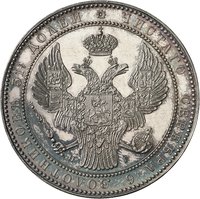
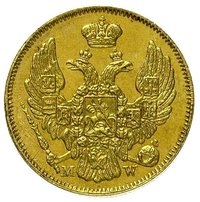
Eagle with breast and wing shields.
Inscription:
M W
ЧИСТАГО СЕРЕБРА 3 ЗОЛОТНИКА 15 3/4 ДОЛЕЙ
ЧИСТАГО СЕРЕБРА 3 ЗОЛОТНИКА 15 3/4 ДОЛЕЙ
Translation:
M W
PURE SILVER 3 ZOLOTNIKS 15 3/4 PARTS
PURE SILVER 3 ZOLOTNIKS 15 3/4 PARTS
Language: Russian
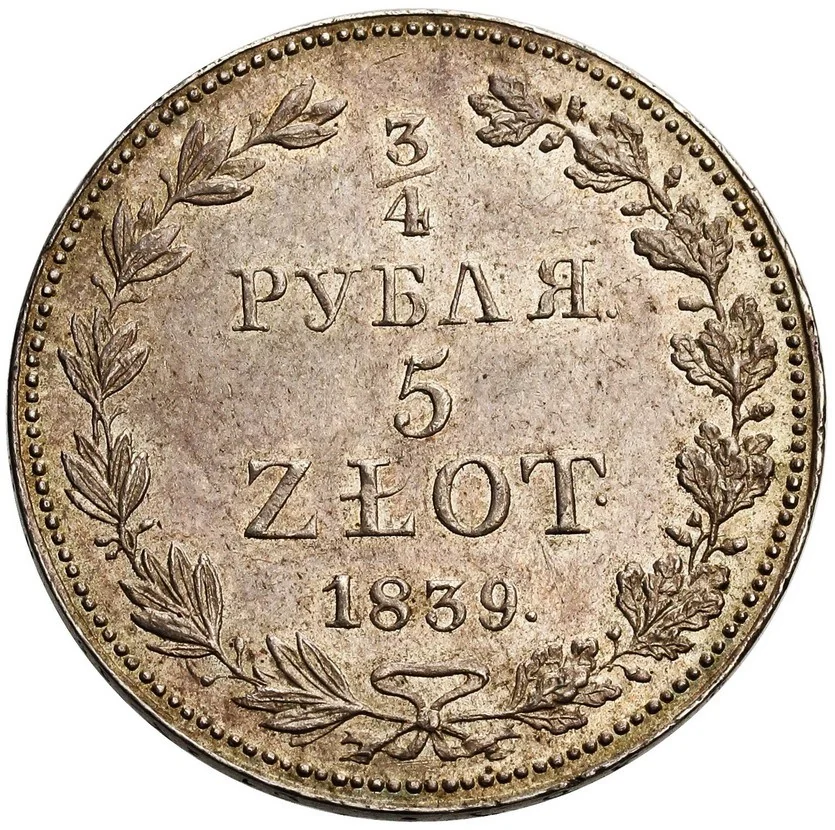
Reverse
Edge
Dotted line
Legend:
. . . . .
Mintings
| Year | Mint Mark | Mintage | Quality | Collection |
|---|---|---|---|---|
| 1833 | НГ | 358,380 | BU | |
| 1834 | MW | 85,848 | ||
| 1834 | НГ | 206,035 | BU | |
| 1835 | MW | 539,636 | ||
| 1835 | НГ | 107,007 | BU | |
| 1836 | MW | 1,196,026 | ||
| 1836 | НГ | 78,008 | BU | |
| 1837 | MW | 999,770 | ||
| 1837 | НГ | 262,004 | BU | |
| 1838 | MW | 1,996,247 | ||
| 1838 | НГ | 12,063 | BU | |
| 1839 | MW | 2,688,517 | ||
| 1839 | НГ | 2 | BU | |
| 1840 | MW | 2,482,419 | ||
| 1840 | НГ | 2,001 | BU | |
| 1841 | MW | 1,273,964 | ||
| 1841 | НГ | — | BU |
Historical background
The currency situation in the Congress Kingdom of Poland in 1833 was one of forced integration and monetary subordination to the Russian Empire, following the crushing of the November Uprising (1830-1831). In the aftermath of the failed rebellion, Tsar Nicholas I moved decisively to abolish the Kingdom’s remaining autonomy, including its financial institutions. The Polish Bank, which had issued the distinctive Polish złoty since 1828, was formally stripped of its issuing privileges in 1832. By 1833, the process of replacing the Polish currency with the Russian ruble was actively underway, symbolizing the political erasure of the Kingdom's separate status.
This monetary transition was not merely a swap of coins and banknotes but a complex economic realignment. The Polish złoty was officially demonetized, and a fixed exchange rate was imposed to facilitate the changeover. This process caused significant economic dislocation, as it disrupted existing contracts, prices, and savings, effectively integrating the Kingdom’s economy directly into the Russian imperial system. The Russian ruble became the sole legal tender, and all financial accounting and state transactions were conducted in the new currency.
Thus, by 1833, the distinct currency of the Congress Kingdom had ceased to exist as a circulating medium, representing a key facet of the broader "Russification" policies implemented after the uprising. The monetary landscape reflected the Kingdom's new reality: no longer a semi-autonomous entity in personal union with Russia, but a conquered province governed by martial law and subject to the full administrative and economic control of St. Petersburg.
This monetary transition was not merely a swap of coins and banknotes but a complex economic realignment. The Polish złoty was officially demonetized, and a fixed exchange rate was imposed to facilitate the changeover. This process caused significant economic dislocation, as it disrupted existing contracts, prices, and savings, effectively integrating the Kingdom’s economy directly into the Russian imperial system. The Russian ruble became the sole legal tender, and all financial accounting and state transactions were conducted in the new currency.
Thus, by 1833, the distinct currency of the Congress Kingdom had ceased to exist as a circulating medium, representing a key facet of the broader "Russification" policies implemented after the uprising. The monetary landscape reflected the Kingdom's new reality: no longer a semi-autonomous entity in personal union with Russia, but a conquered province governed by martial law and subject to the full administrative and economic control of St. Petersburg.
🌟 Limited