

Obverse
Description:
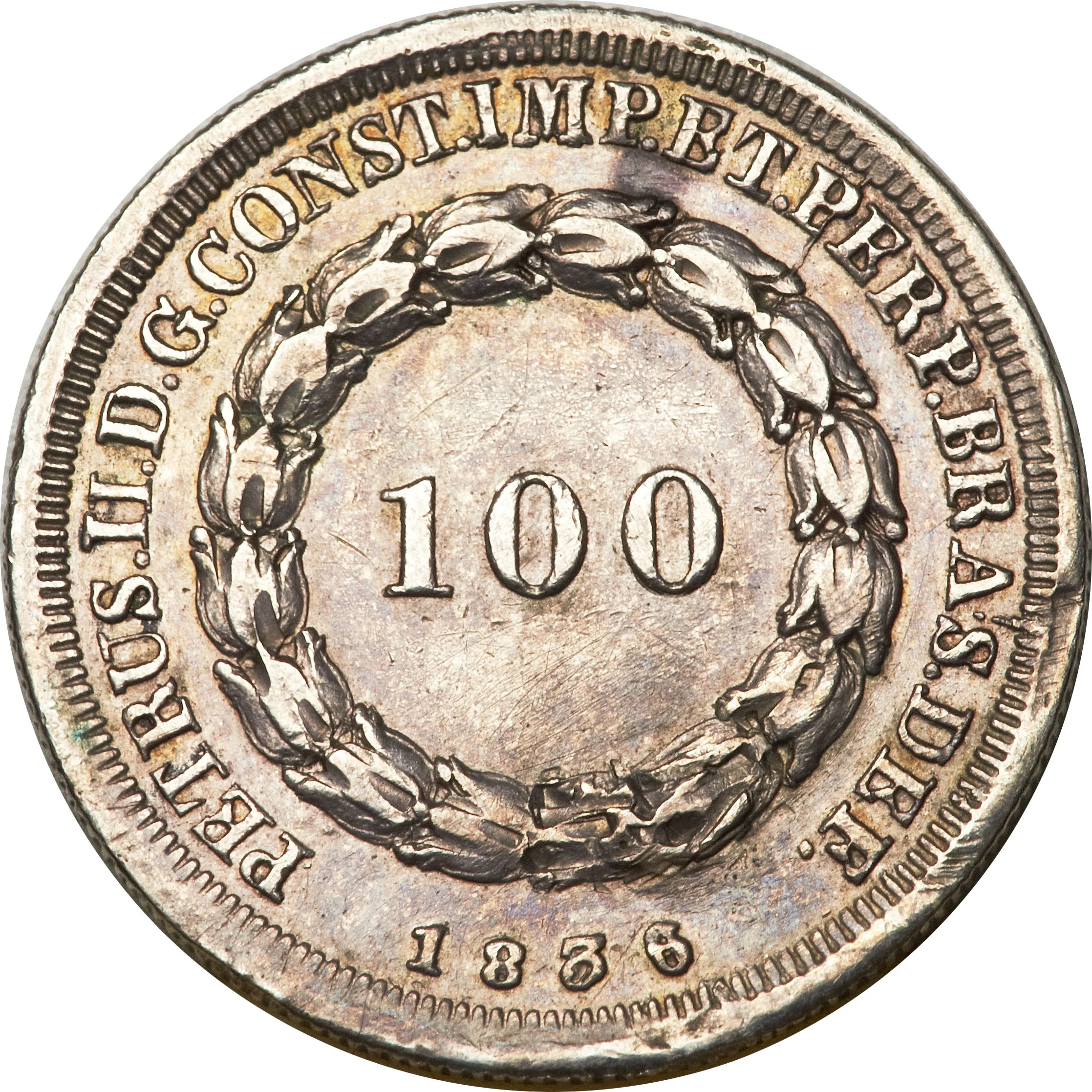
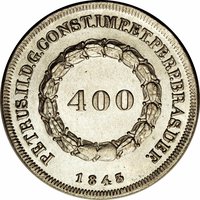
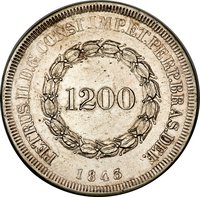
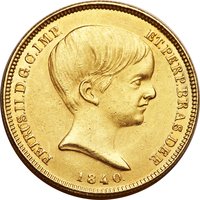
A dashed border surrounds the coin. The legend reads "PRETRUS.II.D.G.CONST.IMP.ET.PERP.BRAS.DEF." with the date 1836 in the exergue. The central value "100" is encircled by a tulip wreath.
Inscription:
PETRUS.IID.G.CONST.IMP.ETPERP.BRAS.DBP.
100
1836
100
1836
Translation:
Peter II, by the Grace of God, Perpetual Emperor and Defender of Brazil.
100
1836
100
1836
Script: Latin
Language: Latin
Reverse
Edge
Reeded
Categories
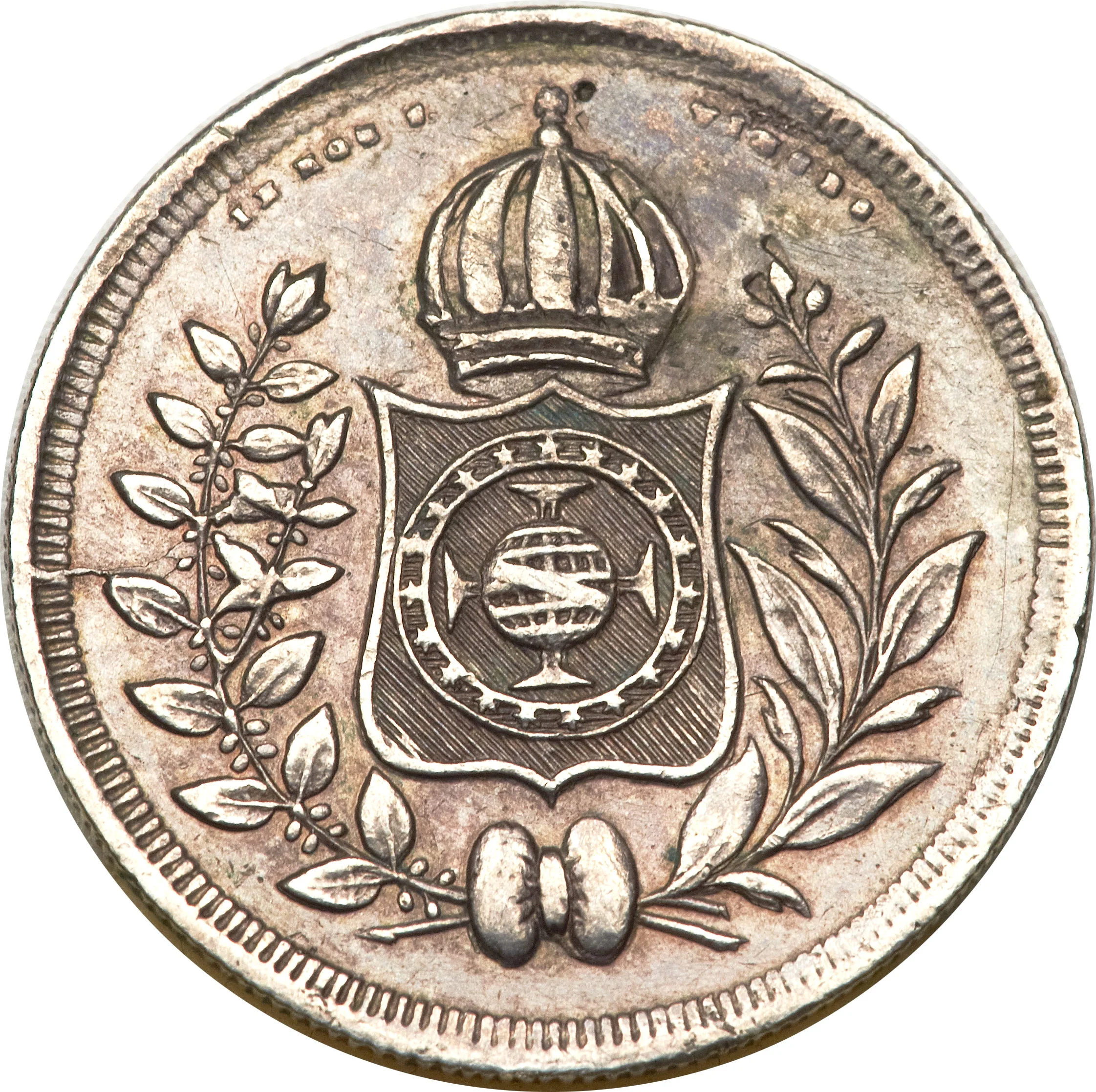
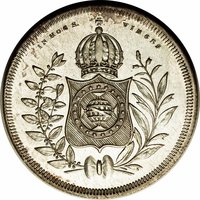
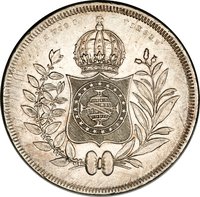
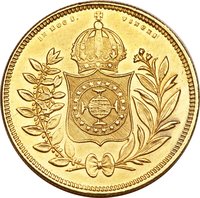
| Symbol> Crown |
| Symbols> Coat of Arms |
Mintings
| Year | Mint Mark | Mintage | Quality | Collection |
|---|---|---|---|---|
| 1834 | — | 7,709 | ||
| 1835 | — | — | ||
| 1836 | — | 5,592 | ||
| 1837 | — | 9,562 | ||
| 1840 | — | 910 | ||
| 1844 | — | — | ||
| 1846 | — | 4,699 | ||
| 1847 | — | 682 | ||
| 1848 | — | 486 |
Historical background
In 1834, Brazil's currency situation was characterized by significant instability and fragmentation, a direct legacy of the political and economic turmoil following independence from Portugal in 1822. The nation operated without a unified monetary system; instead, a confusing mix of coins circulated, including older Portuguese réis, Brazilian-minted coins, and a substantial quantity of debased and counterfeit copper coins known as "bilhões." This proliferation of low-value copper currency, exacerbated by provincial mints over-issuing coins to cover local deficits, caused severe inflation, particularly affecting the daily lives of the poor. The value of money was not uniform across the vast empire, undermining commerce and economic confidence.
This monetary chaos was set against the backdrop of the Regency period (1831-1840), a time of political instability following Emperor Pedro I's abdication. The central government, led by Regent Diogo Antônio Feijó, struggled to assert authority over rebellious provinces, and the fragmented currency mirrored this political disunity. The 1834 Additional Act, which decentralized power by granting more legislative autonomy to the provinces, ironically complicated the monetary issue further. While aiming to pacify the nation, it left the central government with limited tools to impose a standardized monetary policy, as provincial authorities continued their own fiscal and minting practices.
Consequently, the currency crisis of 1834 was more than an economic problem; it was a symptom of a fledgling nation-state struggling to consolidate itself. The widespread use of degraded copper money eroded public trust and hindered the development of a national market. This environment underscored the urgent need for a strong central authority to unify the monetary system, a goal that would only begin to be realized after the coronation of Pedro II in 1840 and the eventual establishment of the Banco do Brasil as an official issuer later in the decade.
This monetary chaos was set against the backdrop of the Regency period (1831-1840), a time of political instability following Emperor Pedro I's abdication. The central government, led by Regent Diogo Antônio Feijó, struggled to assert authority over rebellious provinces, and the fragmented currency mirrored this political disunity. The 1834 Additional Act, which decentralized power by granting more legislative autonomy to the provinces, ironically complicated the monetary issue further. While aiming to pacify the nation, it left the central government with limited tools to impose a standardized monetary policy, as provincial authorities continued their own fiscal and minting practices.
Consequently, the currency crisis of 1834 was more than an economic problem; it was a symptom of a fledgling nation-state struggling to consolidate itself. The widespread use of degraded copper money eroded public trust and hindered the development of a national market. This environment underscored the urgent need for a strong central authority to unify the monetary system, a goal that would only begin to be realized after the coronation of Pedro II in 1840 and the eventual establishment of the Banco do Brasil as an official issuer later in the decade.
⭐ Rare