

100 escudos – Portugal
Add to wishlist
Portugal
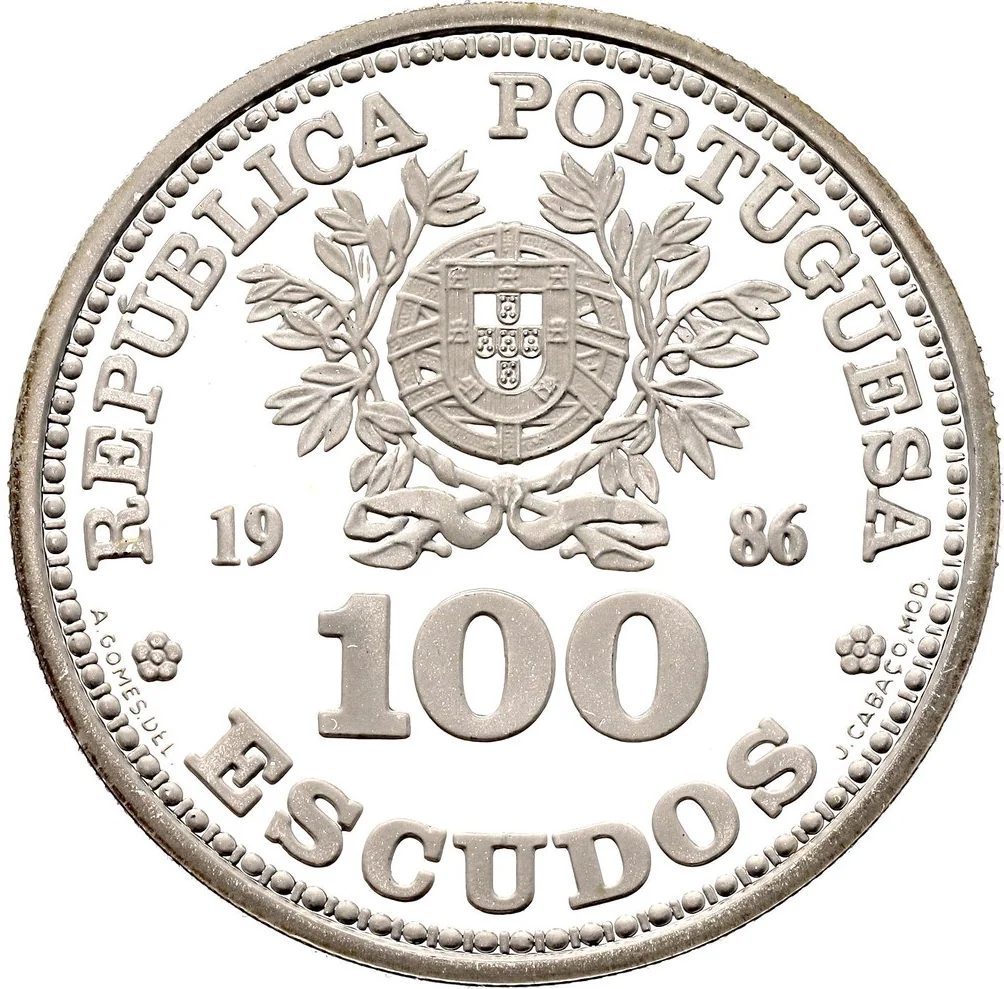
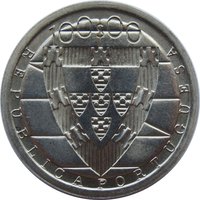
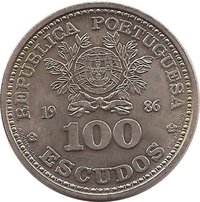
Obverse
Inscription:
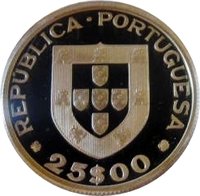
REPUBLICA PORTUGUESA
1986
100 ESCUDOS
1986
100 ESCUDOS
Translation:
PORTUGUESE REPUBLIC
1986
100 ESCUDOS
1986
100 ESCUDOS
Script: Latin
Language: Portuguese
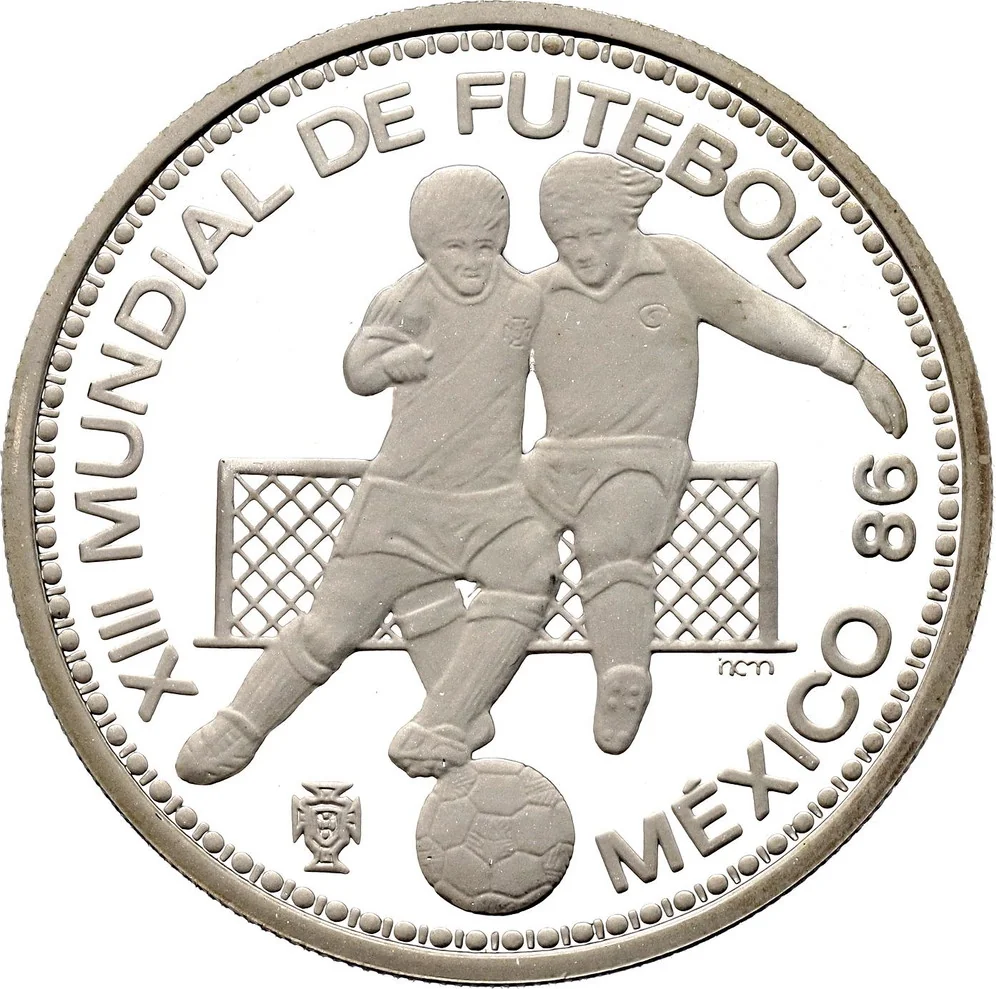
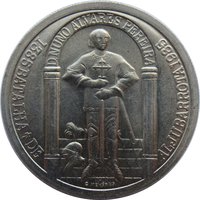
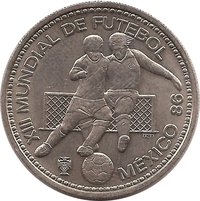
Reverse
Inscription:
XIII MUNDIAL DE FUTEBOL
MEXICO 86
MEXICO 86
Script: Latin
Edge
Reeded
Mints
| Name | Mark |
|---|---|
| Imprensa Nacional - Casa da Moeda | — |
Mintings
| Year | Mint Mark | Mintage | Quality | Collection |
|---|---|---|---|---|
| 1986 | — | 50,000 | In sets | |
| 1986 | — | 20,000 | Proof |
Historical background
In 1986, Portugal's currency situation was fundamentally shaped by its recent accession to the European Economic Community (EEC) on January 1st of that year. This pivotal moment committed the country to eventual Economic and Monetary Union (EMU), setting a long-term trajectory to replace its national currency, the escudo, with a future common European currency. Domestically, the escudo was managed by the Bank of Portugal within a "crawling peg" system, where its value was adjusted in small, frequent devaluations against a basket of currencies. This mechanism aimed to maintain export competitiveness for Portugal's growing, but still developing, economy, which was heavily reliant on textiles, footwear, and agriculture.
The economic context was one of profound transformation and vulnerability. Following the 1974 Carnation Revolution, Portugal had undergone a turbulent decade of nationalizations and political instability. By the mid-1980s, a center-right government was implementing austerity and liberalizing reforms to modernize the economy and meet EEC requirements. However, the country faced high inflation (around 11.5% in 1986), a significant public debt burden, and a large external deficit. The escudo, therefore, remained under pressure, and the controlled devaluations were a necessary tool to correct economic imbalances while avoiding sudden shocks.
Consequently, 1986 represented a transitional year where short-term monetary pragmatism coexisted with a binding European commitment. The crawling peg devaluations provided essential breathing room for the real economy during a difficult convergence process. Yet, the ultimate goal was clearly established: to progressively align Portugal's monetary policy with European partners, stabilize the escudo within the European Monetary System (which it would join in 1992), and ultimately surrender monetary sovereignty for full integration into the Eurozone, which was achieved in 1999.
The economic context was one of profound transformation and vulnerability. Following the 1974 Carnation Revolution, Portugal had undergone a turbulent decade of nationalizations and political instability. By the mid-1980s, a center-right government was implementing austerity and liberalizing reforms to modernize the economy and meet EEC requirements. However, the country faced high inflation (around 11.5% in 1986), a significant public debt burden, and a large external deficit. The escudo, therefore, remained under pressure, and the controlled devaluations were a necessary tool to correct economic imbalances while avoiding sudden shocks.
Consequently, 1986 represented a transitional year where short-term monetary pragmatism coexisted with a binding European commitment. The crawling peg devaluations provided essential breathing room for the real economy during a difficult convergence process. Yet, the ultimate goal was clearly established: to progressively align Portugal's monetary policy with European partners, stabilize the escudo within the European Monetary System (which it would join in 1992), and ultimately surrender monetary sovereignty for full integration into the Eurozone, which was achieved in 1999.
Series: System 1981-2001

🌟 Uncommon