

1 franc – New Hebrides
Add to wishlist
Vanuatu
Context
Years: 1975–1982
Country: Vanuatu
Issuer: New Hebrides
Period:
(1906—1980)
Currency:
(1921—1982)
Demonetized: Yes
Total mintage: 900,000
Material
References
KM: #
Numista: #3017
Obverse
Description:
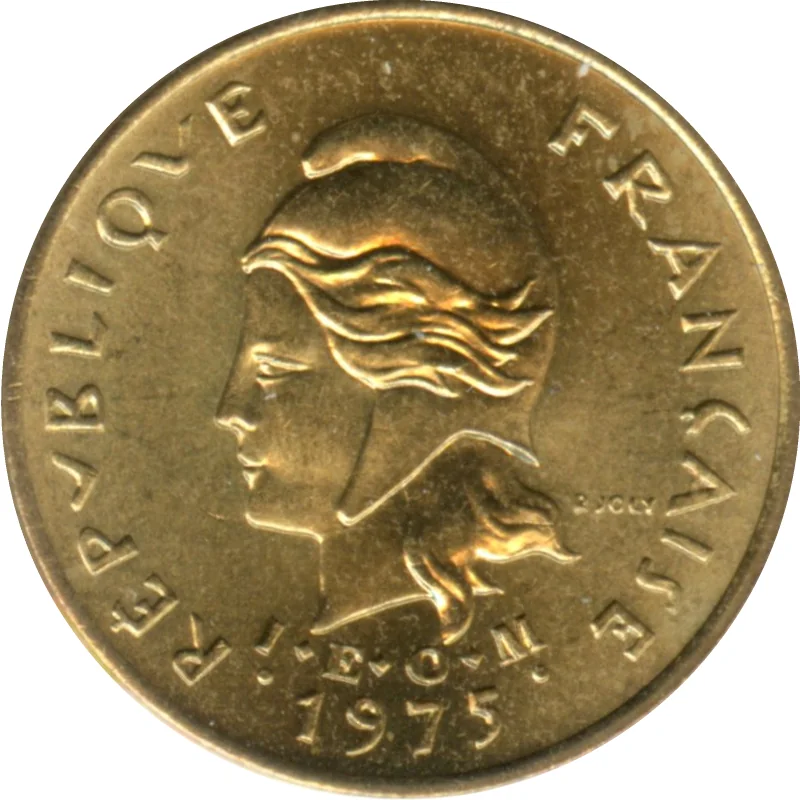
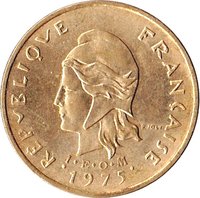
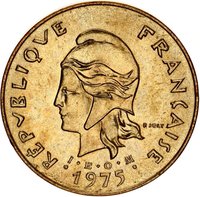
Marianne in profile left, wearing a Phrygian cap.
Inscription:
RÉPVBLIQVE FRANÇAISE
R·JOLY
I·E·O·M
1975
R·JOLY
I·E·O·M
1975
Translation:
FRENCH REPUBLIC
R·JOLY
I·E·O·M
1975
R·JOLY
I·E·O·M
1975
Script: Latin
Language: French
Engraver: Raymond Joly
Reverse
Description:
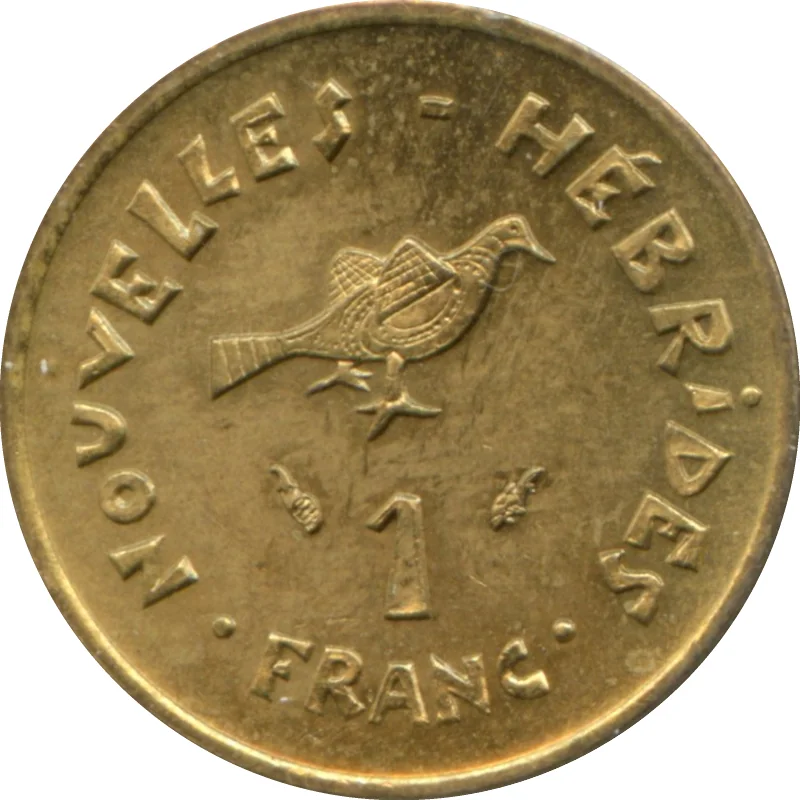
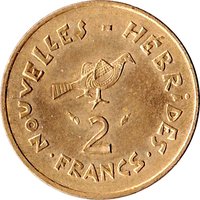
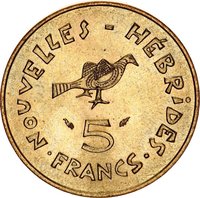
Frigatebird in flight.
Inscription:
NOUVELLES - HÉBRIDES
1
FRANC
1
FRANC
Translation:
New Hebrides
1
Franc
1
Franc
Script: Latin
Language: French
Engraver: Raymond Joly
Edge
Plain
Mints
| Name | Mark |
|---|---|
| Monnaie de Paris | — |
Mintings
| Year | Mint Mark | Mintage | Quality | Collection |
|---|---|---|---|---|
| 1975 | — | 350,000 | ||
| 1978 | — | 200,000 | ||
| 1979 | — | 350,000 | ||
| 1982 | — | — |
Historical background
In 1975, the New Hebrides condominium was in a unique and complex monetary situation, a direct reflection of its unusual political status as a territory jointly administered by Britain and France. The archipelago did not have a central bank or its own independent currency. Instead, it operated under a dual-currency system where both British sterling and the French franc, along with their respective coinage, were legal tender and circulated simultaneously. This meant that shops often displayed prices in both pounds and francs, and transactions could be conducted in either currency, though exchange rates fluctuated informally based on trader preference and the flow of goods and funds from the two metropolitan powers.
This system was inherently cumbersome for the local population and for commerce. The exchange rate between the two currencies was not fixed locally, leading to confusion and occasional arbitrage. The economy was effectively fragmented, with British-linked businesses and government services tending to use sterling, while French entities used francs. This monetary duality mirrored the wider administrative duplication across the condominium, where there were separate British and French systems for education, health, and policing, creating inefficiency and hindering the development of a unified national economic policy.
The situation in 1975 was a point of increasing discussion as the territory moved haltingly towards independence, which would be achieved in 1980. The dual-currency system was widely recognized as unsustainable for a sovereign nation. Consequently, planning began in the mid-to-late 1970s to replace the sterling/franc system with a single, new national currency. This planning culminated in the introduction of the New Hebrides franc in 1979, which was pegged to the French franc, and then the Vanuatu vatu upon full independence in 1980, finally ending the peculiar dual-monetary legacy of the condominium.
This system was inherently cumbersome for the local population and for commerce. The exchange rate between the two currencies was not fixed locally, leading to confusion and occasional arbitrage. The economy was effectively fragmented, with British-linked businesses and government services tending to use sterling, while French entities used francs. This monetary duality mirrored the wider administrative duplication across the condominium, where there were separate British and French systems for education, health, and policing, creating inefficiency and hindering the development of a unified national economic policy.
The situation in 1975 was a point of increasing discussion as the territory moved haltingly towards independence, which would be achieved in 1980. The dual-currency system was widely recognized as unsustainable for a sovereign nation. Consequently, planning began in the mid-to-late 1970s to replace the sterling/franc system with a single, new national currency. This planning culminated in the introduction of the New Hebrides franc in 1979, which was pegged to the French franc, and then the Vanuatu vatu upon full independence in 1980, finally ending the peculiar dual-monetary legacy of the condominium.
🌱 Common