

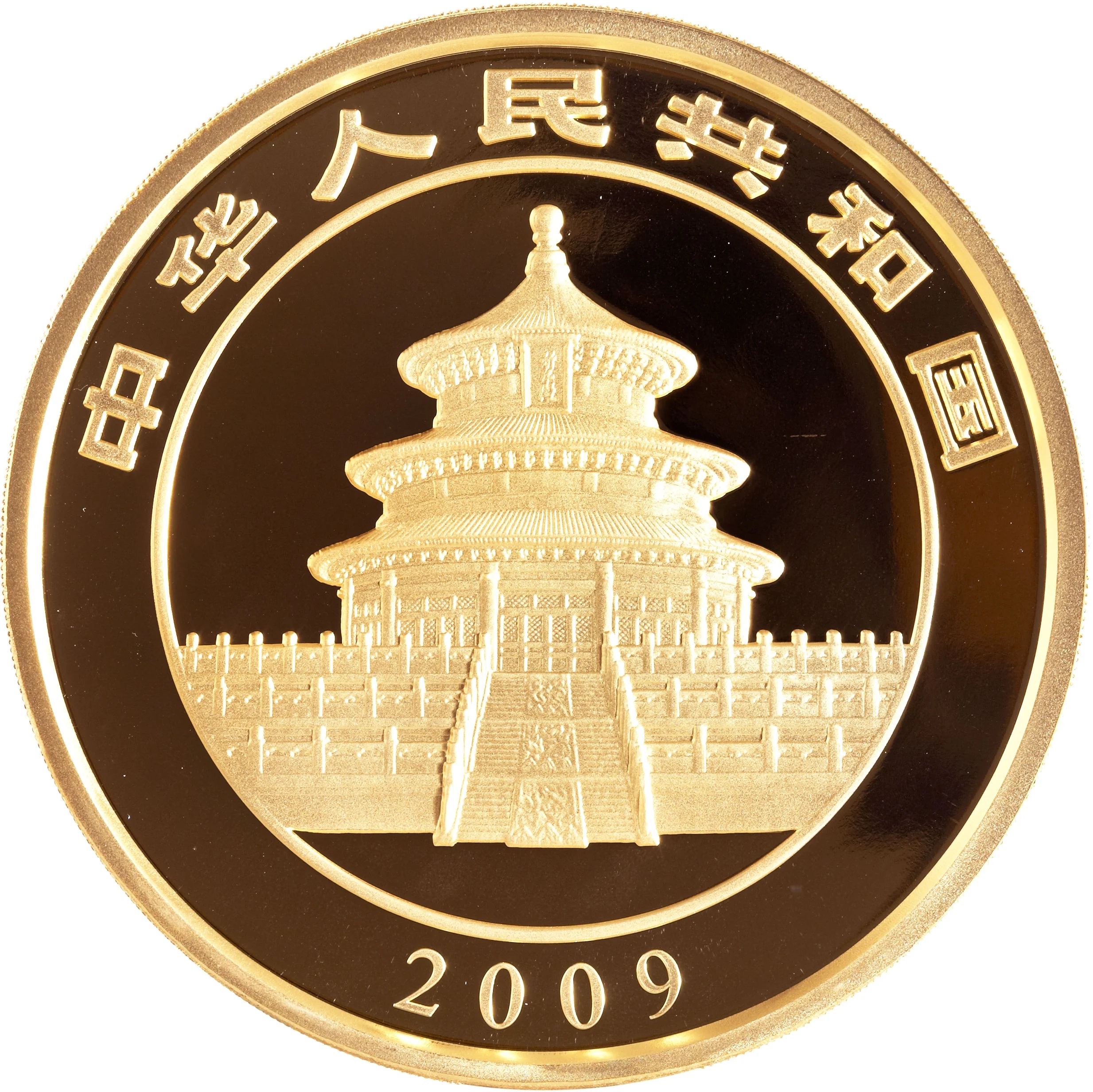
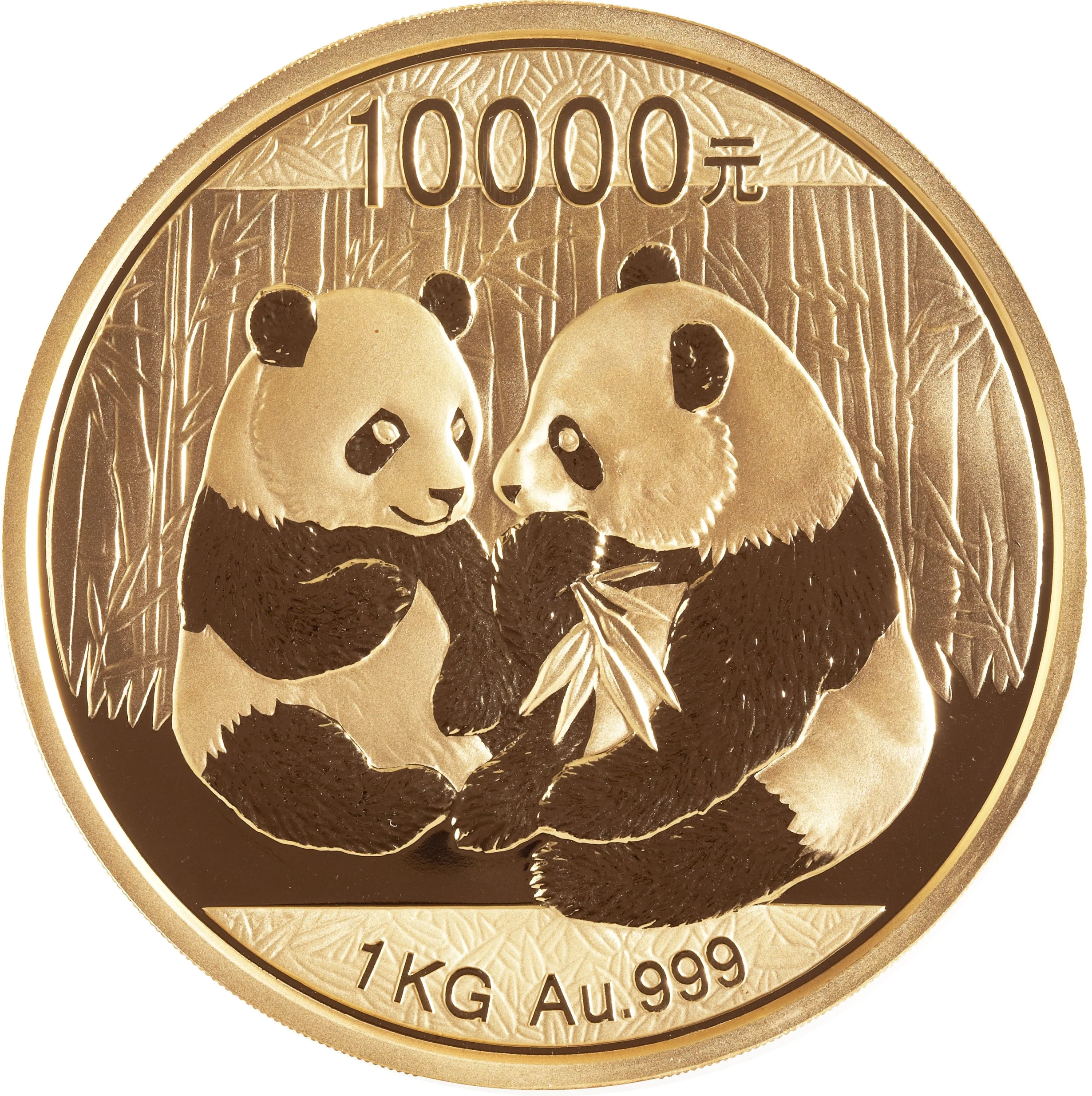
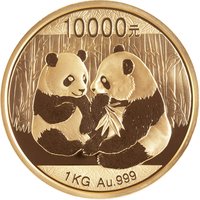
10000 yuan – People's Republic of China
Add to wishlist
Non-circulating coins
Series: Panda Bullion
China
Context
Year: 2009
Country: China
Issuer: People's Republic of China
Period:
(since 1949)
Currency:
(since 1955)
Material
Diameter: 100 mm
Weight: 1000 g
Gold Weight:: 999.00 g
Shape: Round
Composition: 99.9% Gold
Standard: Silver kilo
Magnetic: No
Technique: Milled
References
KM: #
Numista: #30039
Value
Exchange value: 10000 CNY
Bullion value: $154586.69
Inflation-adjusted value: 13495.20 CNY
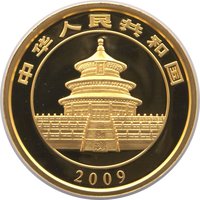
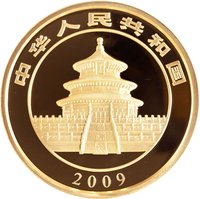
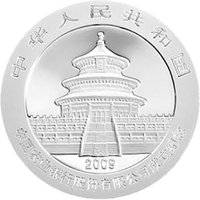
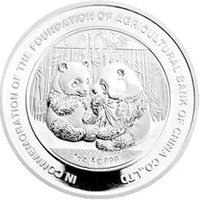
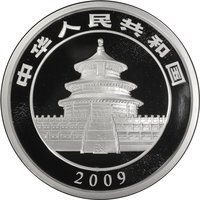
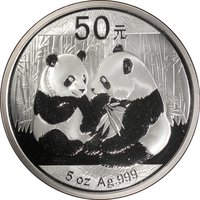
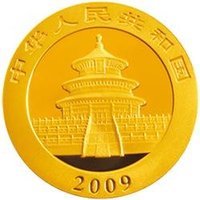
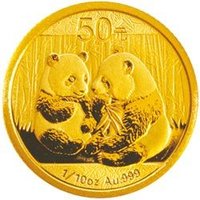
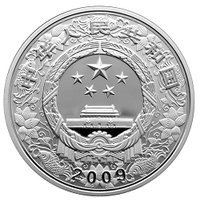
Obverse
Edge
Mintings
| Year | Mint Mark | Mintage | Quality | Collection |
|---|---|---|---|---|
| 2009 | — | — | ||
| 2009 | — | — | BU |
Historical background
In 2009, the People's Republic of China was navigating the global financial crisis with a currency, the Renminbi (RMB), that was still tightly managed. Following a landmark revaluation in 2005, the RMB had been allowed to appreciate gradually against the US dollar. However, in July 2008, as the crisis intensified, China effectively re-pegged the RMB to the dollar at approximately 6.83 RMB/USD to ensure stability for its crucial export sector. This policy remained firmly in place throughout 2009, making the RMB a source of international debate, particularly with the United States and Europe, who argued it was kept artificially undervalued to maintain a trade advantage.
Domestically, the currency policy was a key pillar of China's aggressive stimulus response to the crisis. By stabilizing the exchange rate, the government provided certainty for exporters, who were facing collapsing external demand, and helped to control the cost of imports. This stability was deemed essential for the broader macroeconomic goals of the massive 4-trillion-yuan stimulus package, which aimed to spur domestic investment and consumption to offset the global downturn. The People's Bank of China (PBOC) maintained this peg through heavy intervention in the foreign exchange markets, accumulating vast foreign exchange reserves, which grew to over $2.4 trillion by year's end.
Looking forward, 2009 was a year of deliberate pause in currency reform. While international pressure for appreciation mounted, Chinese authorities prioritized economic recovery and social stability above external calls for a stronger, more flexible RMB. However, the year set the stage for a pivotal shift; by late 2009, with its economy recovering robustly, China began signaling a return to a more flexible exchange rate regime. This culminated in June 2010, when the PBOC announced it would once again allow the RMB to appreciate, marking the end of the crisis-era peg and a cautious resumption of the long-term internationalization strategy for its currency.
Domestically, the currency policy was a key pillar of China's aggressive stimulus response to the crisis. By stabilizing the exchange rate, the government provided certainty for exporters, who were facing collapsing external demand, and helped to control the cost of imports. This stability was deemed essential for the broader macroeconomic goals of the massive 4-trillion-yuan stimulus package, which aimed to spur domestic investment and consumption to offset the global downturn. The People's Bank of China (PBOC) maintained this peg through heavy intervention in the foreign exchange markets, accumulating vast foreign exchange reserves, which grew to over $2.4 trillion by year's end.
Looking forward, 2009 was a year of deliberate pause in currency reform. While international pressure for appreciation mounted, Chinese authorities prioritized economic recovery and social stability above external calls for a stronger, more flexible RMB. However, the year set the stage for a pivotal shift; by late 2009, with its economy recovering robustly, China began signaling a return to a more flexible exchange rate regime. This culminated in June 2010, when the PBOC announced it would once again allow the RMB to appreciate, marking the end of the crisis-era peg and a cautious resumption of the long-term internationalization strategy for its currency.
Series: Panda Bullion
✨ Legendary