

500 Pounds – United Kingdom
Non-circulating coins
Series: Gold Britannia
United Kingdom
Context

Material
Diameter: 50 mm
Weight: 156.3 g
Gold weight: 156.28 g
Shape: Round
Composition: 99.99% Gold
Standard: Silver 5 ounces
Magnetic: No
Technique: Milled
Alignment: Medal alignment
flip
References
KM: #Click to copy to clipboard1330
Numista: #300277
Value
Exchange value: 500 GBP = $677.49
Bullion value: $26110.12
Inflation-adjusted value: 732.22 GBP
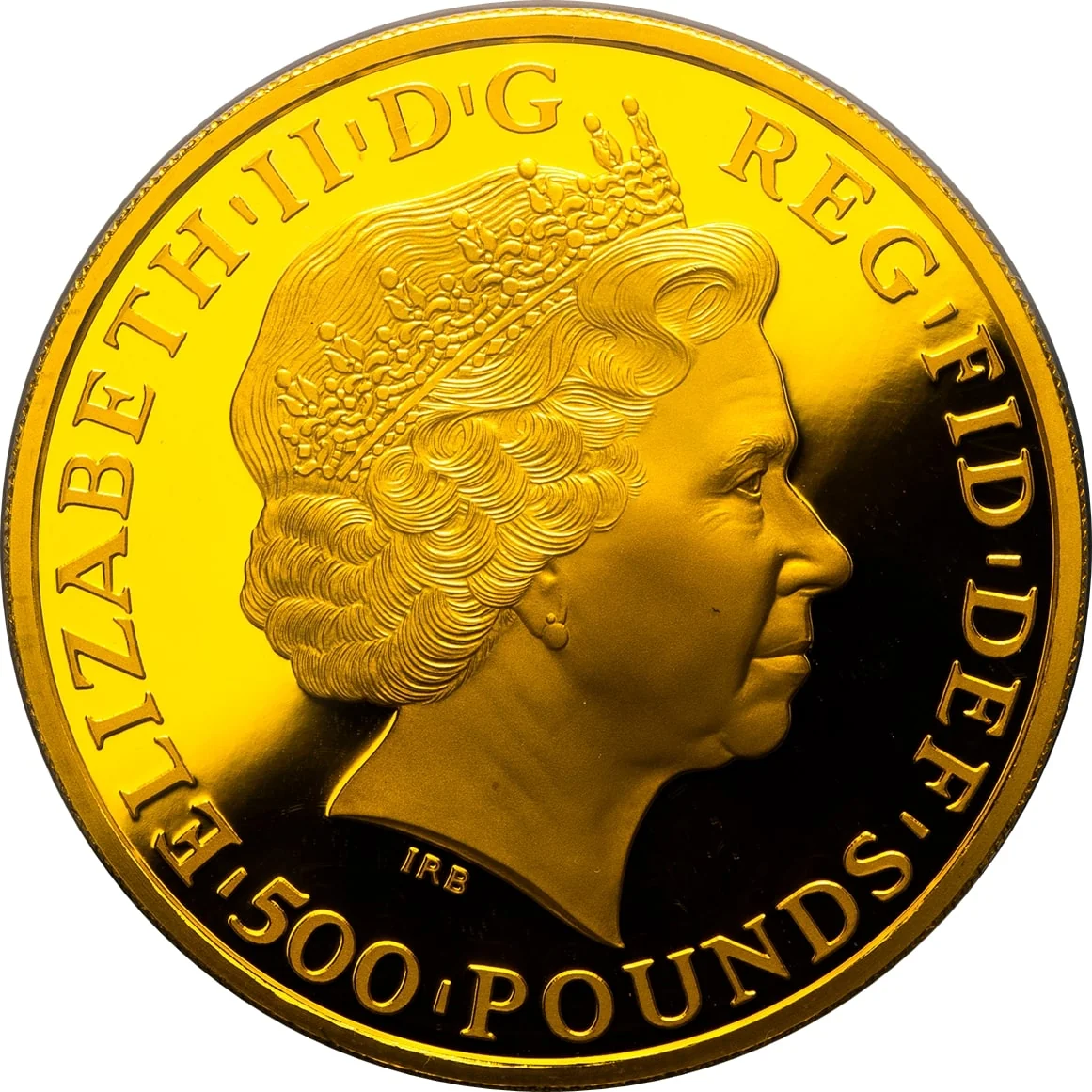
Obverse
Description:
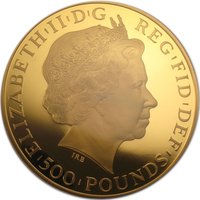
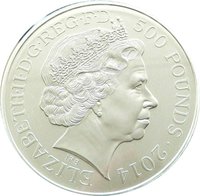
Queen Elizabeth IV facing right, wearing the Girls of Great Britain tiara.
Inscription:
ELIZABETH ' II ' D ' G REG ' FID ' DEF
IRB
' 500 · POUNDS '
IRB
' 500 · POUNDS '
Translation:
Elizabeth the Second, by the Grace of God, Queen, Defender of the Faith.
Five Hundred Pounds
Five Hundred Pounds
Script: Latin
Designer: Ian Rank-Broadley
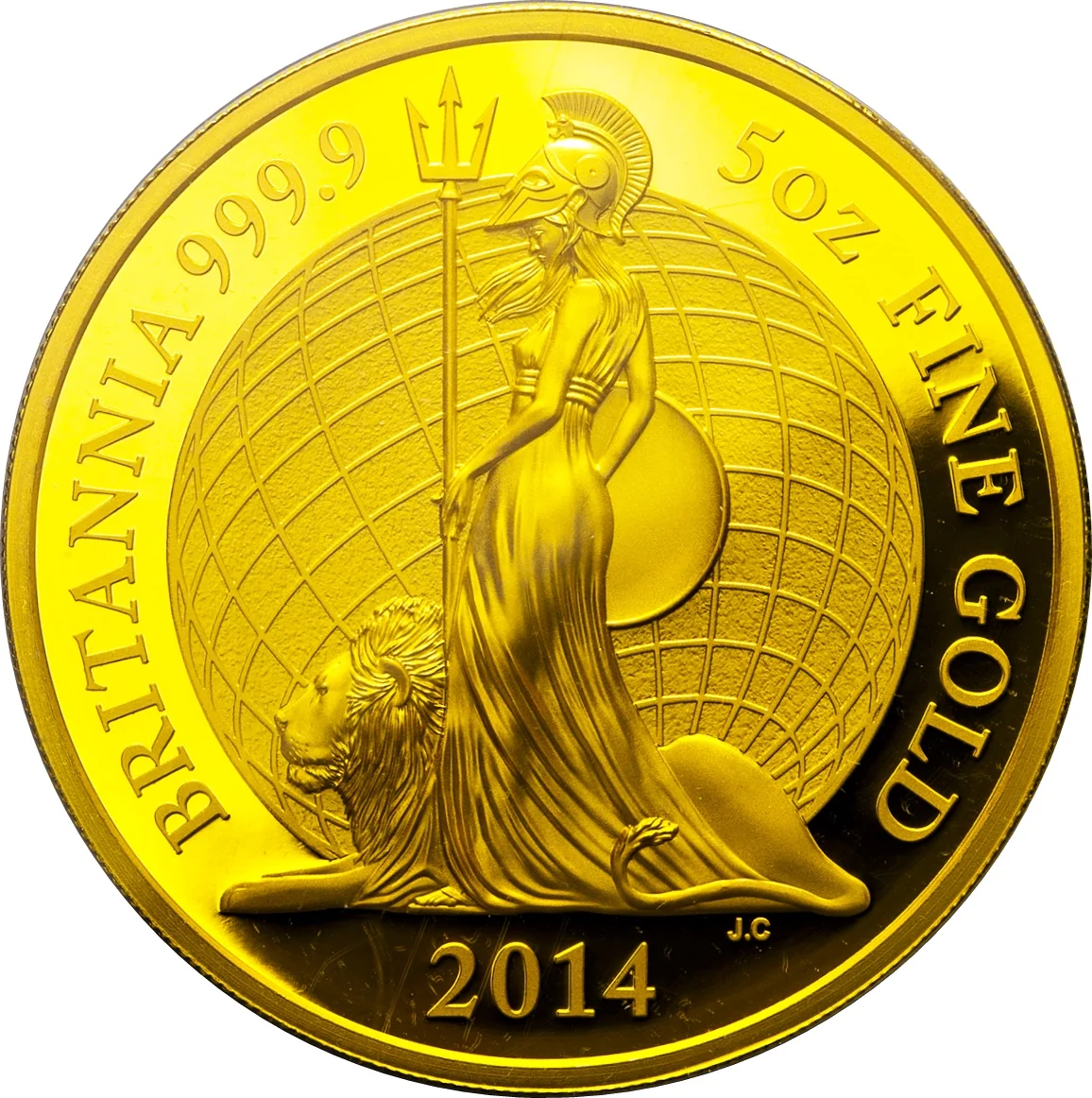
Reverse
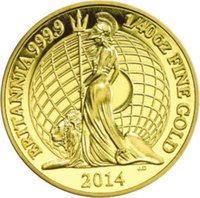
Description:
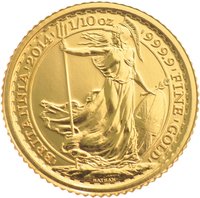
Britannia with globe, lion, and encircling legend.
Inscription:
BRITANNIA 999.9 5oz FINE GOLD
2014
J.C
2014
J.C
Script: Latin
Designer: Jody Clark
Edge
Reeded
Mints
| Name | Mark |
|---|---|
| Royal Mint | — |
Mintings
| Year | Mint Mark | Mintage | Quality | Collection |
|---|---|---|---|---|
| 2014 | — | 75 | Proof |
Historical background
In 2014, the United Kingdom’s currency situation was dominated by the sustained strength of the Pound Sterling (GBP) and its implications for the recovering economy. The GBP, particularly against the Euro and the US Dollar, reached multi-year highs during the year. Against the Euro, sterling climbed to around £0.78 (or €1.28 per pound) by the end of 2014, a level not seen since 2007, largely driven by the European Central Bank's move towards quantitative easing amid stagnation in the Eurozone. Against the US Dollar, the pound also appreciated significantly, breaching the $1.70 mark in the summer before settling around $1.55 by year-end as the US Federal Reserve ended its own stimulus programme.
This appreciation was primarily fueled by diverging monetary policy expectations and the UK's relatively strong economic performance. While major central banks like the ECB and the Bank of Japan were easing policy, market anticipation was building that the Bank of England (BoE) would be the first major central bank to raise interest rates from their historic low of 0.5%. Strong UK GDP growth, falling unemployment, and contained inflation led by Governor Mark Carney created a "rates up first" narrative, attracting foreign capital and boosting the pound. However, this very strength created a policy dilemma, as a stronger currency helped keep inflation well below the BoE's 2% target (ending the year at just 0.5%) but simultaneously hurt export competitiveness.
Consequently, 2014 was a year of cautious management and shifting rhetoric from the BoE. The strong pound acted as a de facto tightening of financial conditions, which allowed the Monetary Policy Committee to maintain its record-low bank rate despite robust growth. Governor Carney's guidance evolved from linking rate rises to a specific unemployment threshold (7%) to emphasising a broader range of indicators, including slack in the economy and wage growth, which remained surprisingly weak. Thus, the currency's strength was both a symbol of the UK's economic outperformance compared to its European neighbours and a complicating factor for policymakers balancing growth with the mandate for price stability.
This appreciation was primarily fueled by diverging monetary policy expectations and the UK's relatively strong economic performance. While major central banks like the ECB and the Bank of Japan were easing policy, market anticipation was building that the Bank of England (BoE) would be the first major central bank to raise interest rates from their historic low of 0.5%. Strong UK GDP growth, falling unemployment, and contained inflation led by Governor Mark Carney created a "rates up first" narrative, attracting foreign capital and boosting the pound. However, this very strength created a policy dilemma, as a stronger currency helped keep inflation well below the BoE's 2% target (ending the year at just 0.5%) but simultaneously hurt export competitiveness.
Consequently, 2014 was a year of cautious management and shifting rhetoric from the BoE. The strong pound acted as a de facto tightening of financial conditions, which allowed the Monetary Policy Committee to maintain its record-low bank rate despite robust growth. Governor Carney's guidance evolved from linking rate rises to a specific unemployment threshold (7%) to emphasising a broader range of indicators, including slack in the economy and wage growth, which remained surprisingly weak. Thus, the currency's strength was both a symbol of the UK's economic outperformance compared to its European neighbours and a complicating factor for policymakers balancing growth with the mandate for price stability.
Series: Gold Britannia




✨ Legendary