

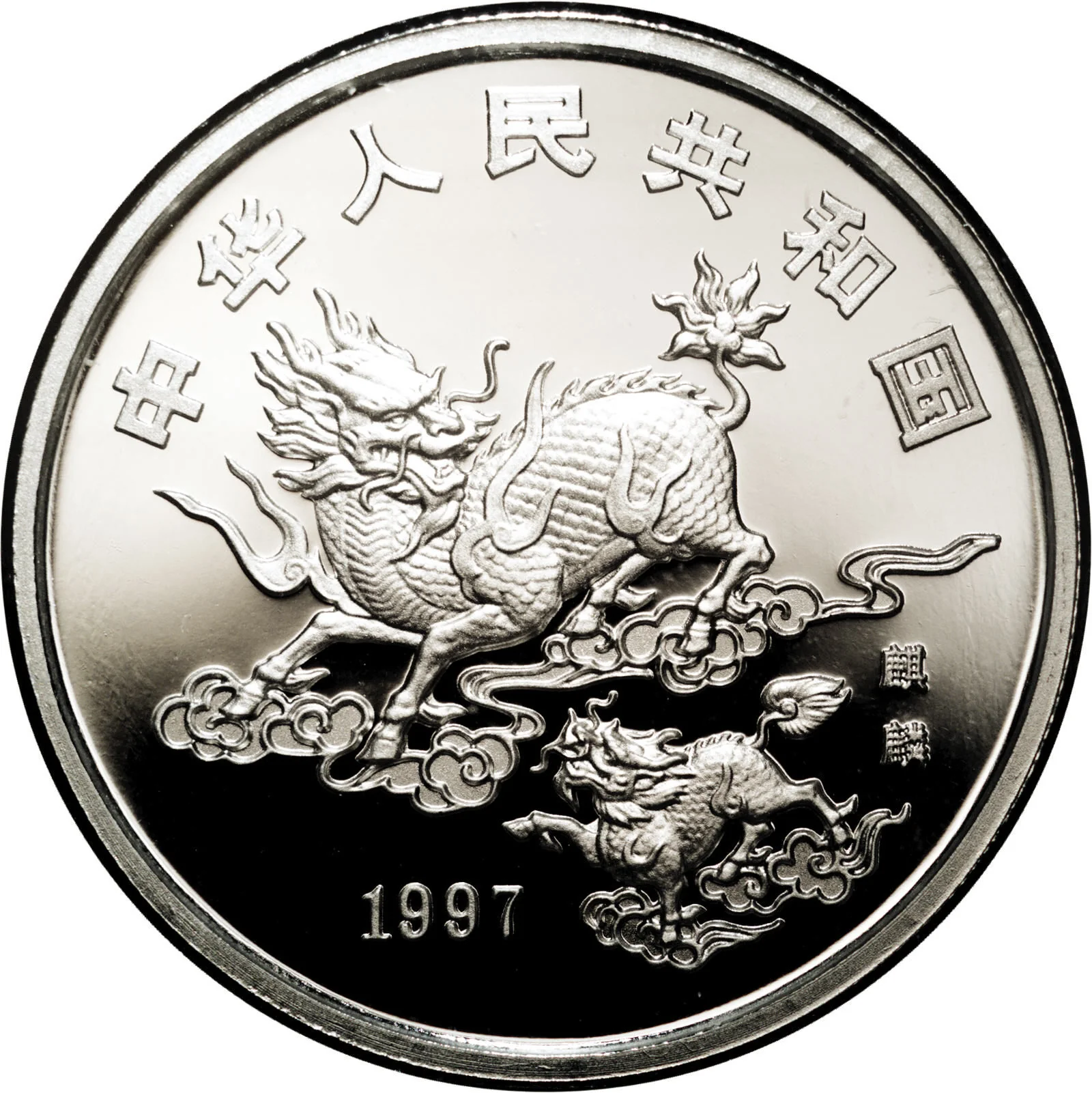
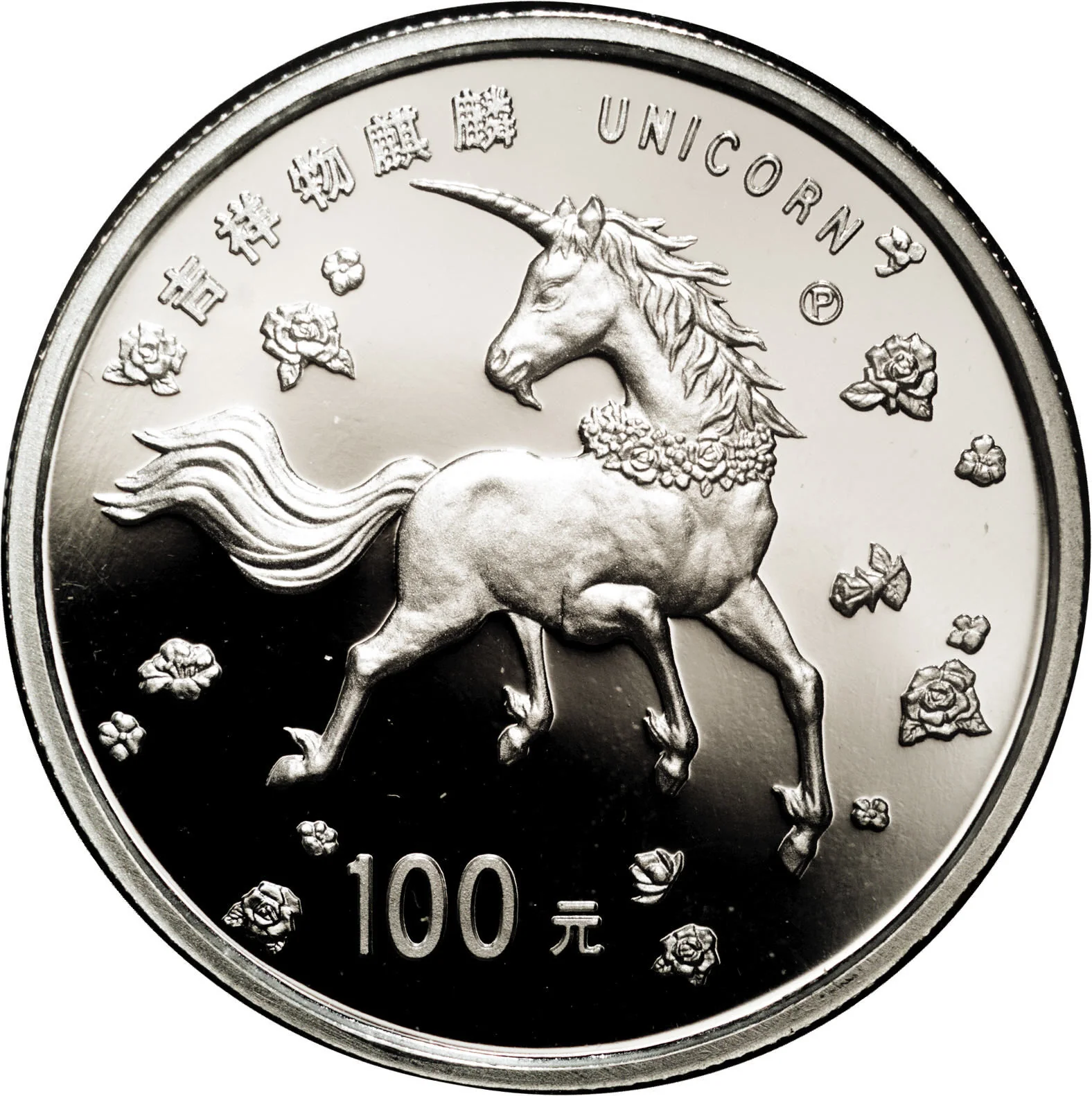
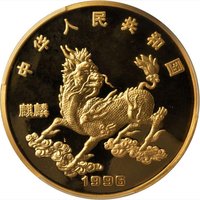
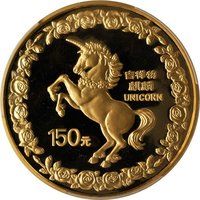
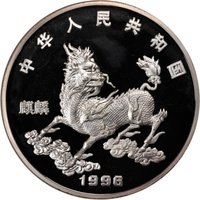
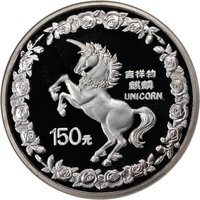
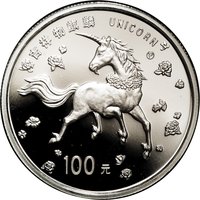
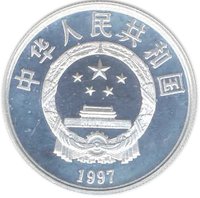
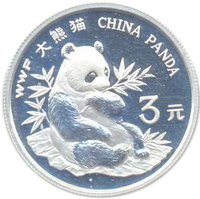
100 yuan – People's Republic of China
Add to wishlist
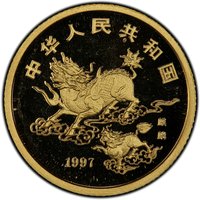
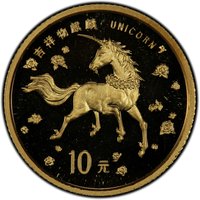
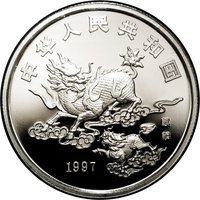
Non-circulating coins
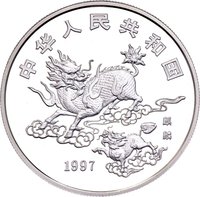
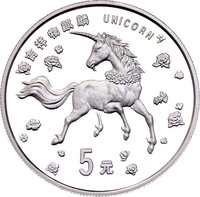
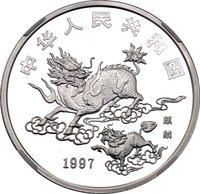
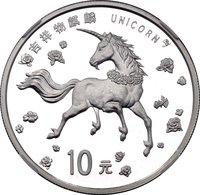
Series: Unicorn Bullion
China
Context
Year: 1997
Country: China
Issuer: People's Republic of China
Period:
(since 1949)
Currency:
(since 1955)
Material
Diameter: 32 mm
Weight: 31.1 g
Platinum Weight:: 31.07 g
Shape: Round
Composition: 99.9% Platinum
Standard: Silver ounce
Technique: Milled
References
KM: #
Numista: #30013
Value
Exchange value: 100 CNY
Bullion value: $2089.67
Inflation-adjusted value: 164.25 CNY
Mintings
| Year | Mint Mark | Mintage | Quality | Collection |
|---|---|---|---|---|
| 1997 | — | — | Proof |
Historical background
In 1997, the People's Republic of China's currency, the Renminbi (RMB), operated under a tightly managed exchange rate regime, pegged to the US dollar at approximately 8.28 RMB/USD. This fixed peg, established in 1994 following a major unification of dual exchange rates, provided crucial stability for trade and investment during a period of rapid economic growth and integration into the global economy. However, the year was dominated by the external shock of the Asian Financial Crisis, which began in Thailand in July and rapidly spread through the region, causing severe currency devaluations and economic turmoil in neighboring economies like South Korea, Indonesia, and Malaysia.
The crisis presented a profound test for China's currency policy. Intense international speculation and market pressure led many to anticipate that China would be forced to devalue the RMB to maintain the competitiveness of its exports, as its regional competitors' currencies had plummeted. Instead, Chinese leadership, prioritizing regional stability and its own long-term credibility, made a pivotal decision to publicly pledge that it would not devalue the RMB. This commitment, announced by senior officials including Premier Zhu Rongji, was a defining moment that required significant domestic sacrifice, as it risked hurting Chinese export growth but was aimed at preventing a further destructive spiral of competitive devaluations across Asia.
Domestically, China's financial system in 1997 was fragile, with state-owned banks burdened by high levels of non-performing loans to inefficient state-owned enterprises. The government's resolve to defend the peg was therefore also driven by a need to maintain internal financial and social stability, fearing that a devaluation could trigger capital flight and banking crises. The successful defense of the RMB's peg throughout 1997 and beyond bolstered China's international stature, demonstrating its emergence as a responsible regional economic power. This stability laid the groundwork for future reforms, though the rigid peg would later become a source of trade tension, leading to a gradual move toward a more flexible exchange rate mechanism in the following decade.
The crisis presented a profound test for China's currency policy. Intense international speculation and market pressure led many to anticipate that China would be forced to devalue the RMB to maintain the competitiveness of its exports, as its regional competitors' currencies had plummeted. Instead, Chinese leadership, prioritizing regional stability and its own long-term credibility, made a pivotal decision to publicly pledge that it would not devalue the RMB. This commitment, announced by senior officials including Premier Zhu Rongji, was a defining moment that required significant domestic sacrifice, as it risked hurting Chinese export growth but was aimed at preventing a further destructive spiral of competitive devaluations across Asia.
Domestically, China's financial system in 1997 was fragile, with state-owned banks burdened by high levels of non-performing loans to inefficient state-owned enterprises. The government's resolve to defend the peg was therefore also driven by a need to maintain internal financial and social stability, fearing that a devaluation could trigger capital flight and banking crises. The successful defense of the RMB's peg throughout 1997 and beyond bolstered China's international stature, demonstrating its emergence as a responsible regional economic power. This stability laid the groundwork for future reforms, though the rigid peg would later become a source of trade tension, leading to a gradual move toward a more flexible exchange rate mechanism in the following decade.
Series: Unicorn Bullion
✨ Legendary