

1 ruble – Belarus
Add to wishlist
Belarus
Context
Material
Diameter: 33 mm
Weight: 15.5 g
Shape: Round
Composition: Copper-nickel
Standard: Silver half ounce
Technique: Milled
Alignment: Medal alignment
flip
References
KM: #
Numista: #30004
Value
Exchange value: 1 BYR
Obverse
Description:
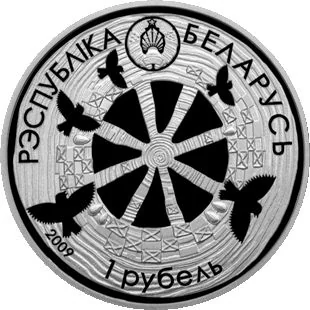
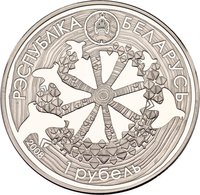
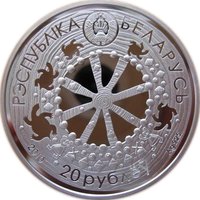
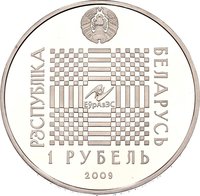
Top: Relief of the State Coat of Arms.
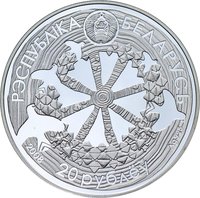
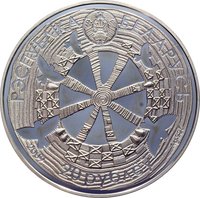
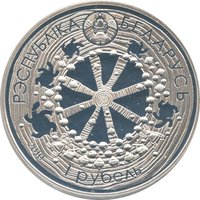
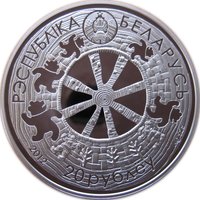
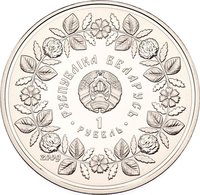
Center: Stylized skylarks and folk ornaments on a spinning wheel, its pattern transforming into tree rings.
Bottom: Year of issue.
Circumference: Top — РЭСПУБЛІКА БЕЛАРУСЬ (THE REPUBLIC OF BELARUS); bottom — 1 РУБЕЛЬ (1 RUBLE).
Center: Stylized skylarks and folk ornaments on a spinning wheel, its pattern transforming into tree rings.
Bottom: Year of issue.
Circumference: Top — РЭСПУБЛІКА БЕЛАРУСЬ (THE REPUBLIC OF BELARUS); bottom — 1 РУБЕЛЬ (1 RUBLE).
Inscription:
РЭСПУБЛIКА БЕЛАРУСЬ
1 РУБЕЛЬ
2009
1 РУБЕЛЬ
2009
Translation:
REPUBLIC OF BELARUS
1 RUBLE
2009
1 RUBLE
2009
Script: Cyrillic
Language: Belarusian
Designer: Oksana Novosiolova
Reverse
Description:
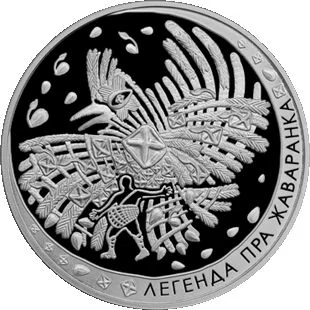
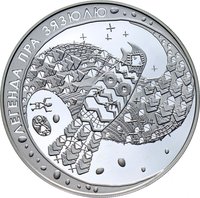
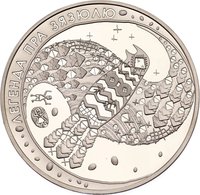
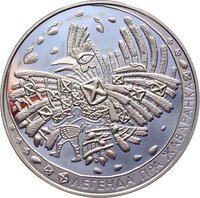
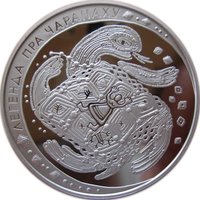
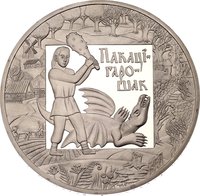
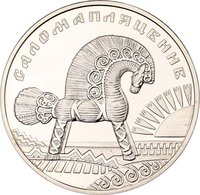
Centered: a stylized skylark, its wings spread and plumage patterned like plowed furrows, within a rhombus and cross linking it to earth and the Divine. Below is a sower's silhouette. At bottom right, the circumferential inscription: ЛЕГЕНДА ПРА ЖАВАРАНКА (THE LEGEND OF THE SKYLARK).
Inscription:
ЛЕГЕНДА ПРА ЖАВАРАНКА
Translation:
A legend about the Yavaranka
Script: Cyrillic
Language: Belarusian
Designer: Oksana Novosiolova
Edge
Reeded
Mints
| Name | Mark |
|---|---|
| Lithuanian Mint | — |
Mintings
| Year | Mint Mark | Mintage | Quality | Collection |
|---|---|---|---|---|
| 2009 | — | 5,000 | Prooflike |
Historical background
In 2009, Belarus faced a severe currency crisis, the roots of which lay in a state-led economic model heavily reliant on subsidized Russian energy and directed lending to inefficient state-owned enterprises. The government of President Alexander Lukashenko maintained an official fixed exchange rate for the Belarusian ruble (BYR) that was significantly overvalued, while a large current account deficit and dwindling foreign currency reserves created mounting pressure. This policy was sustained in part by a $3 billion loan from the International Monetary Fund (IMF) in early 2009, intended to help stabilize the economy during the global financial crisis, but underlying structural weaknesses remained unaddressed.
The situation came to a head in late 2008 and throughout 2009 as the overvalued currency fueled a surge in imports and a collapse in exports, rapidly depleting the country's hard currency reserves. A growing black market for foreign exchange emerged, where the US dollar traded at a premium of up to 30-40% above the official rate, exposing the unrealistic nature of the peg. Despite administrative measures to restrict currency purchases and boost reserves—including mandatory sales of foreign currency earnings by exporters—confidence in the ruble evaporated, leading to widespread dollarization within the economy as citizens and businesses sought to protect their savings.
The crisis forced the National Bank of Belarus to undertake a series of controlled devaluations in 2009, officially lowering the ruble's value against a basket of foreign currencies by approximately 20% over the year. However, these measures were insufficient to restore balance, merely setting the stage for a more dramatic and traumatic devaluation in 2011. The 2009 episode thus highlighted the fundamental unsustainability of Belarus's economic policies, its vulnerability to external shocks, and the persistent gap between administrative controls and market realities.
The situation came to a head in late 2008 and throughout 2009 as the overvalued currency fueled a surge in imports and a collapse in exports, rapidly depleting the country's hard currency reserves. A growing black market for foreign exchange emerged, where the US dollar traded at a premium of up to 30-40% above the official rate, exposing the unrealistic nature of the peg. Despite administrative measures to restrict currency purchases and boost reserves—including mandatory sales of foreign currency earnings by exporters—confidence in the ruble evaporated, leading to widespread dollarization within the economy as citizens and businesses sought to protect their savings.
The crisis forced the National Bank of Belarus to undertake a series of controlled devaluations in 2009, officially lowering the ruble's value against a basket of foreign currencies by approximately 20% over the year. However, these measures were insufficient to restore balance, merely setting the stage for a more dramatic and traumatic devaluation in 2011. The 2009 episode thus highlighted the fundamental unsustainability of Belarus's economic policies, its vulnerability to external shocks, and the persistent gap between administrative controls and market realities.
Series: Belarusian Folk Legends
🌟 Limited