

200 dollars – Liberia
Add to wishlist
Non-circulating coins
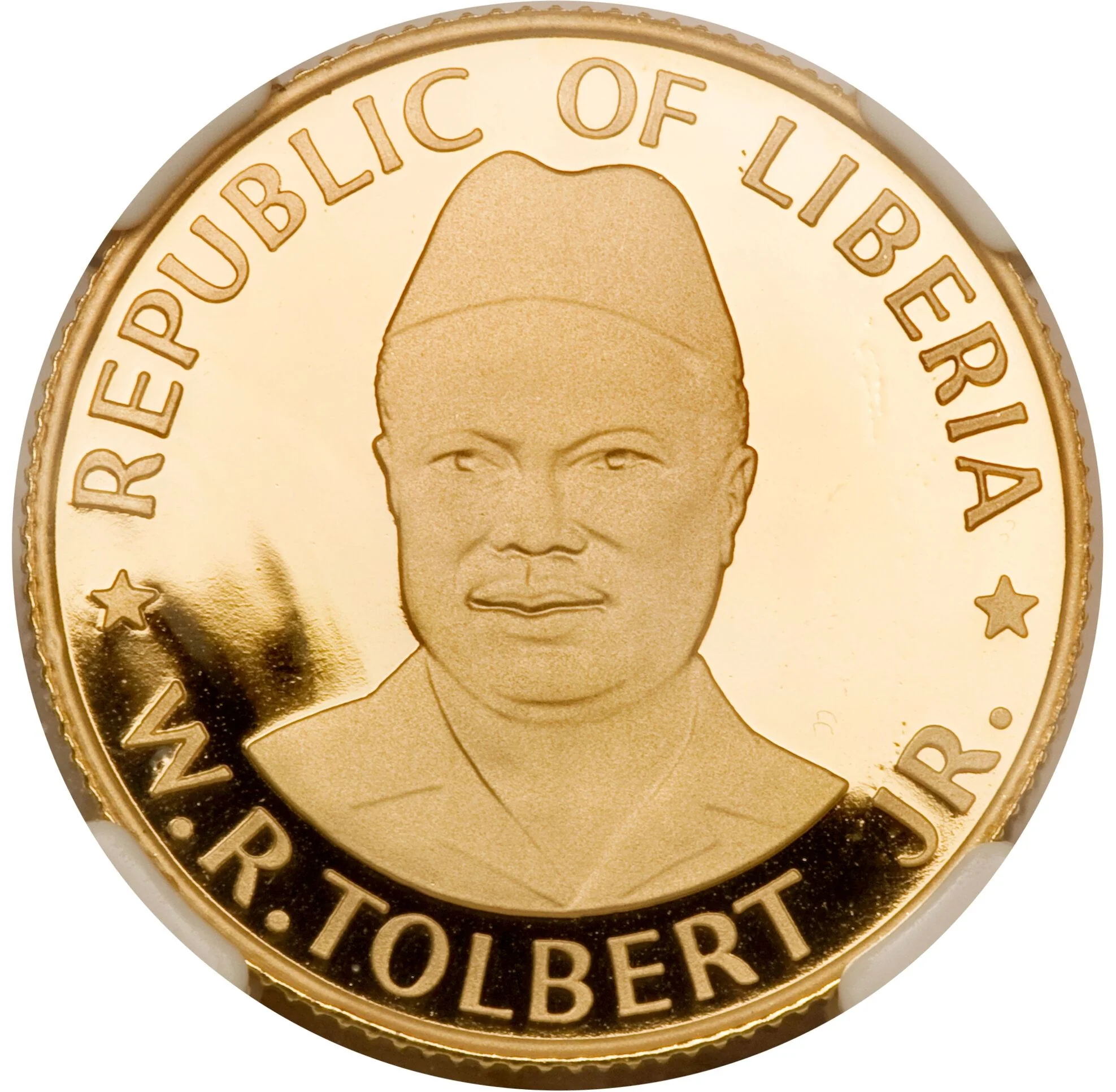
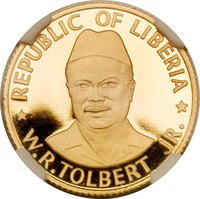
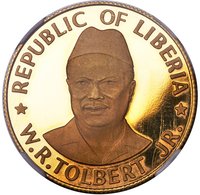
Commemoration: Inauguration of President Tolbert
Series: Presidential Inauguration
Liberia
Context
Material
References
KM: #
Numista: #299905
Value
Exchange value: 200 LRD
Bullion value: $1654.82
Obverse
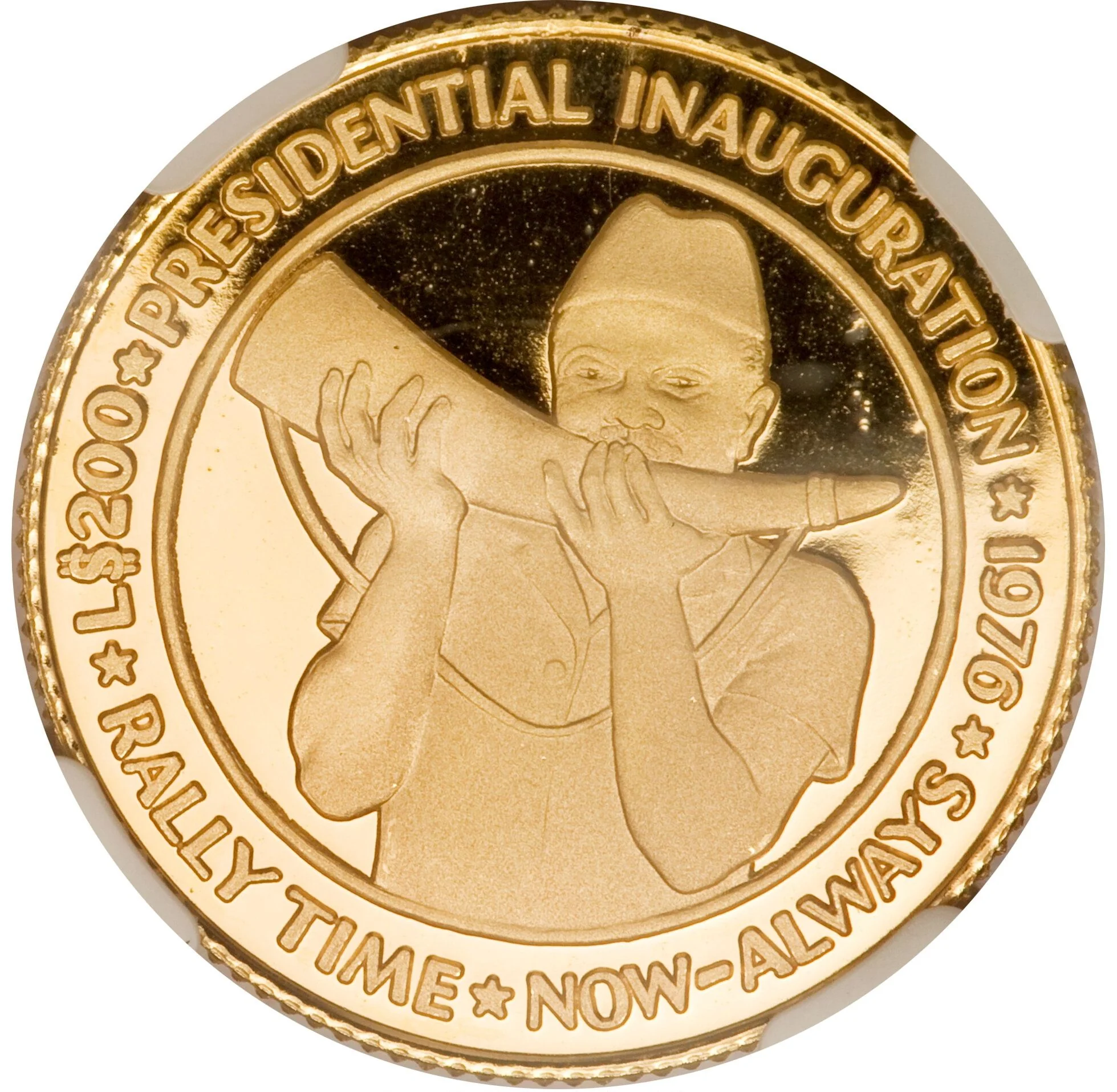
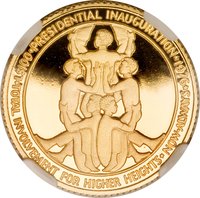
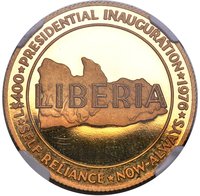
Reverse
Description:
Horn player
Inscription:
L$200 ★ PRESIDENTIAL INAUGURATION ★ 1976
★ RALLY TIME ★ NOW - ALWAYS ★
★ RALLY TIME ★ NOW - ALWAYS ★
Script: Latin
Edge
Reeded
Categories
| Object> Hat |
| Person> Politician |
Mints
| Name | Mark |
|---|---|
| Royal Mint | — |
Mintings
| Year | Mint Mark | Mintage | Quality | Collection |
|---|---|---|---|---|
| 1976 | — | 100 | Proof |
Historical background
In 1976, Liberia's currency situation was characterized by the unique coexistence of two legal tenders: the Liberian dollar (LRD) and the United States dollar (USD). This dual-currency system was a legacy of the country's founding and deep historical ties with the United States. Since the early 20th century, the U.S. dollar had circulated freely and was widely accepted for all transactions, a practice formalized by law. The Liberian dollar, first issued in 1847, was pegged at par (1:1) with the U.S. dollar, a fixed exchange rate intended to provide stability and foster confidence in the domestic currency.
Economically, 1976 fell within a period of relative prosperity fueled by significant foreign investment in the iron ore sector and rising commodity prices. This environment supported the stability of the currency peg. The government, under President William R. Tolbert Jr., maintained conservative fiscal and monetary policies aimed at preserving this parity. The Central Bank of Liberia, established in 1974, managed the issuance of Liberian dollar coins and banknotes, but the U.S. dollar remained the dominant medium for large-scale business, international trade, and government accounts, effectively making Liberia a dollarized economy.
However, this system contained underlying vulnerabilities. The economy's heavy reliance on a few primary exports made it susceptible to external shocks, and the fixed parity depended heavily on sufficient foreign exchange reserves. While not yet apparent in 1976, the structural weaknesses would later be exposed following the global economic downturns of the late 1970s, culminating in a severe balance of payments crisis. The stability of 1976, therefore, represented the calm before a storm that would eventually lead to the breakdown of the historic peg and a significant devaluation of the Liberian dollar in the early 1980s.
Economically, 1976 fell within a period of relative prosperity fueled by significant foreign investment in the iron ore sector and rising commodity prices. This environment supported the stability of the currency peg. The government, under President William R. Tolbert Jr., maintained conservative fiscal and monetary policies aimed at preserving this parity. The Central Bank of Liberia, established in 1974, managed the issuance of Liberian dollar coins and banknotes, but the U.S. dollar remained the dominant medium for large-scale business, international trade, and government accounts, effectively making Liberia a dollarized economy.
However, this system contained underlying vulnerabilities. The economy's heavy reliance on a few primary exports made it susceptible to external shocks, and the fixed parity depended heavily on sufficient foreign exchange reserves. While not yet apparent in 1976, the structural weaknesses would later be exposed following the global economic downturns of the late 1970s, culminating in a severe balance of payments crisis. The stability of 1976, therefore, represented the calm before a storm that would eventually lead to the breakdown of the historic peg and a significant devaluation of the Liberian dollar in the early 1980s.
✨ Legendary