

10 escudos – Portuguese Guinea
Add to wishlist
Guinea-Bissau
Context
Year: 1952
Country: Guinea-Bissau
Issuer: Portuguese Guinea
Period:
(1951—1973)
Currency:
(1914—1975)
Demonetization: 25 April 1974
Total mintage: 1,200,000
Material
References
KM: #
Numista: #29847
Value
Bullion value: $9.16
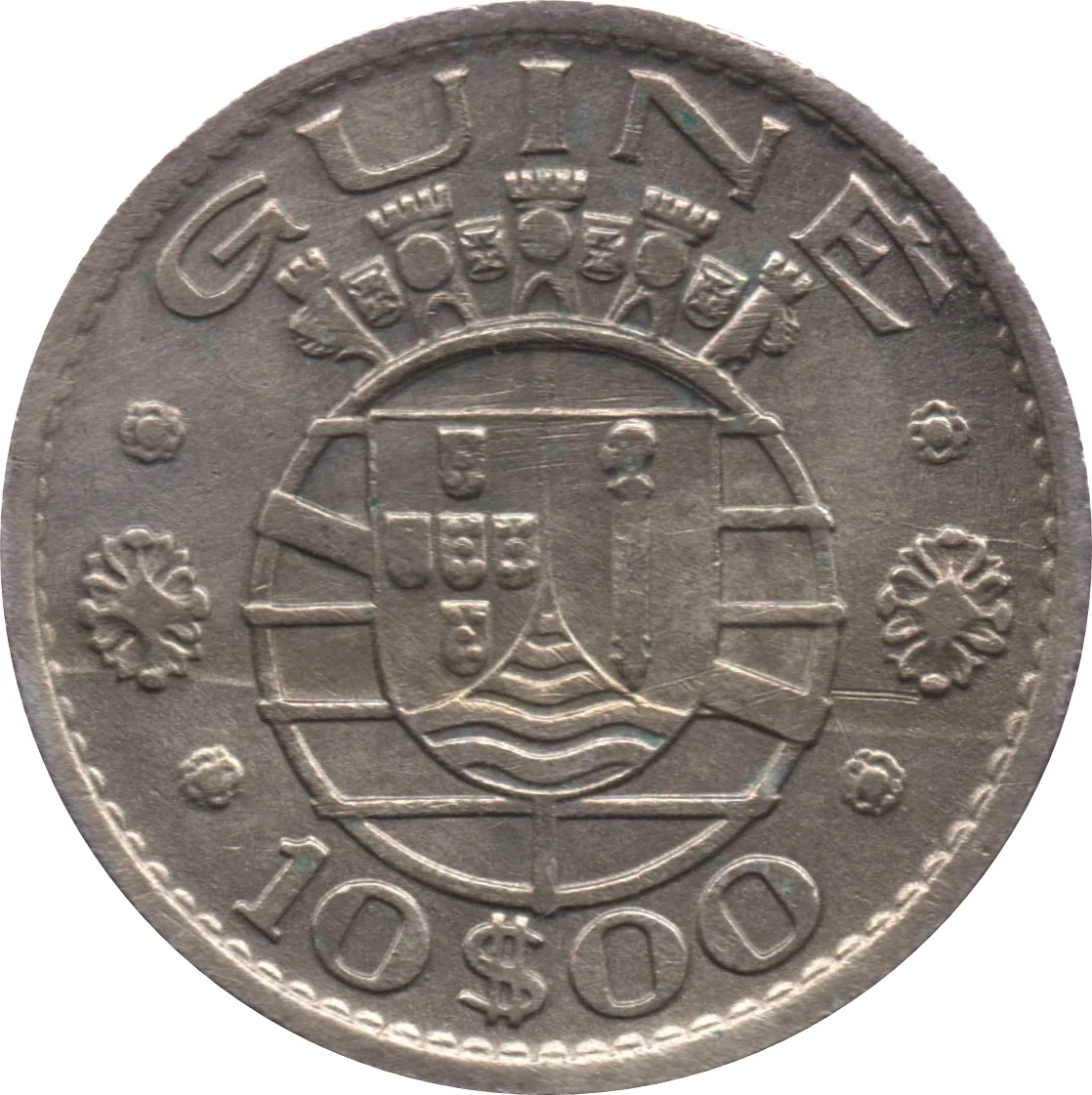
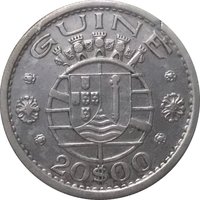
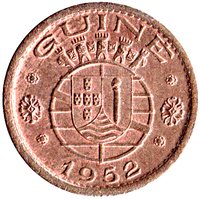
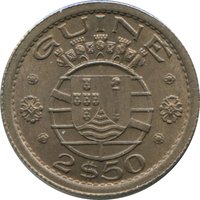
Obverse
Description:
Crowned towers and shields on a divided circle.
Inscription:
GUINÉ
10$00
10$00
Translation:
Guinea
10$00
10$00
Script: Latin
Language: Portuguese
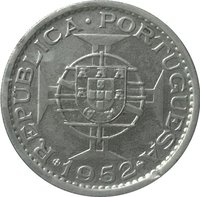
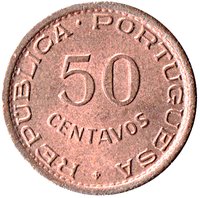
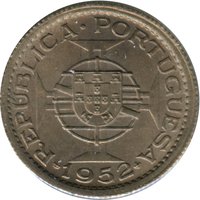
Reverse
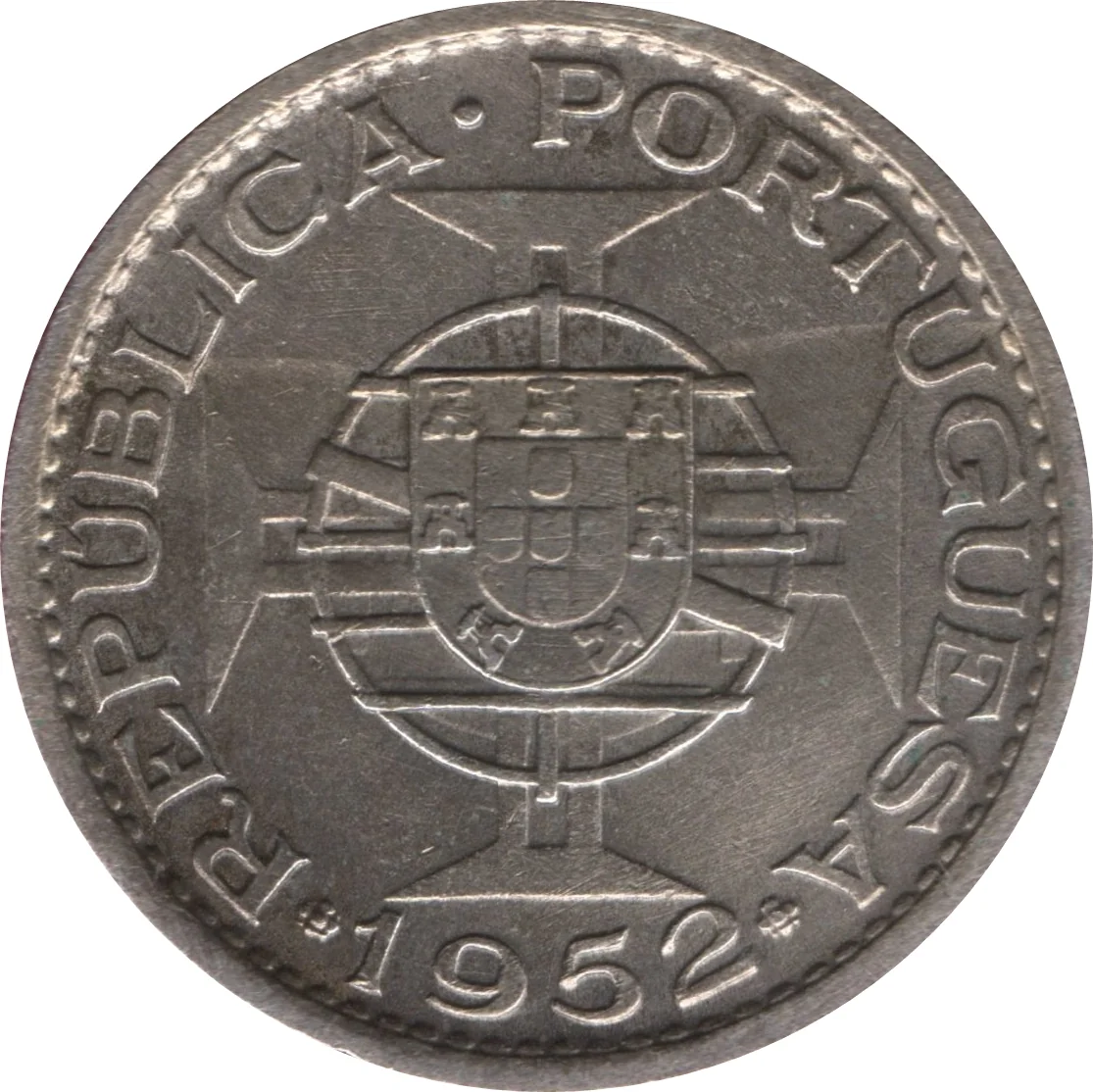
Description:
Shield on a cross-lined circle.
Inscription:
REPÚBLICA·PORTUGUESA
·1952·
·1952·
Translation:
PORTUGUESE REPUBLIC
·1952·
·1952·
Script: Latin
Language: Portuguese
Edge
Reeded
Categories
| Symbols> Coat of Arms |
| Symbol> Cross |
Mintings
| Year | Mint Mark | Mintage | Quality | Collection |
|---|---|---|---|---|
| 1952 | — | 1,200,000 |
Historical background
In 1952, Portuguese Guinea (present-day Guinea-Bissau) operated under a currency system fully integrated into Portugal's colonial monetary framework. The official currency was the Portuguese Guinean escudo, which had been introduced in 1914 and was pegged at par with the Portuguese metropolitan escudo. This system was strictly controlled by Lisbon, with the Banco Nacional Ultramarino (BNU) holding the exclusive right of note issue, ensuring that the colony's financial flows were directed toward the Portuguese economy and that monetary policy was dictated entirely by the colonial power.
The local economy was predominantly subsistence-based, with a small cash sector focused on the export of primary products like peanuts, palm kernels, and timber. The use of formal currency was largely confined to the coastal urban centers, administrative functions, and the small Portuguese settler and mestiço (mixed-race) merchant communities. In rural areas, barter and informal exchange remained widespread, and the escudo's penetration was limited, reflecting the territory's underdeveloped economic integration and Portugal's limited success in stimulating a full market economy.
This monetary arrangement was a direct instrument of colonial exploitation and control. It facilitated the extraction of resources by tying the colony's trade to Portugal, stifling financial autonomy, and preventing connections with other currency zones. The system also reinforced social stratification, as access to and control over escudo currency was largely held by the colonial administration and its allied commercial interests. This financial subjugation, part of the broader Estado Novo policy, would become a focal point of economic grievance fueling the armed struggle for independence that would erupt just over a decade later under the leadership of the PAIGC.
The local economy was predominantly subsistence-based, with a small cash sector focused on the export of primary products like peanuts, palm kernels, and timber. The use of formal currency was largely confined to the coastal urban centers, administrative functions, and the small Portuguese settler and mestiço (mixed-race) merchant communities. In rural areas, barter and informal exchange remained widespread, and the escudo's penetration was limited, reflecting the territory's underdeveloped economic integration and Portugal's limited success in stimulating a full market economy.
This monetary arrangement was a direct instrument of colonial exploitation and control. It facilitated the extraction of resources by tying the colony's trade to Portugal, stifling financial autonomy, and preventing connections with other currency zones. The system also reinforced social stratification, as access to and control over escudo currency was largely held by the colonial administration and its allied commercial interests. This financial subjugation, part of the broader Estado Novo policy, would become a focal point of economic grievance fueling the armed struggle for independence that would erupt just over a decade later under the leadership of the PAIGC.
🌱 Fairly Common