

20 Cash – Hunan-Hupeh Soviet
China
Context
Year: 1931
Country: China 
Issuer: Hunan-Hupeh Soviet
Issuing organization: Hunan-Hupeh Soviet Bank
Currency:
(1930—1936)
Demonetized: Yes
Material
References
Numista: #297984
Obverse
Description:
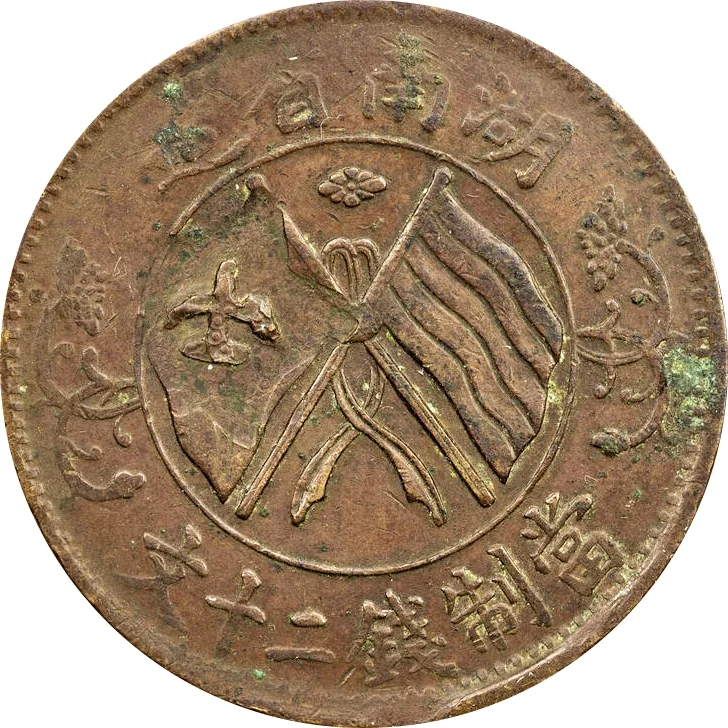
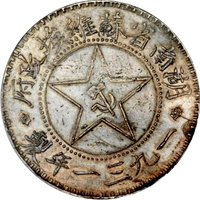
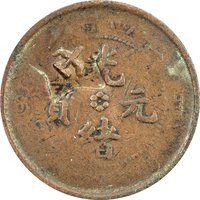
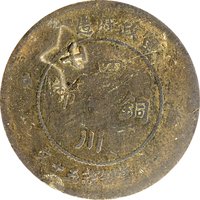
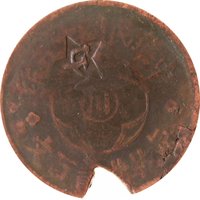
Hammer and sickle in star over crossed flags, floral elements, and Chinese characters.
Inscription:
造省南湖
文十二錢制當
文十二錢制當
Translation:
Made in Nanhu by the Ministry of Works.
Twelve wen by ordinance, equivalent to one coin.
Twelve wen by ordinance, equivalent to one coin.
Language: Classical Chinese
Reverse
Description:
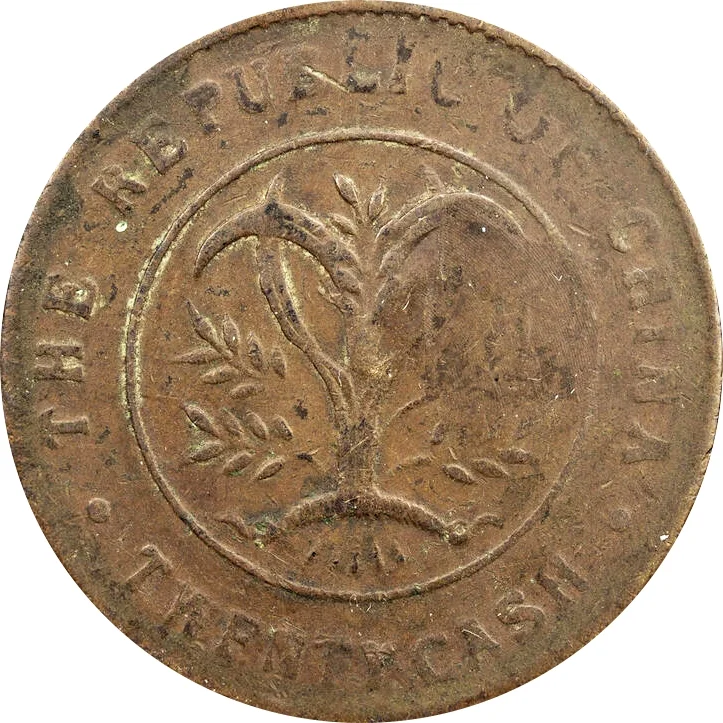
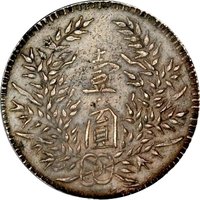
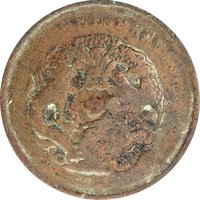
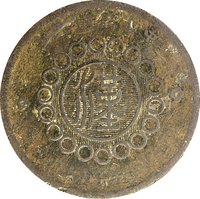
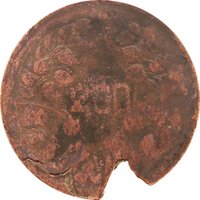
Rice plant with five ears and a ribbon, encircled by English text.
Inscription:
THE REPUBLIC OF CHINA
TWENTY CASH
TWENTY CASH
Edge
Plain
Mintings
| Year | Mint Mark | Mintage | Quality | Collection |
|---|---|---|---|---|
| 1931 | — | — |
Historical background
The currency situation in the Hunan-Hupeh (Hubei) Soviet in 1931 was a critical and experimental component of the Chinese Soviet Republic's attempt to establish an independent economic system amidst the encirclement campaigns of the Nationalist (KMT) government. Facing severe blockade and a scarcity of silver, the soviet government, under the leadership of the Chinese Communist Party, moved to replace the circulating KMT and warlord currencies with its own notes. The primary institution responsible for this was the Hunan-Hupeh Soviet Government Bank, established in 1931, which issued paper notes denominated in "yuan," theoretically backed by a reserve of silver, food, and other commodities.
This monetary policy served dual purposes: to finance government and military expenditures in the ongoing civil war, and to sever the economic dependency on the hostile KMT-controlled regions. However, the currency faced significant challenges. Counterfeiting by the KMT was a major tactic of economic warfare, designed to create hyperinflation and destroy public trust. More fundamentally, the soviet's unstable territory and limited economic base—reliant largely on agriculture—made it difficult to establish a robust value guarantee. The currency's acceptance relied heavily on administrative decree and the political credibility of the soviet authorities rather than strong intrinsic or reserve value.
Consequently, while the currency facilitated internal transactions and symbolized political autonomy, it remained fragile and geographically limited. Its value and circulation fluctuated directly with the military fortunes of the Red Army. The pressures of the KMT's Third Encirclement Campaign in 1931 further strained this fledgling financial system, highlighting the immense difficulty of maintaining a stable currency in a besieged, rural-based revolutionary base area. This experience provided early, harsh lessons in economic management that would later inform the CCP's financial policies in the Yan'an period and after victory in 1949.
This monetary policy served dual purposes: to finance government and military expenditures in the ongoing civil war, and to sever the economic dependency on the hostile KMT-controlled regions. However, the currency faced significant challenges. Counterfeiting by the KMT was a major tactic of economic warfare, designed to create hyperinflation and destroy public trust. More fundamentally, the soviet's unstable territory and limited economic base—reliant largely on agriculture—made it difficult to establish a robust value guarantee. The currency's acceptance relied heavily on administrative decree and the political credibility of the soviet authorities rather than strong intrinsic or reserve value.
Consequently, while the currency facilitated internal transactions and symbolized political autonomy, it remained fragile and geographically limited. Its value and circulation fluctuated directly with the military fortunes of the Red Army. The pressures of the KMT's Third Encirclement Campaign in 1931 further strained this fledgling financial system, highlighting the immense difficulty of maintaining a stable currency in a besieged, rural-based revolutionary base area. This experience provided early, harsh lessons in economic management that would later inform the CCP's financial policies in the Yan'an period and after victory in 1949.
💎 Very Rare