

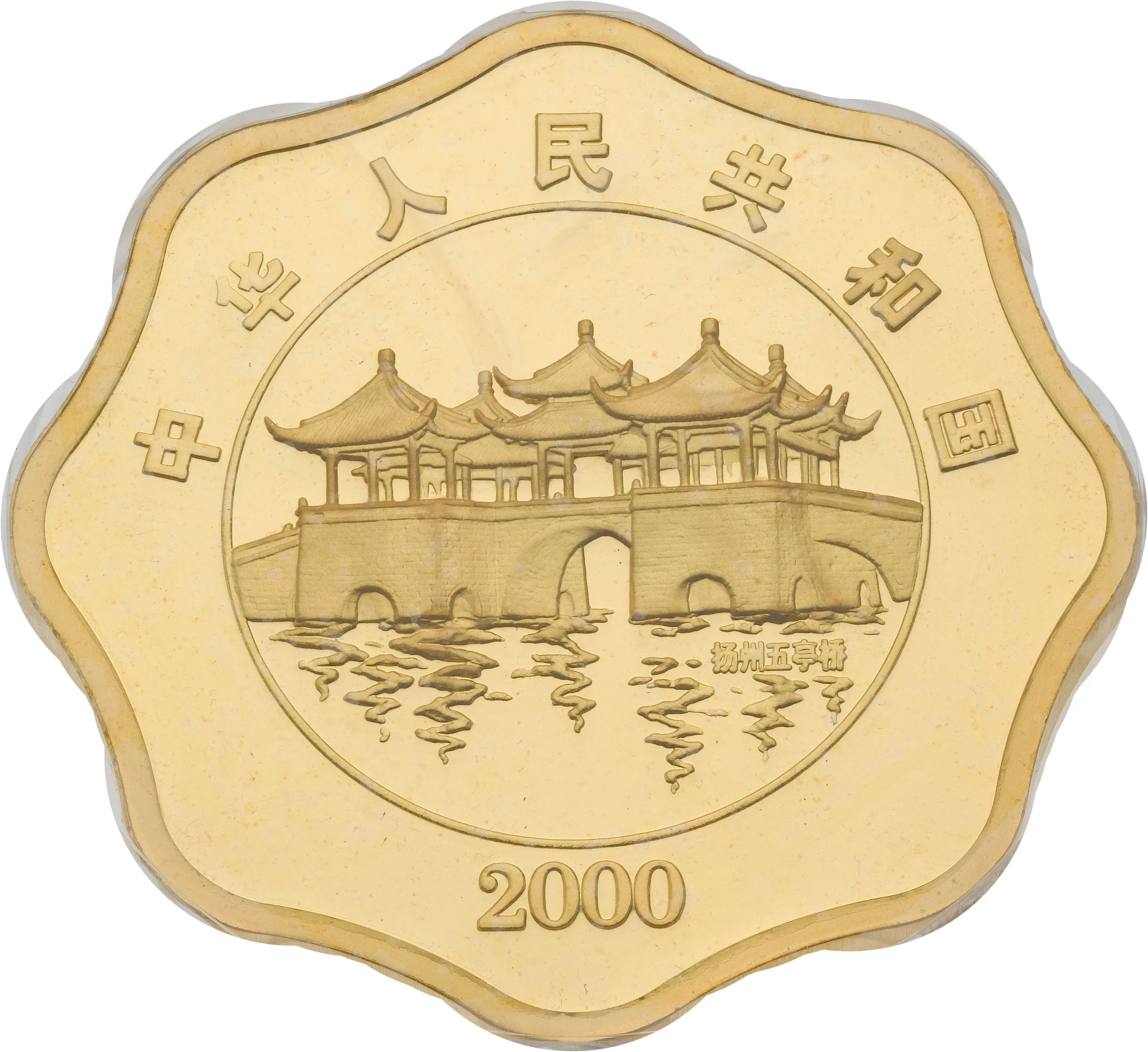
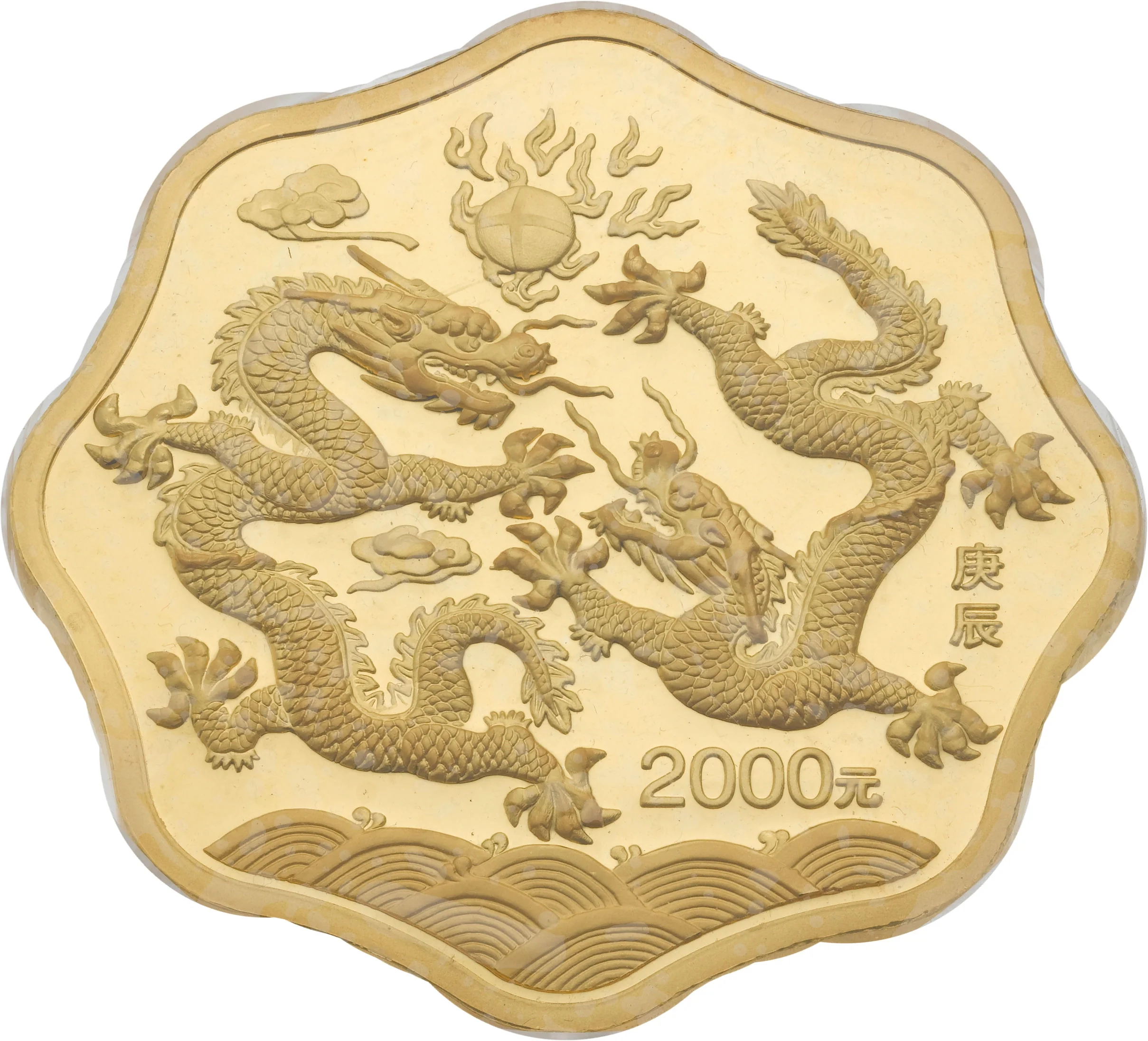
2000 Yuan – People's Republic of China
China
Context
Year: 2000
Country: China 
Issuer: People's Republic of China
Period:
(since 1949)
Currency:
(since 1955)
Material
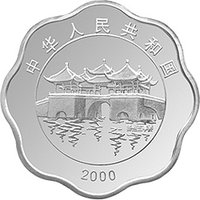
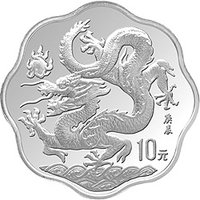
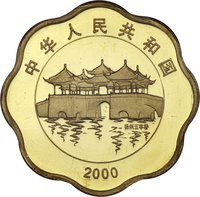
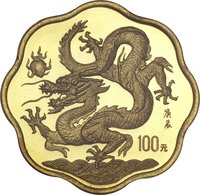
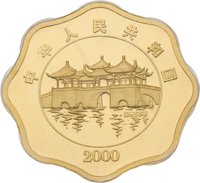
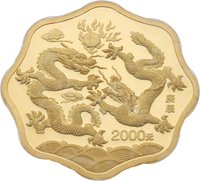
Diameter: 100 mm
Weight: 1000 g
Gold weight: 999.00 g
Shape: Scalloped
Composition: 99.9% Gold
Standard: Silver kilo
Magnetic: No
Technique: Milled
References
KM: #Click to copy to clipboard1327
Numista: #29760
Value
Exchange value: 2000 CNY = $292.34
Bullion value: $166900.94
Inflation-adjusted value: 3266.30 CNY
Mintings
| Year | Mint Mark | Mintage | Quality | Collection |
|---|---|---|---|---|
| 2000 | — | — | Proof |
Historical background
In the year 2000, the People's Republic of China's currency system was characterized by a critical duality: the Renminbi (RMB) was fully convertible on the current account (for trade in goods and services) but remained strictly non-convertible on the capital account. This meant that while foreign businesses could freely exchange currency to pay for Chinese exports or invest in factories, strict controls prevented the free flow of capital for financial investments like stocks and bonds. The exchange rate itself was not set by the market; instead, the People's Bank of China (PBOC) pegged the RMB to the U.S. dollar at a fixed rate of approximately 8.28 RMB per USD. This peg, maintained since the Asian Financial Crisis of 1997-98, provided crucial stability for China's booming export sector, which was a primary engine of the country's rapid economic growth.
This policy framework was a deliberate tool of China's export-oriented development strategy. The fixed and arguably undervalued exchange rate made Chinese goods exceptionally cheap on the global market, fueling a continuous surge in exports and generating massive trade surpluses. Consequently, China accumulated foreign exchange reserves at an accelerating pace, building a war chest that would grow to become the world's largest. However, this system also created significant external pressures. Major trading partners, particularly the United States, began to increasingly criticize the peg as a distortion giving China an unfair trade advantage, leading to persistent calls for RMB appreciation and greater currency flexibility.
Domestically, the currency regime presented both shields and challenges. The capital controls effectively insulated China's financial system from volatile international capital flows, providing a stable environment for domestic reform of state-owned enterprises and the banking sector. Yet, the need to maintain the dollar peg constrained independent monetary policy, as the PBOC had to consistently intervene in foreign exchange markets by buying incoming dollars and selling RMB. This intervention led to a substantial increase in the domestic money supply, creating latent inflationary pressures and complicating macroeconomic management. Thus, in 2000, China's currency situation was a stable but increasingly strained cornerstone of its economic model, balancing domestic control against growing international scrutiny and internal imbalances.
This policy framework was a deliberate tool of China's export-oriented development strategy. The fixed and arguably undervalued exchange rate made Chinese goods exceptionally cheap on the global market, fueling a continuous surge in exports and generating massive trade surpluses. Consequently, China accumulated foreign exchange reserves at an accelerating pace, building a war chest that would grow to become the world's largest. However, this system also created significant external pressures. Major trading partners, particularly the United States, began to increasingly criticize the peg as a distortion giving China an unfair trade advantage, leading to persistent calls for RMB appreciation and greater currency flexibility.
Domestically, the currency regime presented both shields and challenges. The capital controls effectively insulated China's financial system from volatile international capital flows, providing a stable environment for domestic reform of state-owned enterprises and the banking sector. Yet, the need to maintain the dollar peg constrained independent monetary policy, as the PBOC had to consistently intervene in foreign exchange markets by buying incoming dollars and selling RMB. This intervention led to a substantial increase in the domestic money supply, creating latent inflationary pressures and complicating macroeconomic management. Thus, in 2000, China's currency situation was a stable but increasingly strained cornerstone of its economic model, balancing domestic control against growing international scrutiny and internal imbalances.
Series: Chinese Zodiac Bullion
✨ Legendary