

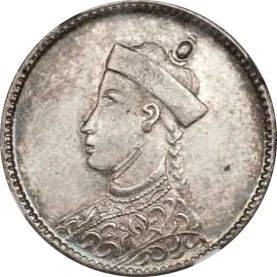
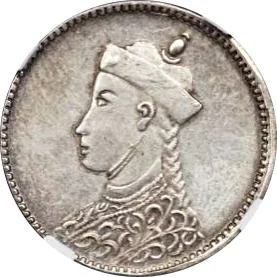

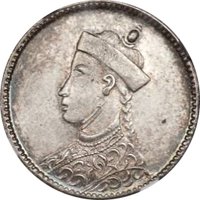
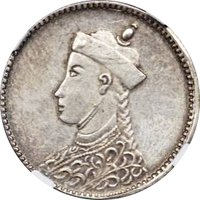
Obverse
Description:
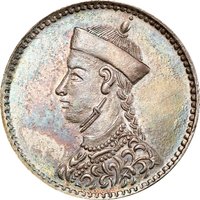
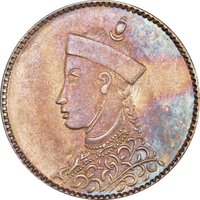
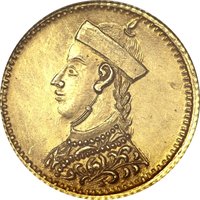
Guangxu bust in cap and floral robe, facing left.
Reverse
Description:
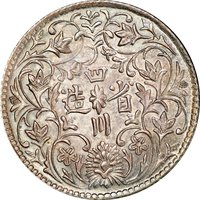
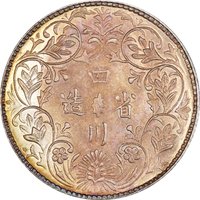
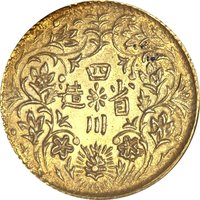
Guangxu bust in cap and floral robe, facing left.
Edge
Reeded.
Mintings
| Year | Mint Mark | Mintage | Quality | Collection |
|---|---|---|---|---|
| — | — | — |
Historical background
In 1904, Tibet operated under a traditional monetary system largely isolated from global trade, yet facing increasing external pressures. The primary circulating currency was the Tibetan silver sang, a locally minted coin that facilitated daily trade and tax payments to monasteries and the Lhasa government. However, the region's economy also saw the widespread use of silver ingots (sycee) for larger transactions and a variety of coins from neighbouring regions, such as Indian rupees and Chinese silver dollars, particularly in border areas. This created a complex and somewhat fragmented monetary environment without a standardized, modern banking system.
This financial landscape was directly impacted by the British military expedition to Lhasa that same year, led by Colonel Francis Younghusband. A key objective of the mission was to force trade relations and establish British influence, challenging the existing Tibetan and Chinese suzerainty. The resulting Treaty of Lhasa (1904) imposed a massive indemnity of 7.5 million rupees on Tibet, to be paid in 75 annual installments. This demand was not just a political shock but an immense financial burden on a subsistence-based economy with limited liquid capital, threatening to drain the region's wealth for decades.
The indemnity clause had profound currency implications. To secure the withdrawal of British forces, the initial payment was hastily arranged by the Chinese Amban in Lhasa, who advanced the funds. This action underscored China's claim to fiscal responsibility for Tibet, a point of diplomatic contention. Furthermore, the treaty stipulated that the indemnity would be reduced if trade marts were established, linking monetary penalty directly to economic opening. Consequently, the events of 1904 forcibly pulled Tibet's currency system into the sphere of imperial finance, setting the stage for future economic competition between British India and Qing China over the region.
This financial landscape was directly impacted by the British military expedition to Lhasa that same year, led by Colonel Francis Younghusband. A key objective of the mission was to force trade relations and establish British influence, challenging the existing Tibetan and Chinese suzerainty. The resulting Treaty of Lhasa (1904) imposed a massive indemnity of 7.5 million rupees on Tibet, to be paid in 75 annual installments. This demand was not just a political shock but an immense financial burden on a subsistence-based economy with limited liquid capital, threatening to drain the region's wealth for decades.
The indemnity clause had profound currency implications. To secure the withdrawal of British forces, the initial payment was hastily arranged by the Chinese Amban in Lhasa, who advanced the funds. This action underscored China's claim to fiscal responsibility for Tibet, a point of diplomatic contention. Furthermore, the treaty stipulated that the indemnity would be reduced if trade marts were established, linking monetary penalty directly to economic opening. Consequently, the events of 1904 forcibly pulled Tibet's currency system into the sphere of imperial finance, setting the stage for future economic competition between British India and Qing China over the region.
✨ Legendary