

1 Shilling – Australia
Australia
Context

Material
References
KM: #Click to copy to clipboard39
Numista: #2975
Value
Bullion value: $14.78
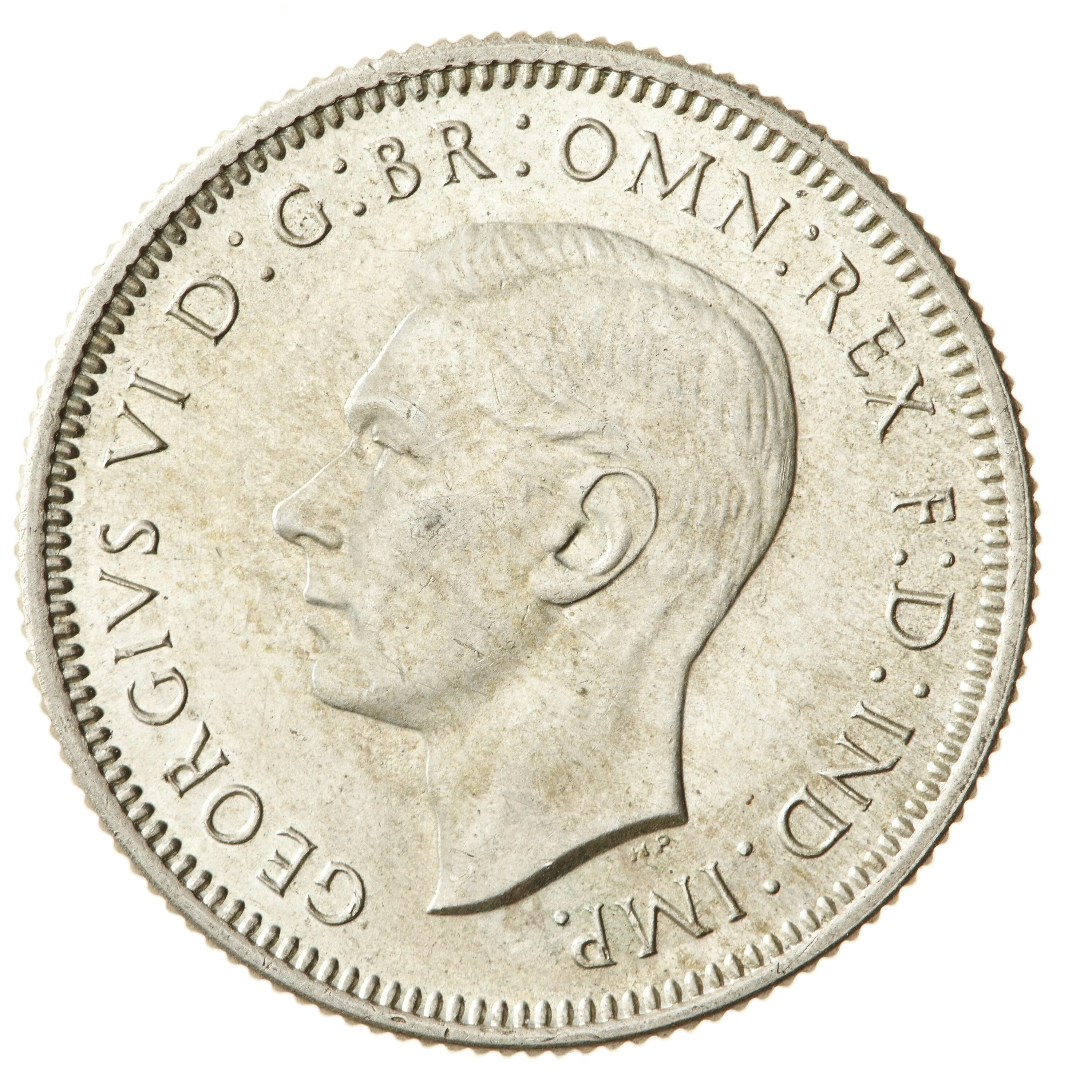
Obverse
Description:
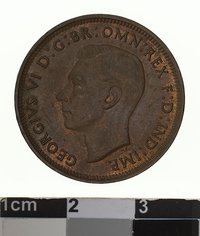
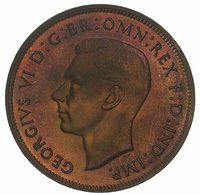
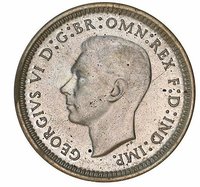
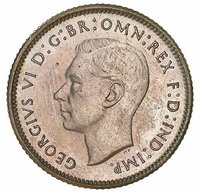
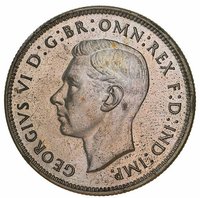
King George VI, left-facing portrait.
Inscription:
GEORGIVS VI D:G:BR:OMN:REX F:D:IND:IMP.
HP
HP
Translation:
George VI by the Grace of God King of all the Britains Defender of the Faith Emperor of India.
Script: Latin
Language: Latin
Engraver: Thomas Humphrey Paget
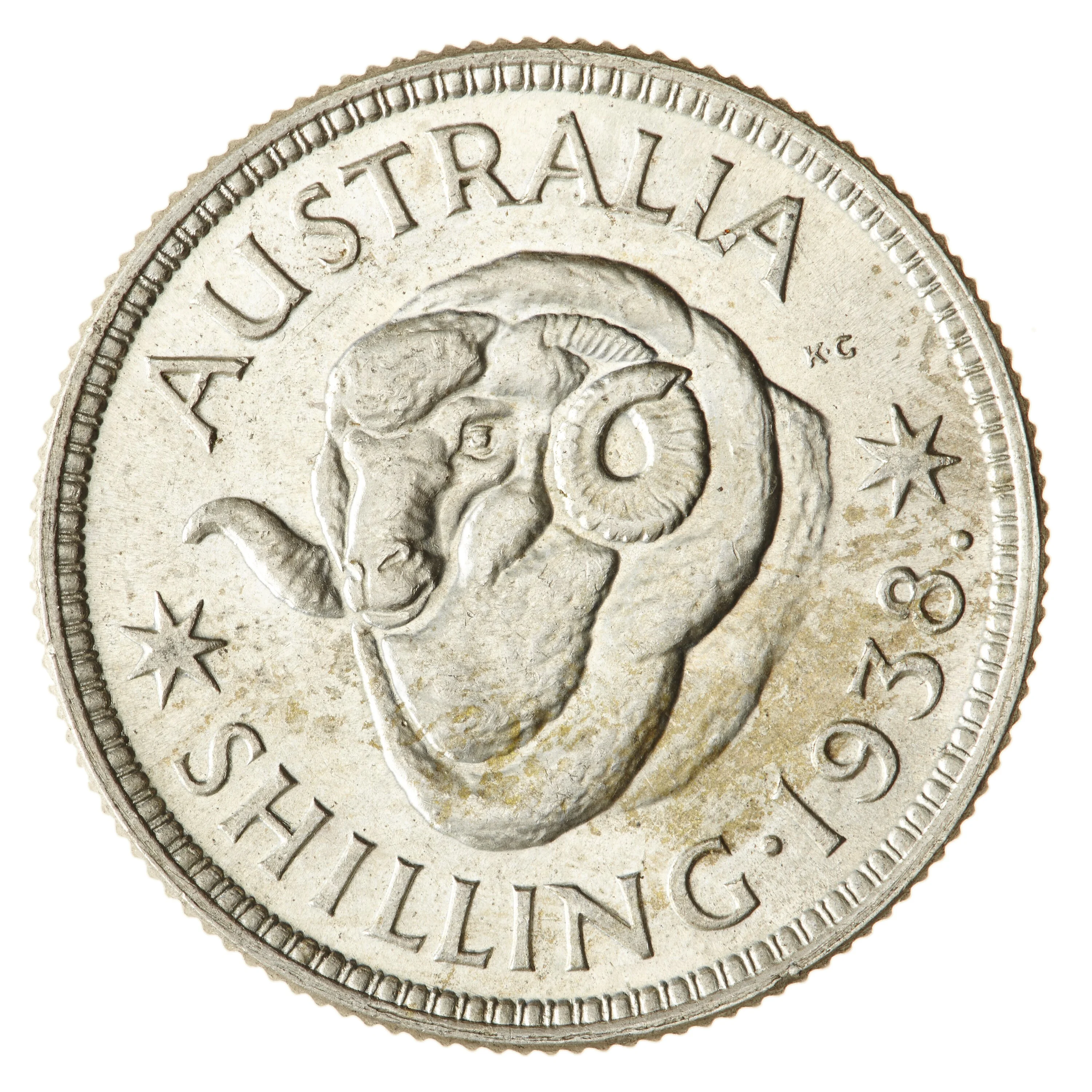
Reverse
Description:
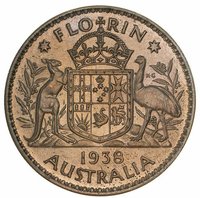
Merino breeding ram
Inscription:
AUSTRALIA
KG
*SHILLING·1940*
KG
*SHILLING·1940*
Script: Latin
Engraver: George Kruger Gray
Edge
Reeded
Mints
| Name | Mark |
|---|---|
| Royal Mint (Tower Hill) | — |
| Royal Mint | — |
| United States Mint of San Francisco | S |
Mintings
Historical background
In 1938, Australia’s currency system was fundamentally shaped by its position within the British Empire and the lingering effects of the Great Depression. The nation operated under the Australian Pound (A£), which was legally pegged to the British Pound Sterling (GBP) at parity. This meant the Australian Pound was not an independently floating currency; its value was fixed to Sterling, which itself was loosely managed against gold through the Sterling Area’s arrangements. This peg facilitated trade and capital flows with Britain, which remained Australia’s dominant economic partner, but it also meant Australia’s monetary policy was largely subordinated to British interests and the health of the Sterling Bloc.
The economic landscape was one of cautious recovery. Following the severe banking crises and the Depression’s peak in the early 1930s, the government had devalued the Australian Pound against Sterling in 1931, setting it at A£125 = GBP100. This 20% devaluation provided a crucial boost to export competitiveness for primary products like wool and wheat. By 1938, this adjusted parity remained in place, providing a measure of stability. However, the economy was still vulnerable to external shocks, and the banking system, dominated by private trading banks, operated under the Commonwealth Bank Act 1924, which gave the Commonwealth Bank limited central banking powers but not full control over monetary policy.
Looking ahead, the currency situation was on the cusp of significant change driven by geopolitical pressures. The shadows of impending war in Europe were lengthening, prompting increased domestic planning for economic mobilisation and a greater focus on national financial control. Within a few years, the demands of World War II would lead to a decisive shift, culminating in the creation of a true central bank—the Reserve Bank of Australia—and, eventually, the historic break from the Pound Sterling system with the introduction of the Australian Dollar in 1966. Thus, 1938 represents a late point in an era of imperial monetary alignment, just before global conflict accelerated the move toward financial independence.
The economic landscape was one of cautious recovery. Following the severe banking crises and the Depression’s peak in the early 1930s, the government had devalued the Australian Pound against Sterling in 1931, setting it at A£125 = GBP100. This 20% devaluation provided a crucial boost to export competitiveness for primary products like wool and wheat. By 1938, this adjusted parity remained in place, providing a measure of stability. However, the economy was still vulnerable to external shocks, and the banking system, dominated by private trading banks, operated under the Commonwealth Bank Act 1924, which gave the Commonwealth Bank limited central banking powers but not full control over monetary policy.
Looking ahead, the currency situation was on the cusp of significant change driven by geopolitical pressures. The shadows of impending war in Europe were lengthening, prompting increased domestic planning for economic mobilisation and a greater focus on national financial control. Within a few years, the demands of World War II would lead to a decisive shift, culminating in the creation of a true central bank—the Reserve Bank of Australia—and, eventually, the historic break from the Pound Sterling system with the introduction of the Australian Dollar in 1966. Thus, 1938 represents a late point in an era of imperial monetary alignment, just before global conflict accelerated the move toward financial independence.
Series: 1938 Australia circulation coins
🌱 Very Common