

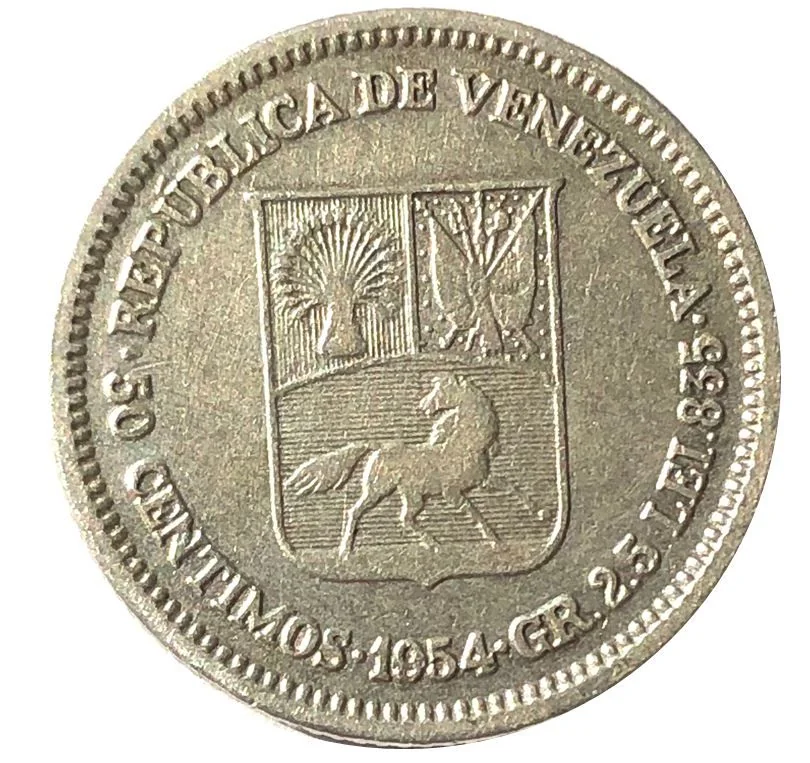
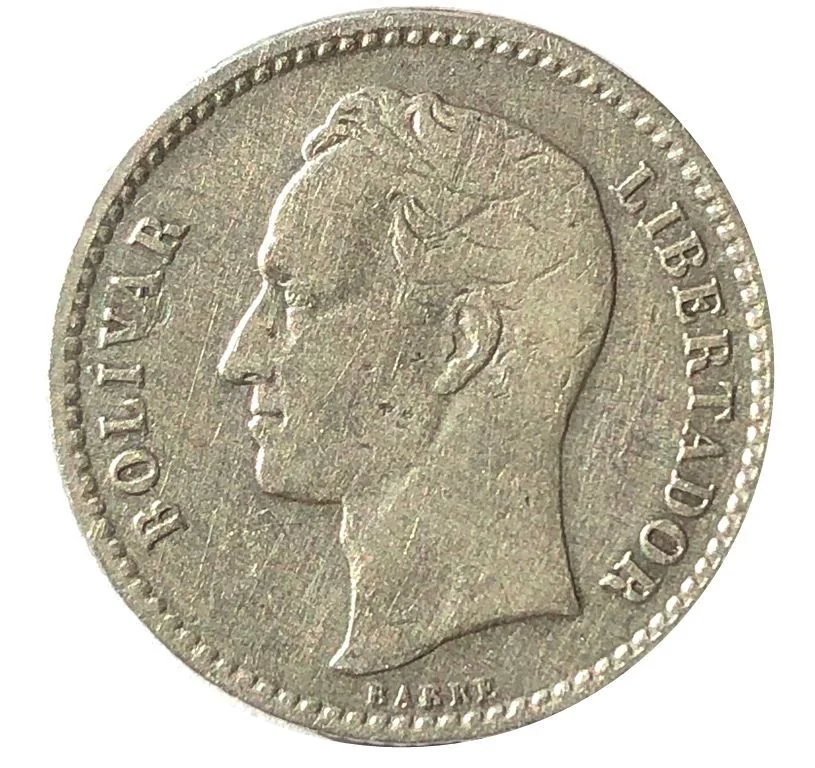
50 Centimos – Venezuela
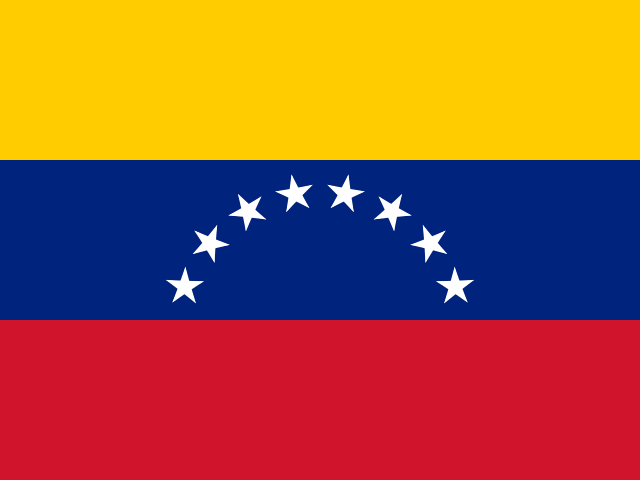
Venezuela
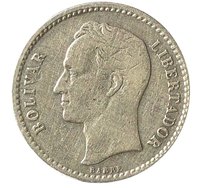
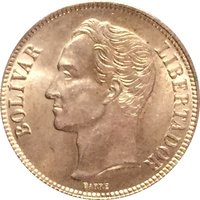
Obverse
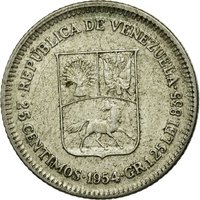
Reverse
Edge
Reeded
Categories
| Animal> Horse |
| Person> Military leader |
| Person> Politician |
| Symbols> Coat of Arms |
Mints
| Name | Mark |
|---|---|
| United States Mint of Philadelphia | — |
Mintings
| Year | Mint Mark | Mintage | Quality | Collection |
|---|---|---|---|---|
| 1955 | — | 15,000,000 |
Historical background
In 1955, Venezuela's currency, the bolívar, was a symbol of exceptional strength and stability in Latin America, underpinned by the nation's booming oil economy. As the world's third-largest oil exporter, Venezuela enjoyed substantial foreign exchange reserves, which allowed it to maintain a fixed and highly favorable exchange rate of 3.09 bolívares to the US dollar. This peg, established in 1941, was firmly backed by gold and dollar reserves, making the bolívar one of the most reliable currencies in the region and fostering significant international confidence.
This monetary stability was a direct result of the economic policies of the authoritarian government of Marcos Pérez Jiménez, which prioritized large-scale infrastructure projects and maintained strict fiscal discipline. The influx of petrodollars financed modernization and kept inflation low, while import-oriented economic policies ensured a steady flow of consumer goods. The strong bolívar facilitated cheap imports and reflected an era of apparent prosperity in Caracas and other major cities, masking underlying social inequalities and a growing dependence on a single commodity.
However, the situation in 1955, while outwardly robust, contained the seeds of future vulnerability. The economy was overwhelmingly reliant on oil revenues, with agriculture and other sectors neglected, creating a classic "Dutch Disease" scenario. Furthermore, the fixed exchange rate and the government's spending priorities were not diversified into productive, non-oil investments. This lack of economic diversification and the political instability that would follow Pérez Jiménez's overthrow in 1958 would later expose the currency to severe pressures, setting the stage for the profound monetary crises that would plague Venezuela decades later.
This monetary stability was a direct result of the economic policies of the authoritarian government of Marcos Pérez Jiménez, which prioritized large-scale infrastructure projects and maintained strict fiscal discipline. The influx of petrodollars financed modernization and kept inflation low, while import-oriented economic policies ensured a steady flow of consumer goods. The strong bolívar facilitated cheap imports and reflected an era of apparent prosperity in Caracas and other major cities, masking underlying social inequalities and a growing dependence on a single commodity.
However, the situation in 1955, while outwardly robust, contained the seeds of future vulnerability. The economy was overwhelmingly reliant on oil revenues, with agriculture and other sectors neglected, creating a classic "Dutch Disease" scenario. Furthermore, the fixed exchange rate and the government's spending priorities were not diversified into productive, non-oil investments. This lack of economic diversification and the political instability that would follow Pérez Jiménez's overthrow in 1958 would later expose the currency to severe pressures, setting the stage for the profound monetary crises that would plague Venezuela decades later.
🌱 Common