

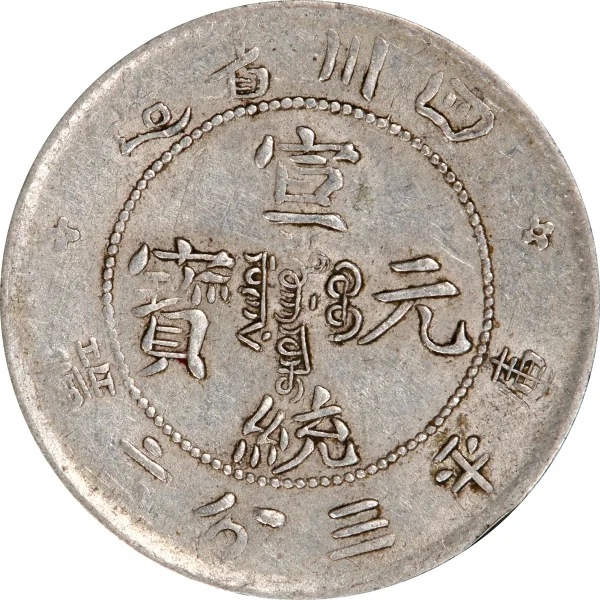
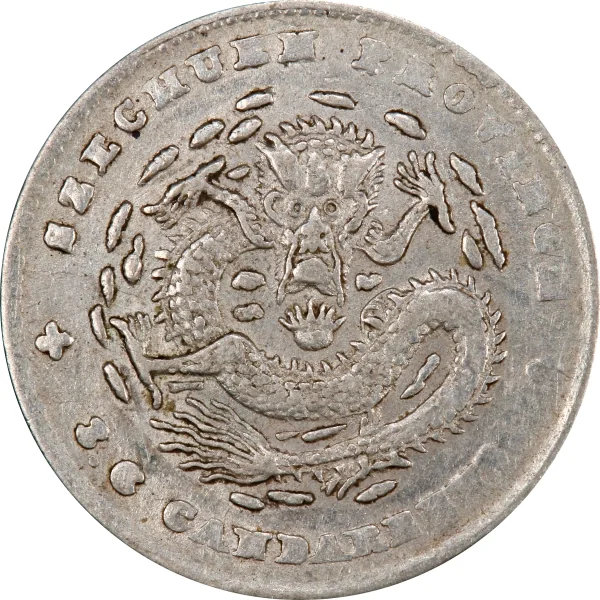
5 fen – Szechuan Province
Add to wishlist
China
Context
Year: 1910
Country: China
Issuer: Szechuan Province
Ruler: Xuantong
Currency:
(1897—1949)
Demonetized: Yes
Total mintage: 566,000
Material
References
Y: #
Numista: #297052
Value
Bullion value: $2.68
Obverse
Description:
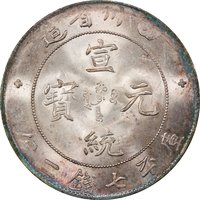
Chinese ideograms read vertically, right to left, with Manchu text in the center, all encircled by more Chinese characters.
Inscription:
造省川四
宣
ᡤᡝᡥᡠᠩᡤᡝ
寶 ᠶᡠᠸᠠᠨ ᠪᠣᠣ 元
ᠶᠣᠰᠣ
統
釐六分三平庫
宣
ᡤᡝᡥᡠᠩᡤᡝ
寶 ᠶᡠᠸᠠᠨ ᠪᠣᠣ 元
ᠶᠣᠰᠣ
統
釐六分三平庫
Translation:
Made in Sichuan Province
Xuan
Gehungge
Yuan Bao
Yuan
Yoson
Tong
Three Fen Six Li, Pingku [Standard Treasury]
Xuan
Gehungge
Yuan Bao
Yuan
Yoson
Tong
Three Fen Six Li, Pingku [Standard Treasury]
Scripts: Chinese, Mongolian / Manchu
Reverse
Description:
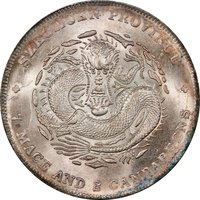
Dragon encircling a pearl, surrounded by English text.
Inscription:
SZECHUEN PROVINCE
3.6 CANDAREENS
3.6 CANDAREENS
Script: Latin
Edge
Reeded.
Categories
| Mythology> Fantastic animal |
Mintings
| Year | Mint Mark | Mintage | Quality | Collection |
|---|---|---|---|---|
| 1910 | — | 566,000 |
Historical background
In 1910, Szechuan (Sichuan) Province was mired in a severe and complex monetary crisis, symptomatic of the wider collapse of the Qing dynasty's financial system. The core of the problem was the chaotic coexistence of multiple, depreciating currencies. The official currency, the silver tael, was scarce and hoarded, while the province heavily relied on locally minted, low-quality copper "cash" coins and a flood of privately issued paper notes known as zhuangpiao. These zhuangpiao, issued by merchants, banks (qianzhuang), and even local gentry, were intended to facilitate trade but were often backed by insufficient reserves, leading to wild fluctuations in value and frequent bankruptcies.
This monetary anarchy was exacerbated by specific provincial factors. Szechuan's geographical isolation and strong local identity had long fostered financial independence, but by 1910, the system was breaking down. A failed attempt to introduce a modern, standardized copper coinage in the previous decade had only added another debased currency to the mix. Furthermore, the province was shouldering a massive indemnity payment to foreign powers following the Boxer Protocol, which drained vast quantities of silver out of the local economy. This silver drain caused the value of copper cash and paper notes to plummet against silver, devastating peasants who paid taxes in silver but earned in copper, and crippling intra-provincial commerce.
The resulting economic distress and widespread mistrust in the monetary system created a tinderbox of social unrest. This financial chaos directly fueled popular grievances that merged with anti-Qing and anti-foreign sentiment, making Szechuan a primary flashpoint for the revolution that would erupt just a year later. The 1911 Railway Protection Movement, which ignited the Wuchang Uprising, was in part a protest against the dynasty's financial policies and its plan to nationalize railways, which was seen as another scheme financed through further foreign loans and currency manipulation. Thus, the currency situation of 1910 was not merely an economic issue but a critical catalyst for political revolution.
This monetary anarchy was exacerbated by specific provincial factors. Szechuan's geographical isolation and strong local identity had long fostered financial independence, but by 1910, the system was breaking down. A failed attempt to introduce a modern, standardized copper coinage in the previous decade had only added another debased currency to the mix. Furthermore, the province was shouldering a massive indemnity payment to foreign powers following the Boxer Protocol, which drained vast quantities of silver out of the local economy. This silver drain caused the value of copper cash and paper notes to plummet against silver, devastating peasants who paid taxes in silver but earned in copper, and crippling intra-provincial commerce.
The resulting economic distress and widespread mistrust in the monetary system created a tinderbox of social unrest. This financial chaos directly fueled popular grievances that merged with anti-Qing and anti-foreign sentiment, making Szechuan a primary flashpoint for the revolution that would erupt just a year later. The 1911 Railway Protection Movement, which ignited the Wuchang Uprising, was in part a protest against the dynasty's financial policies and its plan to nationalize railways, which was seen as another scheme financed through further foreign loans and currency manipulation. Thus, the currency situation of 1910 was not merely an economic issue but a critical catalyst for political revolution.
✨ Legendary