

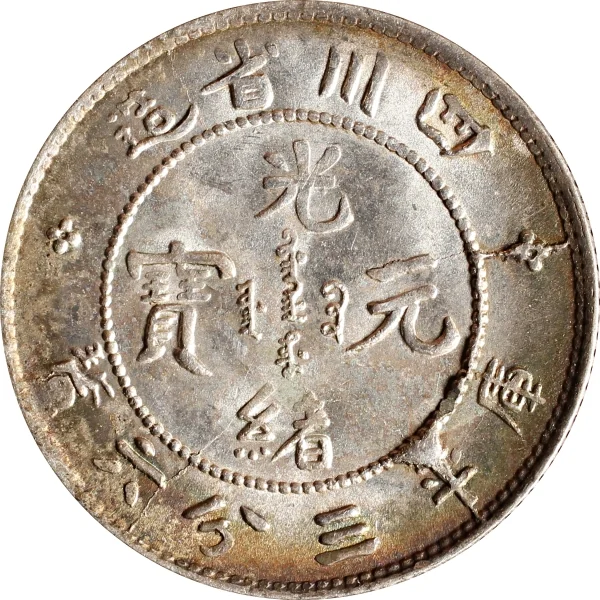
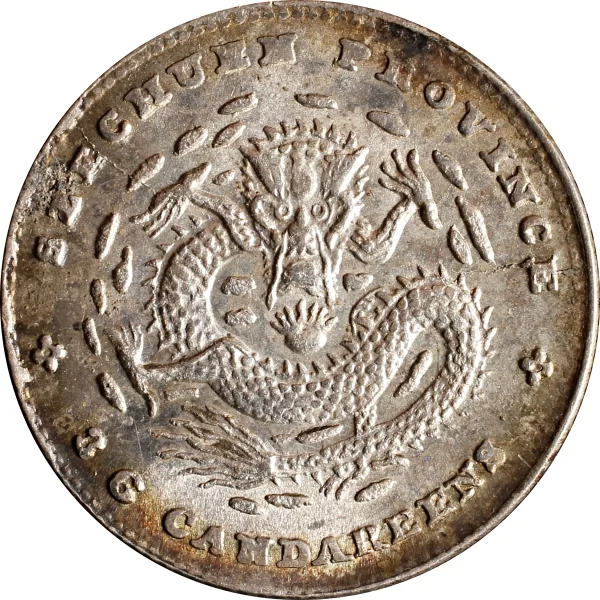
5 Fen – Szechuan Province
China
Context
Years: 1898–1908
Country: China 
Issuer: Szechuan Province
Ruler: Guangxu
Currency:
(1897—1949)
Demonetized: Yes
Material
References
Y: #Click to copy to clipboard234
Numista: #296997
Value
Bullion value: $3.03
Obverse
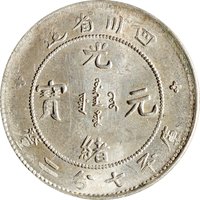
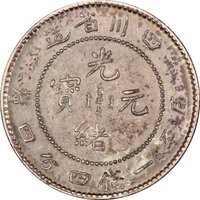
Description:
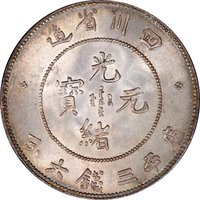
Chinese ideograms read vertically, right to left, with Manchu text in the center, all encircled by more Chinese characters.
Inscription:
造省川四
光
ᠪᠠᡩᠠᡵᠠᠩᡤᠠ
寶 ᠶᡠᠸᠠᠨ ᠪᠣᠣ 元
ᡩᠣᡵᠣ
緒
釐六分三平庫
光
ᠪᠠᡩᠠᡵᠠᠩᡤᠠ
寶 ᠶᡠᠸᠠᠨ ᠪᠣᠣ 元
ᡩᠣᡵᠣ
緒
釐六分三平庫
Translation:
Made in Sichuan Province
Guangxu
Badarangga
Treasure Yuan
Doro
Reign
Three Fen Six Li Treasury Standard Tael
Guangxu
Badarangga
Treasure Yuan
Doro
Reign
Three Fen Six Li Treasury Standard Tael
Scripts: Chinese, Mongolian / Manchu
Languages: Manchu, Classical Chinese
Reverse
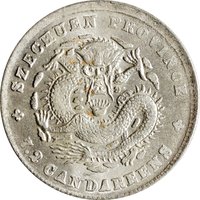
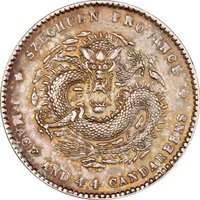
Description:
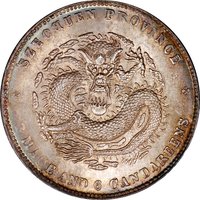
Dragon encircling a pearl, surrounded by English text.
Inscription:
SZECHUEN PROVINCE
3.6 CANDAREENS
3.6 CANDAREENS
Script: Latin
Edge
Reeded.
Categories
| Mythology> Fantastic animal |
Mintings
| Year | Mint Mark | Mintage | Quality | Collection |
|---|---|---|---|---|
| — | — | — |
Historical background
In 1898, the currency situation in Sichuan Province was one of profound complexity and instability, characteristic of China's late Qing dynasty. The province operated under a chaotic multi-tiered monetary system. At the top was the official silver tael, a unit of account, but actual silver sycee ingots varied in purity and weight from one locality to another, hindering trade. More critically, the everyday economy relied on a flood of privately minted copper cash coins, which were debased, irregular, and issued by numerous provincial mints and even local merchants, leading to wild fluctuations in the exchange rate between copper and silver.
This monetary disorder was exacerbated by the increasing circulation of foreign silver dollars, like the Mexican Eagle, which circulated by weight and added another variable to the system. Most disruptive, however, was the widespread introduction of Sichuan's indigenous paper notes. These jiaozi or qianpiao were issued by local banks, pawnshops, and merchant guilds with little to no standardization or reserve backing. While facilitating local transactions, this led to frequent defaults and depreciations, eroding public trust and causing commercial disputes.
The underlying cause of this turmoil was the province's relative isolation and the weak fiscal control of the central Qing government. Provincial authorities struggled to impose uniformity, and the system was effectively decentralized and market-driven in the worst sense. This financial fragmentation mirrored the political weakness of the Qing, creating a fertile ground for economic grievances. It was within this context of monetary chaos that the imperial government would, just a year later in 1899, attempt to reassert control by ordering the establishment of a modern provincial mint, a step toward the standardized silver coinage that would later emerge.
This monetary disorder was exacerbated by the increasing circulation of foreign silver dollars, like the Mexican Eagle, which circulated by weight and added another variable to the system. Most disruptive, however, was the widespread introduction of Sichuan's indigenous paper notes. These jiaozi or qianpiao were issued by local banks, pawnshops, and merchant guilds with little to no standardization or reserve backing. While facilitating local transactions, this led to frequent defaults and depreciations, eroding public trust and causing commercial disputes.
The underlying cause of this turmoil was the province's relative isolation and the weak fiscal control of the central Qing government. Provincial authorities struggled to impose uniformity, and the system was effectively decentralized and market-driven in the worst sense. This financial fragmentation mirrored the political weakness of the Qing, creating a fertile ground for economic grievances. It was within this context of monetary chaos that the imperial government would, just a year later in 1899, attempt to reassert control by ordering the establishment of a modern provincial mint, a step toward the standardized silver coinage that would later emerge.
✨ Legendary