

5 qian – Hunan Province
Add to wishlist
China
Context
Year: 1908
Country: China
Issuer: Hunan Province
Ruler: Guangxu
Currency:
(1906—1912)
Demonetized: Yes
Material
References
Numista: #296887
Value
Bullion value: $44.54
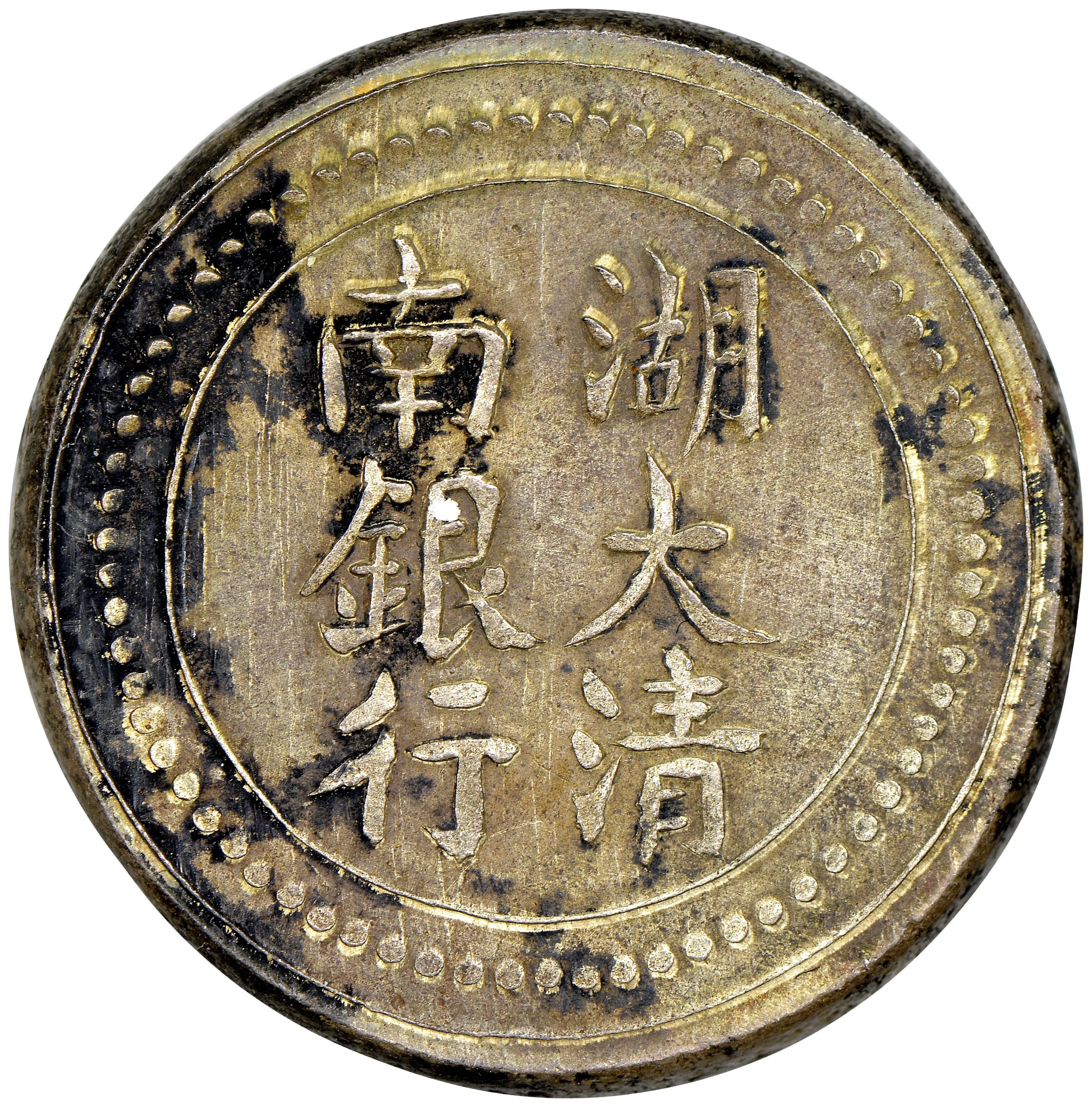
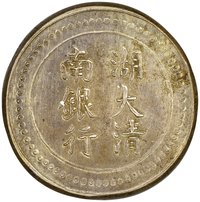
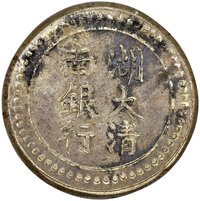
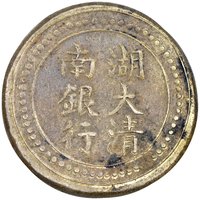
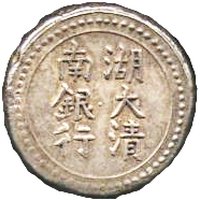
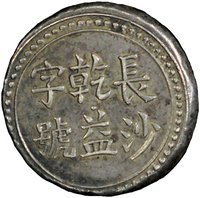
Obverse
Description:
Six Chinese characters.
Inscription:
南湖
銀大
行清
銀大
行清
Translation:
South Lake Bank Qing Silver Tael
Language: Chinese
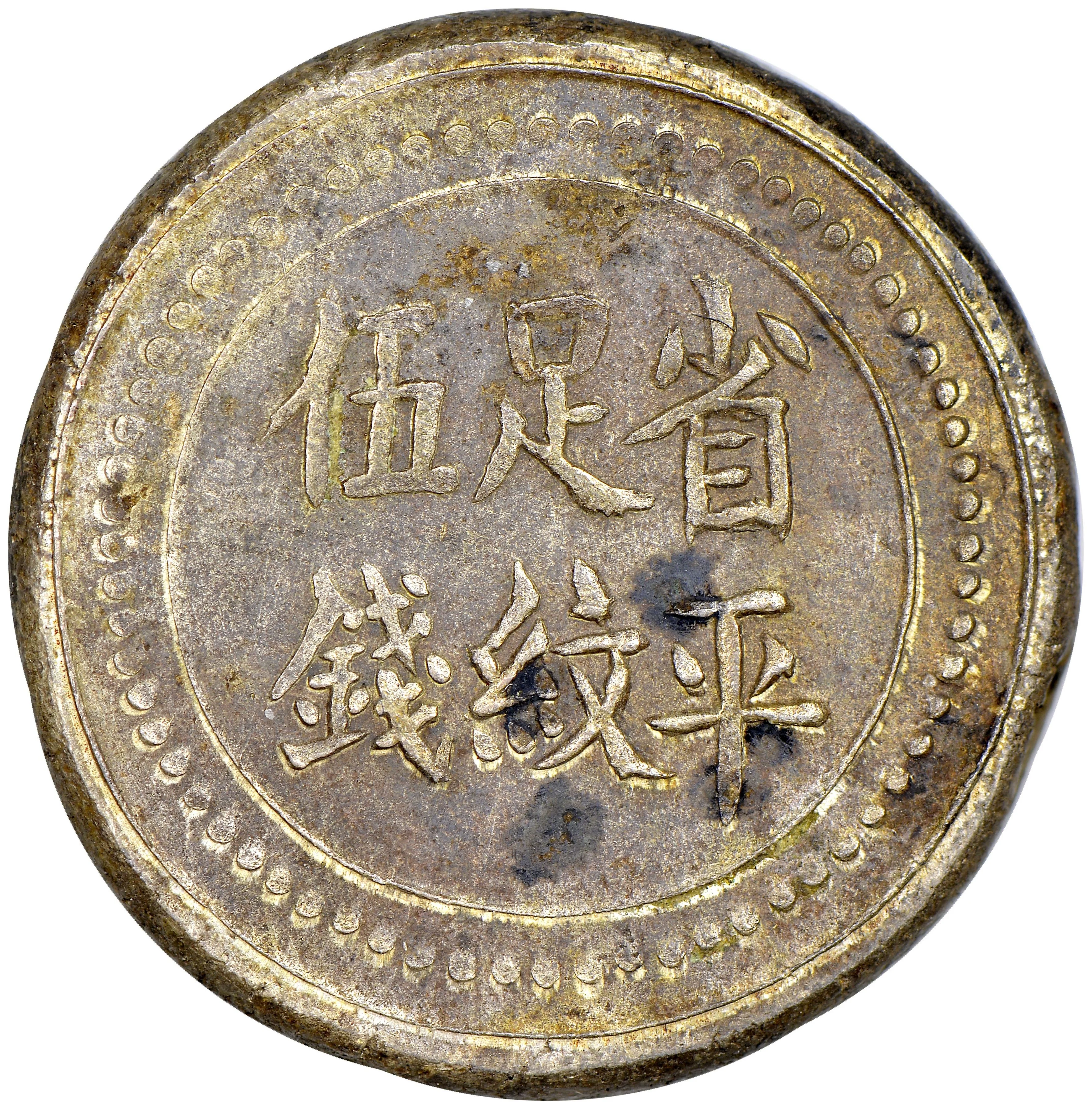
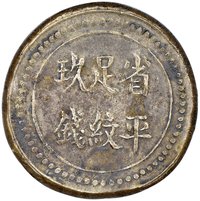
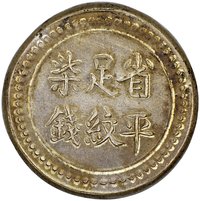
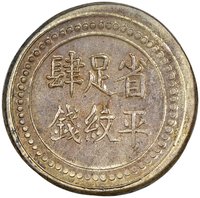
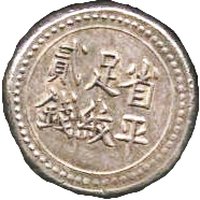
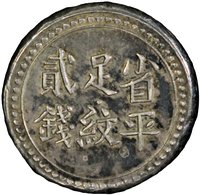
Reverse
Description:
Six Chinese characters.
Inscription:
伍足省
錢紋平
錢紋平
Translation:
Five Zhu Bureau,
coin pattern Ping.
coin pattern Ping.
Language: Classical Chinese
Edge
Plain
Mintings
| Year | Mint Mark | Mintage | Quality | Collection |
|---|---|---|---|---|
| 1908 | — | — |
Historical background
In 1908, Hunan Province, like much of late Qing China, was mired in a complex and debilitating currency crisis. The monetary system was a chaotic mix of traditional copper cash (tongyuan and zhiqian), silver sycee (by weight in taels), and a growing influx of foreign and domestic silver dollars, primarily the Mexican "Eagle" dollar and the new Imperial Chinese dollar minted from 1897. This lack of standardization created severe exchange rate volatility between silver and copper, which directly harmed peasants who earned in copper but paid taxes assessed in silver. The situation was exacerbated by provincial authorities and even local militaries issuing their own, often debased, copper coins and paper notes to raise revenue, leading to inflation and a collapse of public trust in locally issued currency.
The crisis was deeply intertwined with imperial decline and foreign economic pressure. Hunan's growing integration into the global economy, particularly through the treaty port of Changsha opened in 1904, increased the circulation of foreign silver and exposed the province to international silver price fluctuations. As the price of silver fell globally in the early 1900s, the silver-based tax burden on the populace effectively increased, fueling widespread resentment. Furthermore, the Qing government's attempts at centralization, including establishing the Hunan Mint in Changsha, were inconsistent and could not keep pace with the rampant counterfeiting and regional fragmentation of monetary authority.
This monetary disorder had profound social consequences, contributing to the rising tide of unrest that would culminate in the 1911 Revolution. The unreliable currency disrupted markets, hindered commerce, and squeezed both peasants and urban merchants. It became a tangible daily grievance against the Qing state's inability to provide economic stability, eroding its legitimacy. Thus, by 1908, the currency situation in Hunan was not merely a financial issue but a key symptom of systemic failure, actively undermining the social order and fueling the revolutionary sentiment that was gathering force in the province.
The crisis was deeply intertwined with imperial decline and foreign economic pressure. Hunan's growing integration into the global economy, particularly through the treaty port of Changsha opened in 1904, increased the circulation of foreign silver and exposed the province to international silver price fluctuations. As the price of silver fell globally in the early 1900s, the silver-based tax burden on the populace effectively increased, fueling widespread resentment. Furthermore, the Qing government's attempts at centralization, including establishing the Hunan Mint in Changsha, were inconsistent and could not keep pace with the rampant counterfeiting and regional fragmentation of monetary authority.
This monetary disorder had profound social consequences, contributing to the rising tide of unrest that would culminate in the 1911 Revolution. The unreliable currency disrupted markets, hindered commerce, and squeezed both peasants and urban merchants. It became a tangible daily grievance against the Qing state's inability to provide economic stability, eroding its legitimacy. Thus, by 1908, the currency situation in Hunan was not merely a financial issue but a key symptom of systemic failure, actively undermining the social order and fueling the revolutionary sentiment that was gathering force in the province.

✨ Legendary