

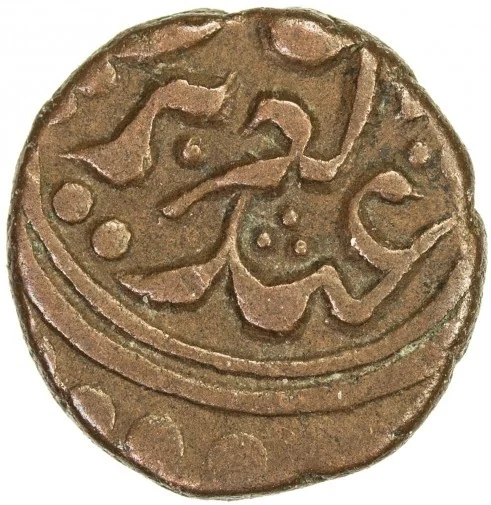
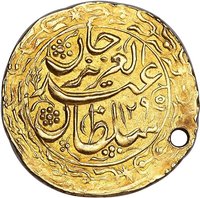
Obverse
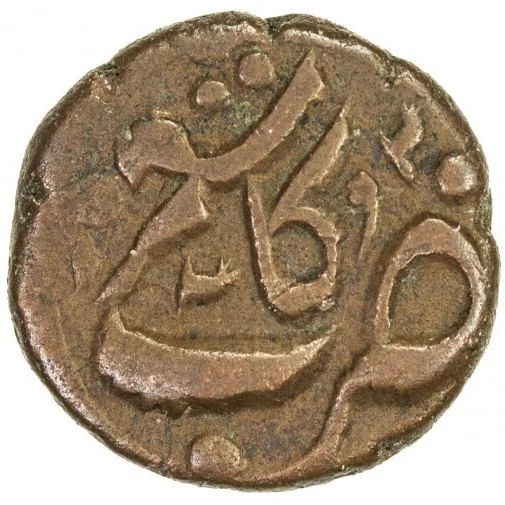
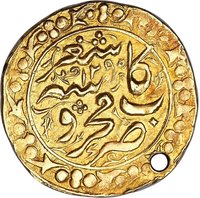
Reverse
Edge
Plain
Mintings
| Year | Mint Mark | Mintage | Quality | Collection |
|---|---|---|---|---|
| 1873 | — | — | ||
| 1874 | — | — | ||
| 1875 | — | — | ||
| 1876 | — | — | ||
| 1877 | — | — | ||
| 1878 | — | — |
Historical background
In 1873, the currency situation in Sinkiang (Xinjiang) was chaotic and reflected the region's turbulent political state following the suppression of the Dungan Revolt (1862–1877). The province was not under unified control; while Qing forces, led by Zuo Zongtang, were gradually reconquering territory from various rebel factions, no single authority could enforce a standard monetary system. Consequently, the economy operated on a complex and unstable mixture of currencies, including remnants of pre-rebellion Qing coinage (mostly copper cash coins), locally minted coins of varying and often debased quality by rebel leaders, and tangible assets like tea bricks and silver ingots which were used for larger transactions.
The most prominent circulating medium was the pul coin, a small copper coin of Central Asian tradition. During the revolt, the Kashgaria-based regime of Yaqub Beg had begun minting its own puls, alongside some silver tangas, in an attempt to establish monetary authority. However, these issues were often lightweight and crude, leading to severe inflation and loss of confidence. In areas still under Qing influence or recently recaptured, old Qianlong and Jiaqing era red cash coins (Xinjiang's distinctive local cash) circulated but were in short supply, having been hoarded, melted down, or displaced during years of warfare.
This monetary fragmentation severely hampered trade and daily life, creating a barter economy in many areas. Zuo Zongtang's forces, recognizing that economic stability was key to permanent control, had begun planning for monetary reform. Even in 1873, preparations were likely underway for the eventual standardization that would follow the Qing victory—a system centered on a new, high-quality Xinjiang red cash coin, minted under imperial authority, to restore value and facilitate the region's reintegration into the Qing fiscal structure. Thus, the currency situation of 1873 was one of disorganized transition, caught between the collapsed system of the past and the imposed order of the near future.
The most prominent circulating medium was the pul coin, a small copper coin of Central Asian tradition. During the revolt, the Kashgaria-based regime of Yaqub Beg had begun minting its own puls, alongside some silver tangas, in an attempt to establish monetary authority. However, these issues were often lightweight and crude, leading to severe inflation and loss of confidence. In areas still under Qing influence or recently recaptured, old Qianlong and Jiaqing era red cash coins (Xinjiang's distinctive local cash) circulated but were in short supply, having been hoarded, melted down, or displaced during years of warfare.
This monetary fragmentation severely hampered trade and daily life, creating a barter economy in many areas. Zuo Zongtang's forces, recognizing that economic stability was key to permanent control, had begun planning for monetary reform. Even in 1873, preparations were likely underway for the eventual standardization that would follow the Qing victory—a system centered on a new, high-quality Xinjiang red cash coin, minted under imperial authority, to restore value and facilitate the region's reintegration into the Qing fiscal structure. Thus, the currency situation of 1873 was one of disorganized transition, caught between the collapsed system of the past and the imposed order of the near future.
✨ Legendary