

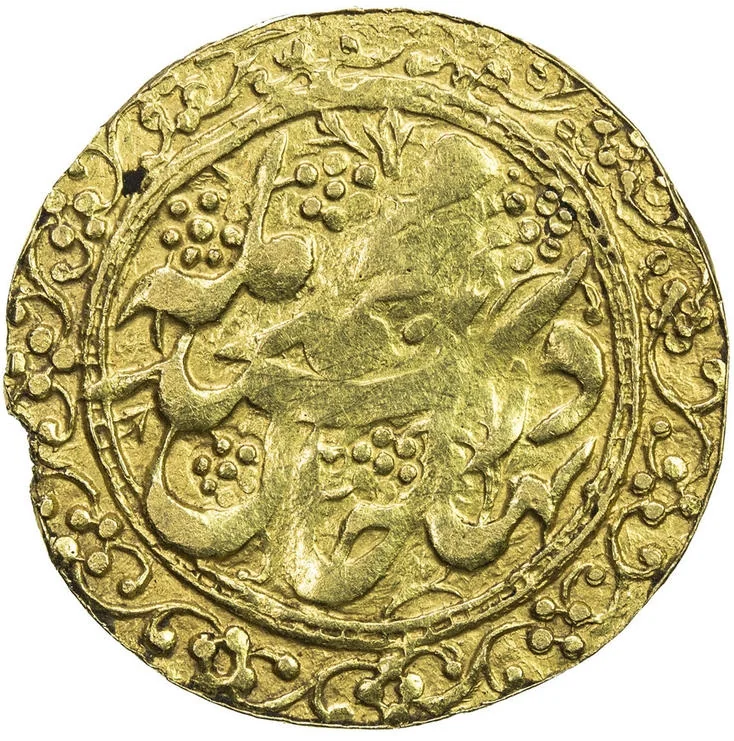
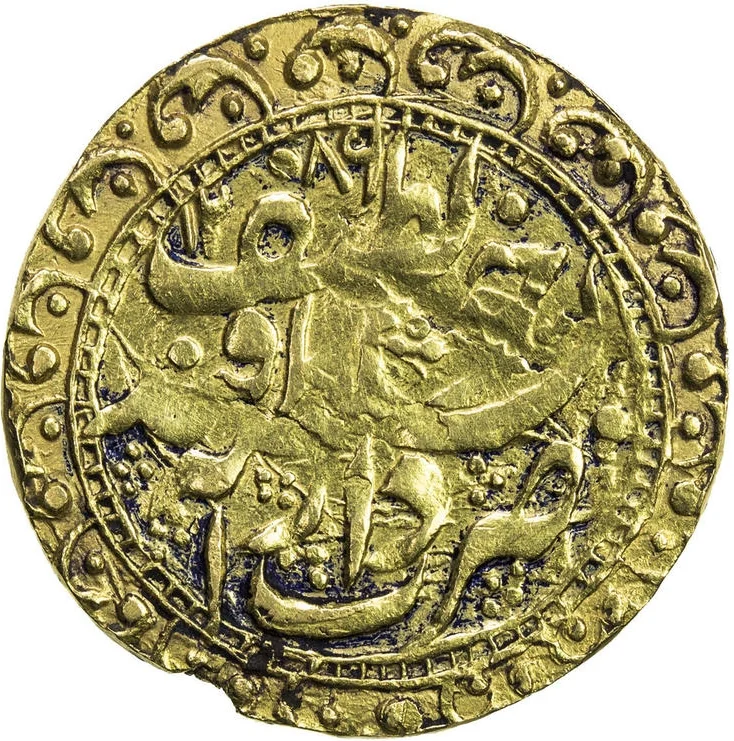

Obverse
Reverse
Edge
Mintings
| Year | Mint Mark | Mintage | Quality | Collection |
|---|---|---|---|---|
| 1872 | — | — |
Historical background
In 1872, the currency situation in Sinkiang (Xinjiang) was chaotic and unstable, a direct reflection of the region's fractured political control following the widespread Dungan Revolt (1862–1877). The Qing dynasty's authority had collapsed across much of the territory, with power fragmented among various rebel factions, the independent regime of Yaqub Beg in the south and west, and isolated Qing strongholds like Tacheng (Chöchäk) and the Ili Valley (under Russian occupation since 1871). This political disintegration led to a complete breakdown of the unified monetary system, as no single authority could issue currency accepted across the province.
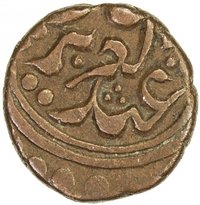
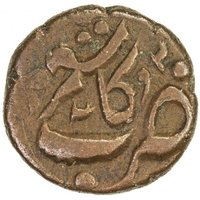
Consequently, a confusing multiplicity of currencies circulated simultaneously. In areas under Yaqub Beg's rule (the Kashgaria-based Yettishar), new coins were struck in the name of the Ottoman Sultan Abdulaziz, acknowledging his symbolic suzerainty. These tanga coins, of varying and often debased silver content, competed with older Qing pul copper coins and Chinese silver sycees. Meanwhile, in the few remaining Qing-controlled zones, efforts were made to maintain the use of official Qing coinage, while Russian silver rubles and goods for barter trade gained prominence, especially in the north where Russian economic influence was strong. The lack of a standard medium of exchange severely hampered trade and deepened economic hardship for the population.
This monetary anarchy was both a symptom and a cause of the region's profound crisis. The inability to establish a trustworthy and uniform currency stifled economic recovery, complicated taxation, and underscored the absence of effective governance. For the beleaguered Qing state, part of the monumental challenge of reconquering and reintegrating Xinjiang, a task already underway under General Zuo Zongtang, would necessitate the re-imposition of a standardized monetary system as a fundamental pillar of restored imperial control and economic stability.
Consequently, a confusing multiplicity of currencies circulated simultaneously. In areas under Yaqub Beg's rule (the Kashgaria-based Yettishar), new coins were struck in the name of the Ottoman Sultan Abdulaziz, acknowledging his symbolic suzerainty. These tanga coins, of varying and often debased silver content, competed with older Qing pul copper coins and Chinese silver sycees. Meanwhile, in the few remaining Qing-controlled zones, efforts were made to maintain the use of official Qing coinage, while Russian silver rubles and goods for barter trade gained prominence, especially in the north where Russian economic influence was strong. The lack of a standard medium of exchange severely hampered trade and deepened economic hardship for the population.
This monetary anarchy was both a symptom and a cause of the region's profound crisis. The inability to establish a trustworthy and uniform currency stifled economic recovery, complicated taxation, and underscored the absence of effective governance. For the beleaguered Qing state, part of the monumental challenge of reconquering and reintegrating Xinjiang, a task already underway under General Zuo Zongtang, would necessitate the re-imposition of a standardized monetary system as a fundamental pillar of restored imperial control and economic stability.
✨ Legendary