

1 Mithqual – Sinkiang Province
China
Context
Year: 1893
Islamic (Hijri) Year: 1310
Country: China 
Issuer: Sinkiang Province
Ruler: Guangxu
Demonetized: Yes
Material

References
Y: #Click to copy to clipboardA13
Numista: #296706
Value
Bullion value: $9.95
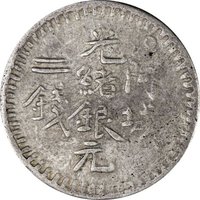
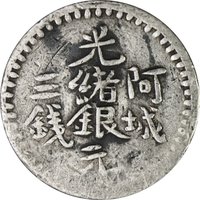
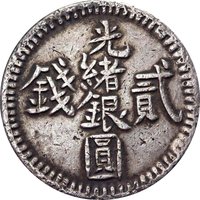
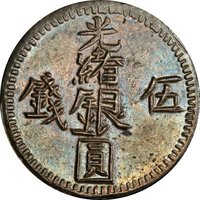
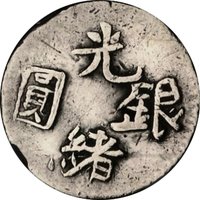
Obverse
Description:
Eight Chinese characters read vertically.
Inscription:
光
一緒阿
錢銀城
元
一緒阿
錢銀城
元
Translation:
Guangyi Tong
Silver Coin City
Yuan
Silver Coin City
Yuan
Language: Classical Chinese
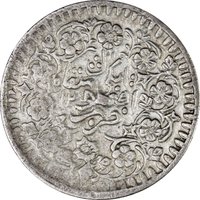
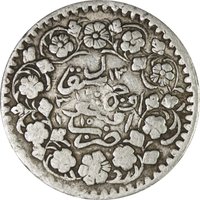
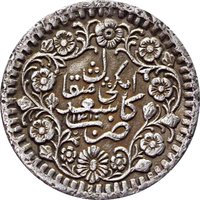
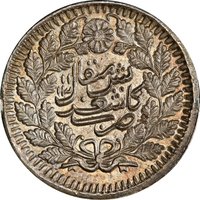
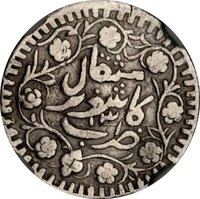
Reverse
Description:
Arabic legend encircled by wreath.
Inscription:
١٣١٠
ی مثقال
اقسو
ضو ب
ی مثقال
اقسو
ضو ب
Translation:
One thousand three hundred and ten
One Mithqal
Aqsou
Dhahab
One Mithqal
Aqsou
Dhahab
Languages: Ottoman Turkish, Arabic
Edge
Mints
| Name | Mark |
|---|---|
| Aksu Mint | — |
Mintings
| Year | Mint Mark | Mintage | Quality | Collection |
|---|---|---|---|---|
| 1893 | — | — |
Historical background
In 1893, the currency situation in Sinkiang (Xinjiang) was a complex and fragmented reflection of its position as a contested frontier region of the Qing Empire. The official currency was the Xinjiang pulu (also called yali or red cash), a locally minted copper coin with a lower copper content and smaller size than standard Qing zhiqian (cash coins) used in China proper. Crucially, the pulu was valued at a forced, artificial rate of 5 pulu to 1 standard cash for official purposes, though its market value was far lower, creating a dual-system that disadvantaged local populations in tax payments and trade with Han Chinese merchants.
This monetary disarray was exacerbated by a severe shortage of coinage, leading to widespread circulation of foreign and informal currencies. Russian gold rubles, silver tangas (from the Khanate of Khiva), and silver yambus (Siberian trade bars) were dominant in northern and western Sinkiang due to robust cross-border trade. In southern oases along the Silk Road, small, cut pieces of silver (kashe) circulated by weight, while Chinese silver sycee ingots (yuanbao) were used for larger transactions. This patchwork system created significant transactional friction and opportunities for exploitation by money-changers.
The underlying cause of this chaos was the Qing's limited administrative and economic integration of the region following the reconquest of the 1870s. The state lacked the resources to supply sufficient official coinage or enforce a uniform standard. Consequently, the currency mosaic of 1893 Sinkiang was not merely an economic issue but a direct manifestation of its geopolitical reality: a zone where Qing authority, Russian imperial influence, and local Turkic-Muslim economic networks all converged and competed, with ordinary trade and taxation burdened by the instability of multiple, fluctuating mediums of exchange.
This monetary disarray was exacerbated by a severe shortage of coinage, leading to widespread circulation of foreign and informal currencies. Russian gold rubles, silver tangas (from the Khanate of Khiva), and silver yambus (Siberian trade bars) were dominant in northern and western Sinkiang due to robust cross-border trade. In southern oases along the Silk Road, small, cut pieces of silver (kashe) circulated by weight, while Chinese silver sycee ingots (yuanbao) were used for larger transactions. This patchwork system created significant transactional friction and opportunities for exploitation by money-changers.
The underlying cause of this chaos was the Qing's limited administrative and economic integration of the region following the reconquest of the 1870s. The state lacked the resources to supply sufficient official coinage or enforce a uniform standard. Consequently, the currency mosaic of 1893 Sinkiang was not merely an economic issue but a direct manifestation of its geopolitical reality: a zone where Qing authority, Russian imperial influence, and local Turkic-Muslim economic networks all converged and competed, with ordinary trade and taxation burdened by the instability of multiple, fluctuating mediums of exchange.

✨ Legendary