

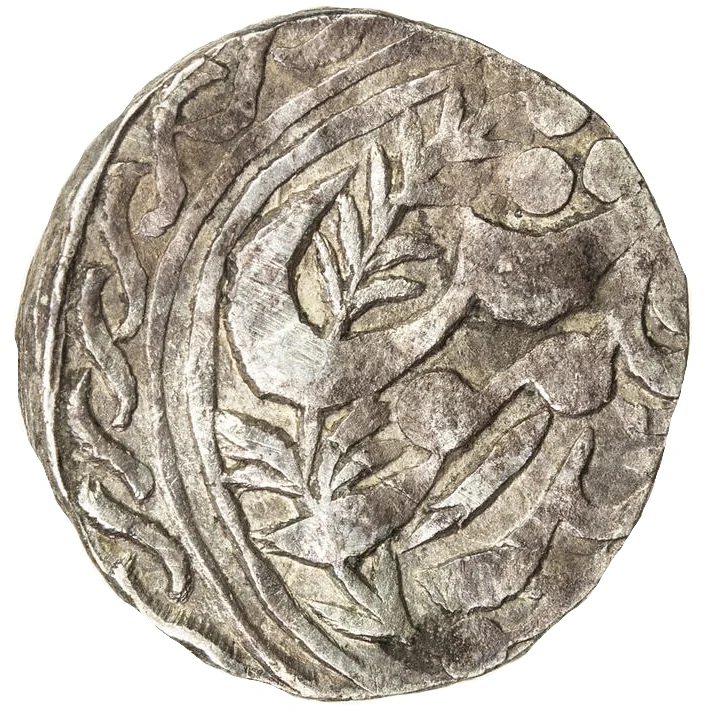
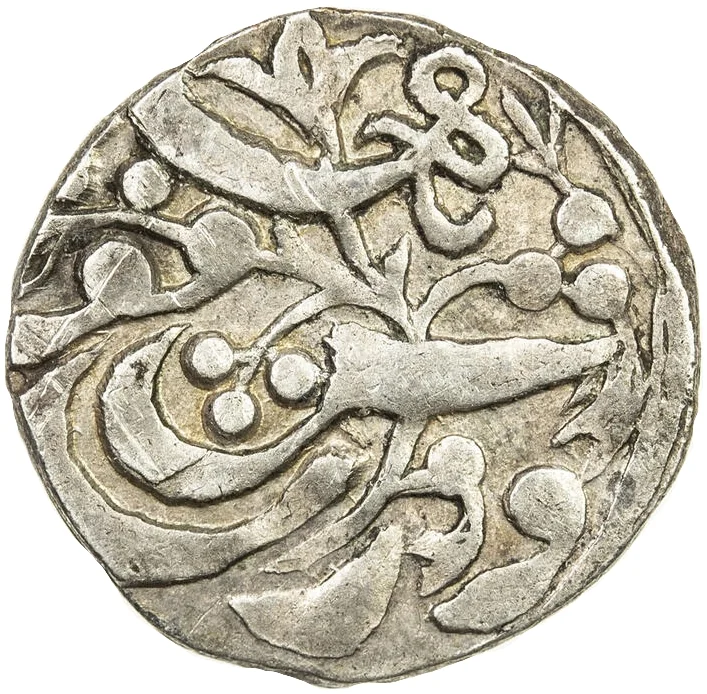
½ Miscal / 5 Fen – Sinkiang Province
China
Context

Material
Diameter: 13 mm
Weight: 1.61 g
Silver weight: 1.61 g
Thickness: 1.4 mm
Shape: Irregular round
Composition: Silver
Magnetic: No
References
Y: #Click to copy to clipboardA7.26
Numista: #296628
Value
Bullion value: $4.58
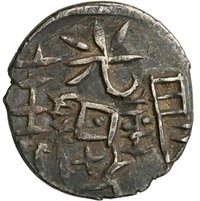
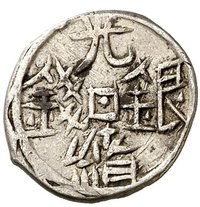
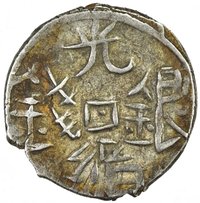
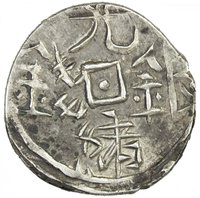
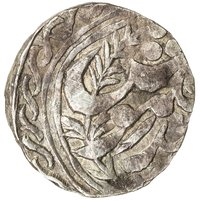
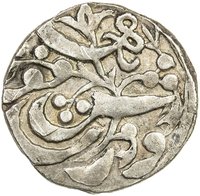
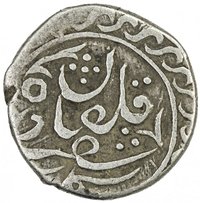
Obverse
Description:
Arabic legend encircled.
Inscription:
ش
كمو
وبران
كمو
وبران
Translation:
Coin of Komor and Bran.
Language: Arabic
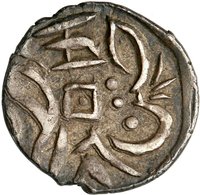
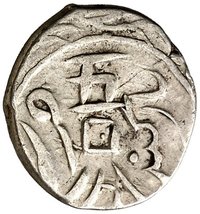
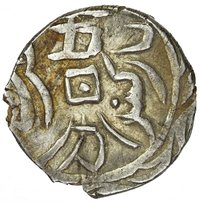
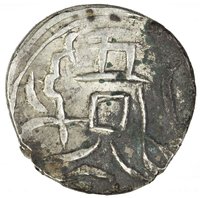
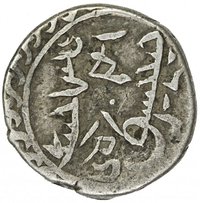
Reverse
Description:
Arabic legend encircled.
Inscription:
ناك
قو
بش
وزب
قو
بش
وزب
Translation:
Sultan Mahmud Khan, son of Sultan Mustafa Khan, may his victory be glorified.
Language: Ottoman Turkish
Edge
Plain
Mintings
| Year | Mint Mark | Mintage | Quality | Collection |
|---|---|---|---|---|
| 1878 | — | — | ||
| 1878 | — | — | ||
| — | — | — | ||
| 1879 | — | — |
Historical background
By 1878, the currency situation in Sinkiang (Xinjiang) was one of profound disorder and debasement, a direct legacy of the region's prolonged instability. The area had been devastated by the Dungan Revolt (1862–1877) and the subsequent reconquest by Qing forces under Zuo Zongtang. During this period of conflict, various rebel regimes and local authorities issued their own copper and silver coins, while older Qing currency remained in circulation. The result was a chaotic monetary landscape with no uniform standard, where the value and metal content of coins varied wildly from one locality to another, severely hampering trade and economic recovery.
The primary circulating currency was the pūl (also known as red cash), a small copper coin with a square hole. However, its quality had drastically deteriorated. To finance military campaigns, authorities had massively overstruck these coins on thinner, inferior blanks, and private counterfeiters flourished. A tæl of silver, the official accounting unit, could command thousands of these debased pūl, with exchange rates fluctuating unpredictably. Silver itself was scarce, often in the form of foreign or sycee silver, adding another layer of complexity to transactions.
Recognizing that monetary chaos impeded effective governance, Zuo Zongtang made currency reform a immediate priority following the military victory. In 1878, with approval from the throne, he established a new mint in Kashgar to produce standardized, high-quality copper pūl and silver tæl coins. These new issues, bearing the reign title of the Guangxu Emperor, were intended to drive the old, debased money out of circulation, restore confidence, and reassert Qing fiscal sovereignty. Thus, 1878 marks a pivotal year of transition from anarchic wartime currency toward a unified, stable monetary system under consolidating Qing control.
The primary circulating currency was the pūl (also known as red cash), a small copper coin with a square hole. However, its quality had drastically deteriorated. To finance military campaigns, authorities had massively overstruck these coins on thinner, inferior blanks, and private counterfeiters flourished. A tæl of silver, the official accounting unit, could command thousands of these debased pūl, with exchange rates fluctuating unpredictably. Silver itself was scarce, often in the form of foreign or sycee silver, adding another layer of complexity to transactions.
Recognizing that monetary chaos impeded effective governance, Zuo Zongtang made currency reform a immediate priority following the military victory. In 1878, with approval from the throne, he established a new mint in Kashgar to produce standardized, high-quality copper pūl and silver tæl coins. These new issues, bearing the reign title of the Guangxu Emperor, were intended to drive the old, debased money out of circulation, restore confidence, and reassert Qing fiscal sovereignty. Thus, 1878 marks a pivotal year of transition from anarchic wartime currency toward a unified, stable monetary system under consolidating Qing control.

✨ Legendary