

Peru
Context
Material
References
KM: #Click to copy to clipboard223
Numista: #1022
Value
Exchange value: 0.05 PEH
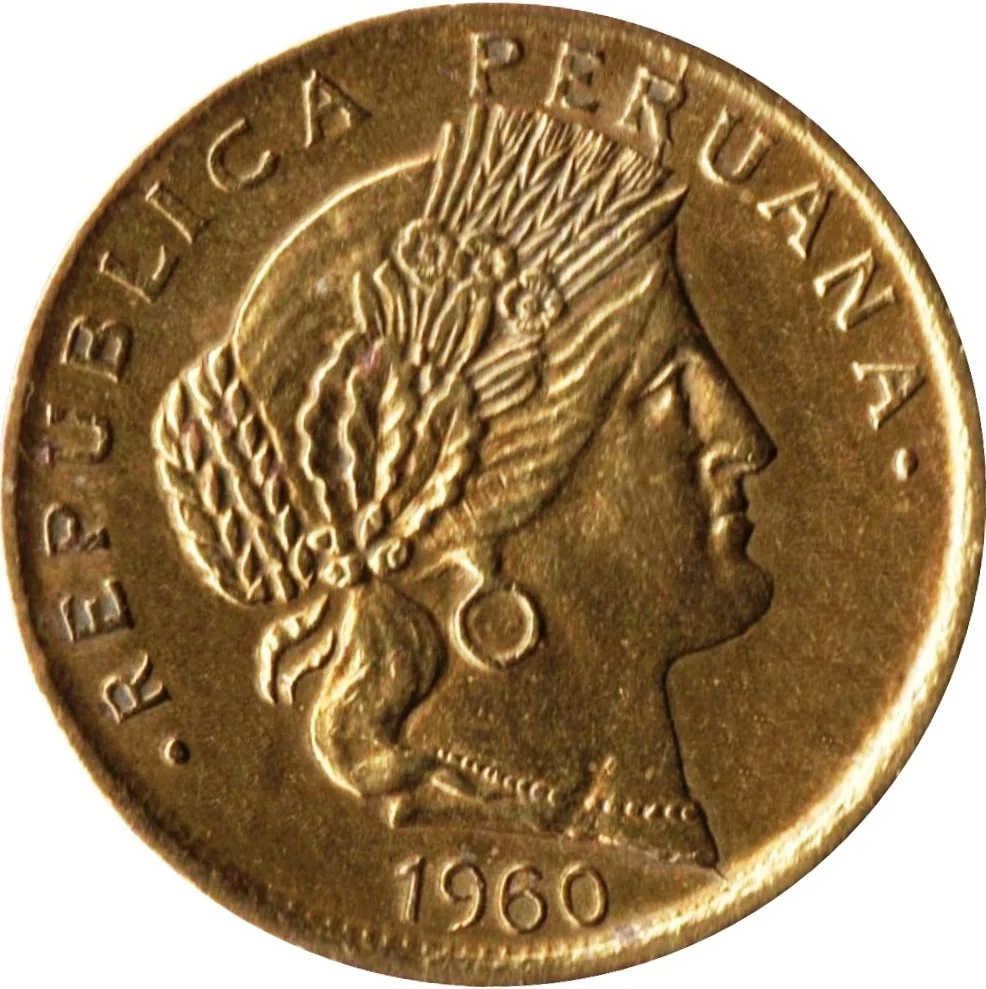
Obverse
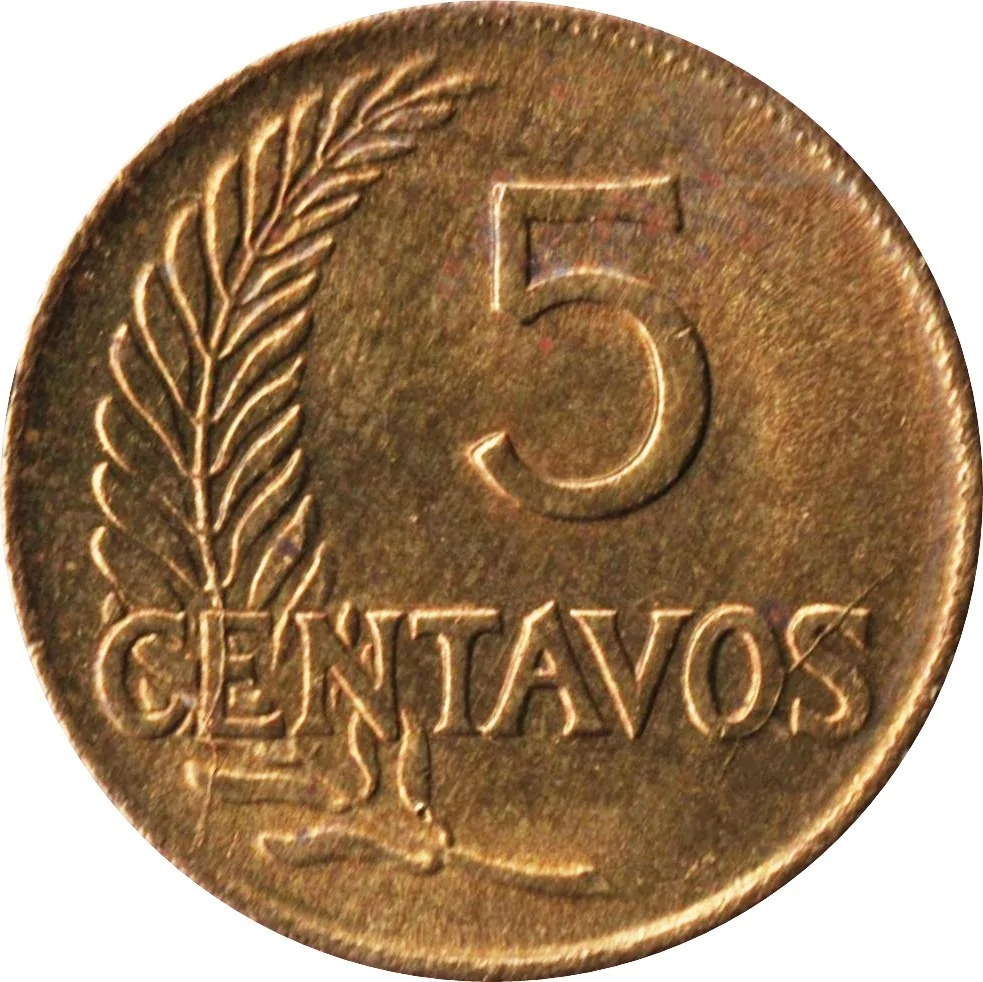
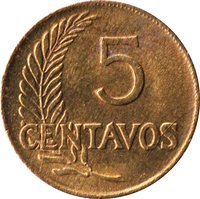
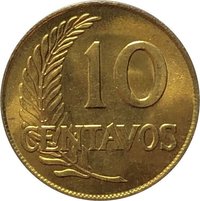
Reverse
Edge
Reeded
Categories
| Mythology |
Mints
| Name | Mark |
|---|---|
| Lima | — |
Mintings
| Year | Mint Mark | Mintage | Quality | Collection |
|---|---|---|---|---|
| 1945 | — | 2,768,000 | ||
| 1946 | — | 4,270,000 | ||
| 1947 | — | 7,683,000 | ||
| 1948 | — | 6,711,000 | ||
| 1949 | — | 5,550,000 | ||
| 1950 | — | 7,933,000 | ||
| 1951 | — | — | ||
| 1952 | — | 7,840,000 | ||
| 1953 | — | 6,976,000 | ||
| 1954 | — | 6,244,000 | ||
| 1955 | — | 8,064,000 | ||
| 1956 | — | 16,200,000 | ||
| 1957 | — | — | ||
| 1958 | — | 4,600,000 | ||
| 1959 | — | 8,300,000 | ||
| 1960 | — | — | ||
| 1961 | — | 10,200,000 | ||
| 1962 | — | — | ||
| 1963 | — | 12,012,000 | ||
| 1964 | — | 12,304,000 | ||
| 1965 | — | — |
Historical background
In 1945, Peru's currency situation was characterized by the dominance of the Sol de Oro, which had been the nation's official currency since 1931. The country operated under a managed exchange rate system, with its value loosely pegged to the U.S. dollar and influenced by the gold standard in principle. However, the economic disruptions of World War II created significant external pressures. While the war boosted demand for Peru's key exports (like minerals and cotton), it also severely restricted imports, leading to accumulating foreign exchange reserves and nascent inflationary pressures within a somewhat isolated economy.
Domestically, the presidency of Manuel Prado y Ugarteche (1939-1945) had pursued generally conservative fiscal policies, which provided a degree of stability. The year 1945 itself was a political watershed, with the election of José Luis Bustamante y Rivero marking a shift toward a more reformist and populist coalition government. This political transition occurred against an economic backdrop where the wartime accumulation of reserves and pent-up consumer demand began to strain the existing price and monetary controls, setting the stage for future challenges.
Overall, the currency and broader economy in 1945 were in a state of transitional tension. The sol remained stable on the surface, buoyed by strong reserves, but underlying forces—including the end of the war, rising social spending promises from the new government, and global economic realignment—were beginning to build. These factors would soon test the managed currency system, leading to the devaluation pressures and inflation that marked the late 1940s, culminating in a major devaluation in 1949.
Domestically, the presidency of Manuel Prado y Ugarteche (1939-1945) had pursued generally conservative fiscal policies, which provided a degree of stability. The year 1945 itself was a political watershed, with the election of José Luis Bustamante y Rivero marking a shift toward a more reformist and populist coalition government. This political transition occurred against an economic backdrop where the wartime accumulation of reserves and pent-up consumer demand began to strain the existing price and monetary controls, setting the stage for future challenges.
Overall, the currency and broader economy in 1945 were in a state of transitional tension. The sol remained stable on the surface, buoyed by strong reserves, but underlying forces—including the end of the war, rising social spending promises from the new government, and global economic realignment—were beginning to build. These factors would soon test the managed currency system, leading to the devaluation pressures and inflation that marked the late 1940s, culminating in a major devaluation in 1949.
🌱 Very Common