

1 peso – Chile
Add to wishlist
Chile
Context
Material
Diameter: 29 mm
Weight: 10 g
Thickness: 1.88 mm
Shape: Round
Composition: Copper-nickel
Technique: Milled
Alignment: Coin alignment
flip
References
KM: #
Numista: #2951
Obverse
Description:
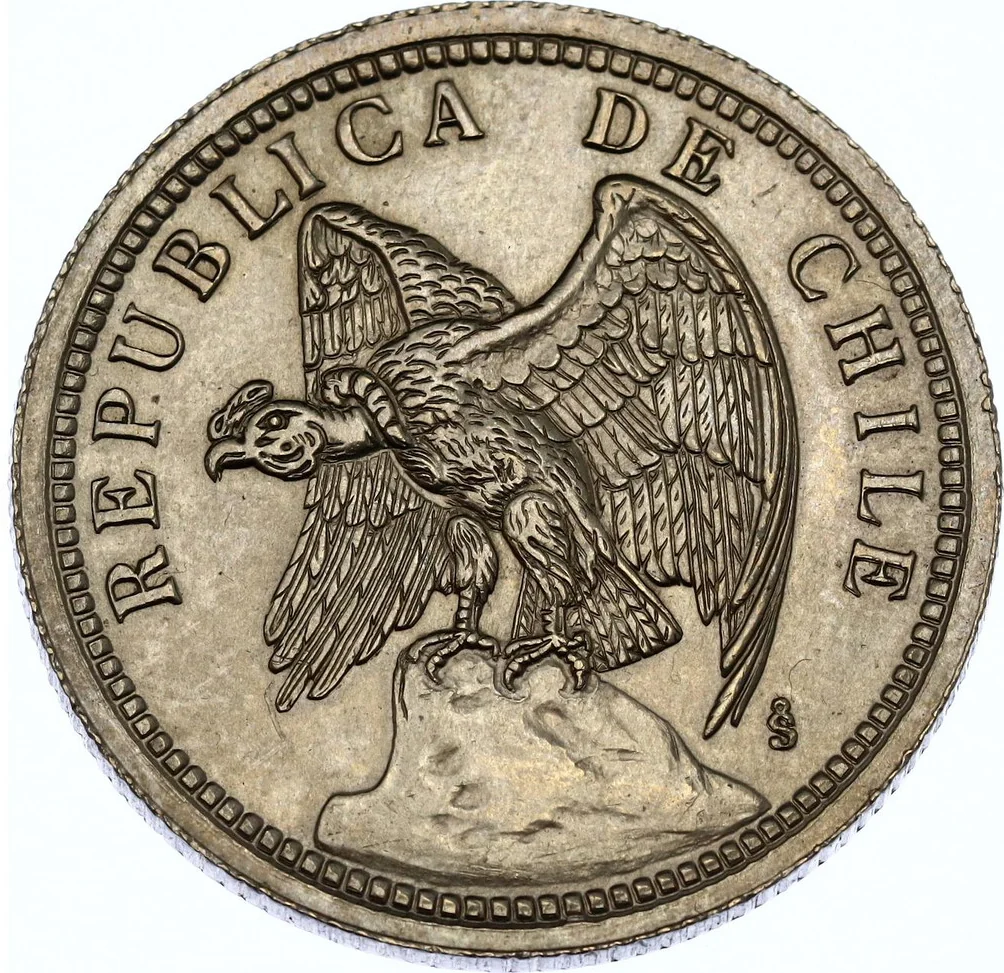
Andean condor on rock, mintmark right.
Inscription:
REPUBLICA DE CHILE
So
So
Translation:
REPUBLIC OF CHILE
Script: Latin
Language: Spanish
Engraver: Louis-Oscar Roty
Reverse
Edge
Reeded
Categories
| Animal> Bird |
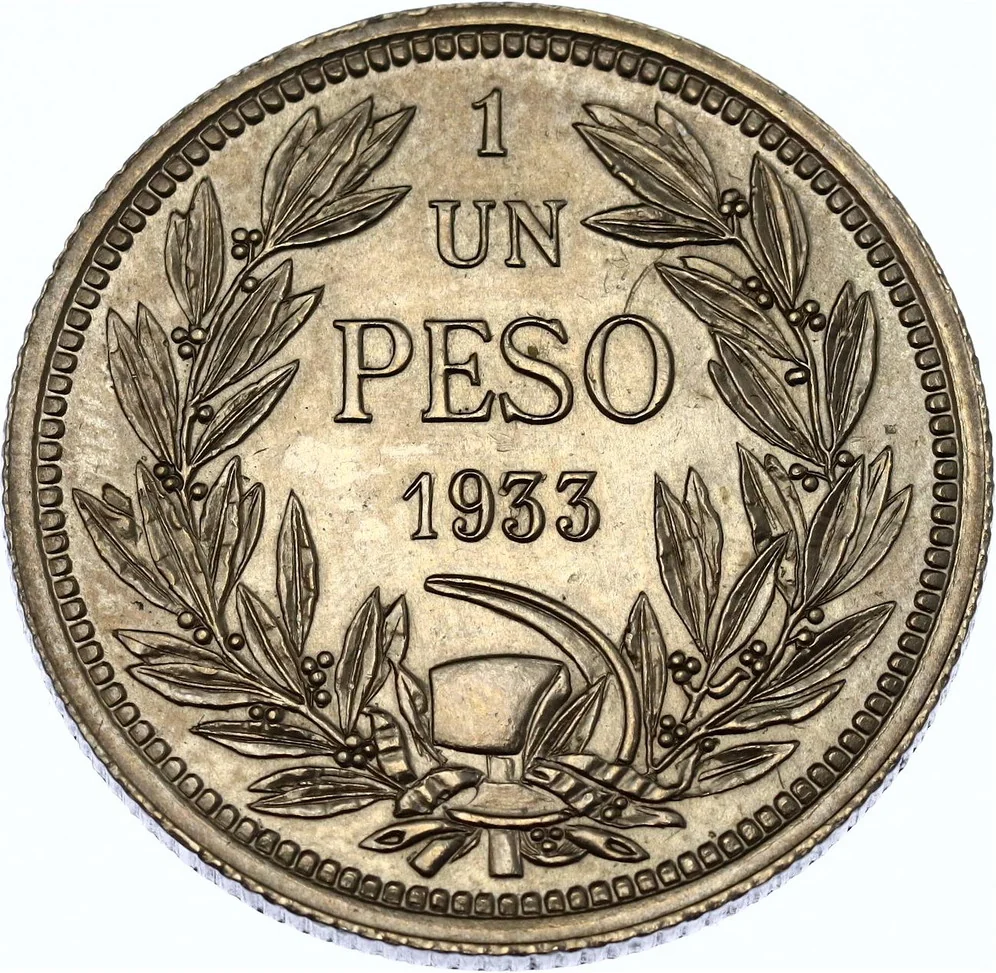
| Symbol> Hammer and sickle |
Mints
| Name | Mark |
|---|---|
| Casa de Moneda de Chile | (So) |
Mintings
| Year | Mint Mark | Mintage | Quality | Collection |
|---|---|---|---|---|
| 1933 | So | 29,976,000 | ||
| 1940 | So | 150,000 |
Historical background
In 1933, Chile was in the throes of the Great Depression, grappling with a severe economic crisis that had profound implications for its currency and monetary system. The global collapse in demand for Chile's primary export, copper, and a sharp fall in nitrate revenues had devastated the economy, leading to massive unemployment and a critical shortage of foreign exchange. This external shock triggered a balance of payments crisis, forcing the government to abandon the gold standard in 1932, a move that formally severed the peso's link to a fixed gold value and opened a period of monetary instability.
The immediate currency situation was characterized by a heavily depreciated and volatile peso, alongside strict exchange controls implemented by the government to conserve dwindling gold and hard currency reserves. Multiple exchange rates emerged—an official rate for essential imports and debt servicing, and a far less favorable free market rate for other transactions. This system, while aimed at managing the crisis, created distortions, encouraged a black market for foreign currency, and reflected the state's direct intervention in the economy, a shift from earlier orthodox liberal policies.
This turbulent period set the stage for significant long-term changes. The economic turmoil of the early 1930s, including the currency instability, fueled political upheaval and led to the rise of a more interventionist state model. The experiences of 1933 directly informed later monetary and fiscal policies, culminating in the creation of central banking institutions like the Central Bank of Chile in 1925 gaining greater operational significance, as the state sought tools to better manage the currency, promote industrialization through import substitution, and shield the economy from future external shocks.
The immediate currency situation was characterized by a heavily depreciated and volatile peso, alongside strict exchange controls implemented by the government to conserve dwindling gold and hard currency reserves. Multiple exchange rates emerged—an official rate for essential imports and debt servicing, and a far less favorable free market rate for other transactions. This system, while aimed at managing the crisis, created distortions, encouraged a black market for foreign currency, and reflected the state's direct intervention in the economy, a shift from earlier orthodox liberal policies.
This turbulent period set the stage for significant long-term changes. The economic turmoil of the early 1930s, including the currency instability, fueled political upheaval and led to the rise of a more interventionist state model. The experiences of 1933 directly informed later monetary and fiscal policies, culminating in the creation of central banking institutions like the Central Bank of Chile in 1925 gaining greater operational significance, as the state sought tools to better manage the currency, promote industrialization through import substitution, and shield the economy from future external shocks.
🌱 Very Common