

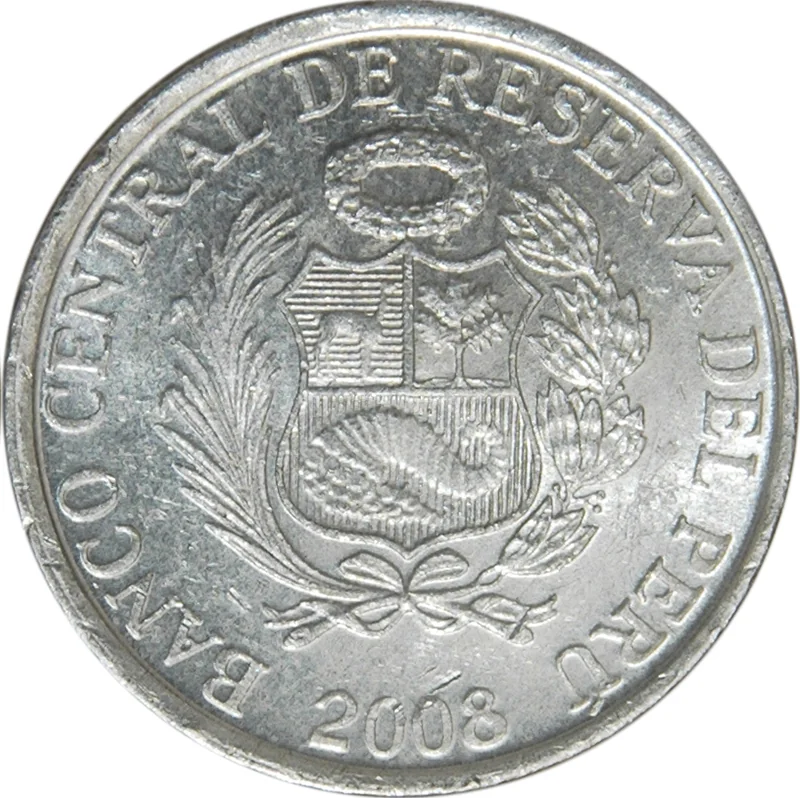
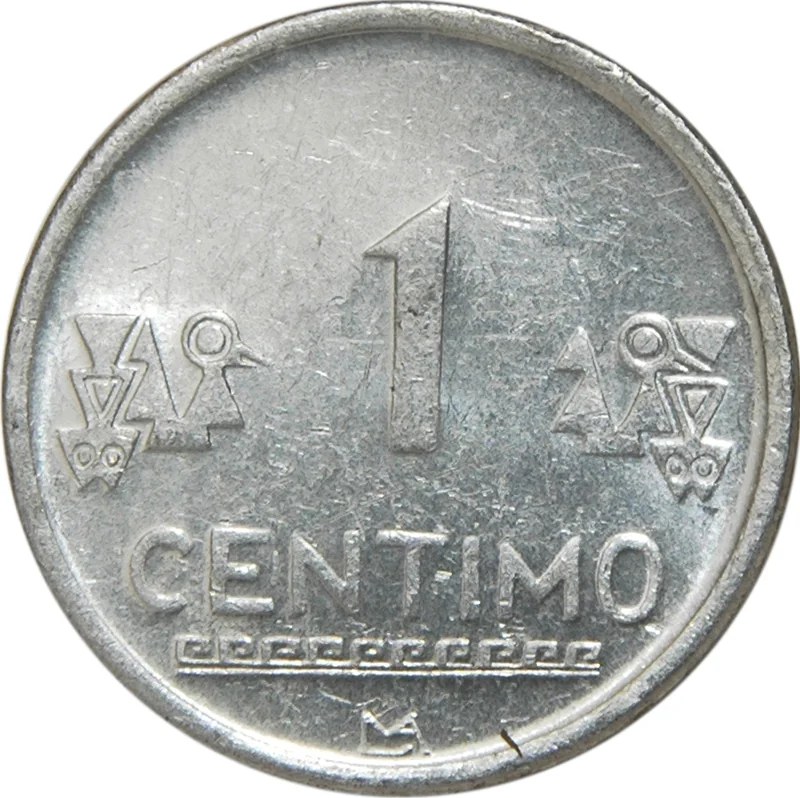
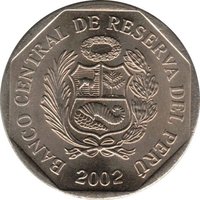
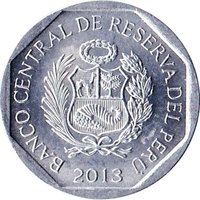
Obverse
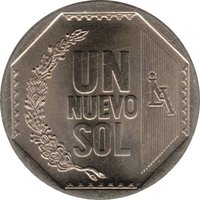
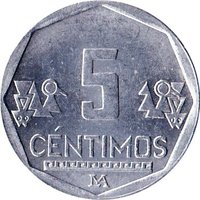
Reverse
Edge
Plain
Mints
| Name | Mark |
|---|---|
| Lima | LIMA |
Mintings
Historical background
In 2005, Peru's currency situation was characterized by a period of significant appreciation and strong macroeconomic stability under the framework of inflation targeting. The Peruvian sol (PEN), which had replaced the inti in 1991, was experiencing sustained upward pressure due to high prices for the country's mineral exports, particularly copper, gold, and zinc. This surge in commodity prices drove a substantial influx of US dollars from trade and foreign direct investment, leading the central bank, the Banco Central de Reserva del Perú (BCRP), to intervene regularly in the foreign exchange market to moderate the sol's rise and prevent excessive volatility that could harm the export sector.
The BCRP's policy was a managed float, with the primary objective of controlling inflation, which it successfully maintained within its target range of 2.5% with a +/- 1% tolerance band. To sterilize the inflationary impact of its dollar purchases, the bank issued certificates of deposit (CDBCRP) in sol. This cautious approach, combined with prudent fiscal management, bolstered investor confidence and contributed to a context of low inflation, sustained economic growth (over 6% GDP growth in 2005), and a steady accumulation of international reserves, which reached record levels.
However, this currency strength presented policy challenges. The appreciating sol raised concerns among exporters and domestic industries about losing competitiveness against cheaper imports. While the overall economy benefited from lower import costs and contained inflation, there was ongoing political and business debate about the appropriate level of intervention. Thus, 2005 represented a period of robust external balances and monetary stability, but one where authorities carefully balanced the benefits of a strong currency against the need to protect certain sectors of the real economy from its effects.
The BCRP's policy was a managed float, with the primary objective of controlling inflation, which it successfully maintained within its target range of 2.5% with a +/- 1% tolerance band. To sterilize the inflationary impact of its dollar purchases, the bank issued certificates of deposit (CDBCRP) in sol. This cautious approach, combined with prudent fiscal management, bolstered investor confidence and contributed to a context of low inflation, sustained economic growth (over 6% GDP growth in 2005), and a steady accumulation of international reserves, which reached record levels.
However, this currency strength presented policy challenges. The appreciating sol raised concerns among exporters and domestic industries about losing competitiveness against cheaper imports. While the overall economy benefited from lower import costs and contained inflation, there was ongoing political and business debate about the appropriate level of intervention. Thus, 2005 represented a period of robust external balances and monetary stability, but one where authorities carefully balanced the benefits of a strong currency against the need to protect certain sectors of the real economy from its effects.
🌱 Very Common