

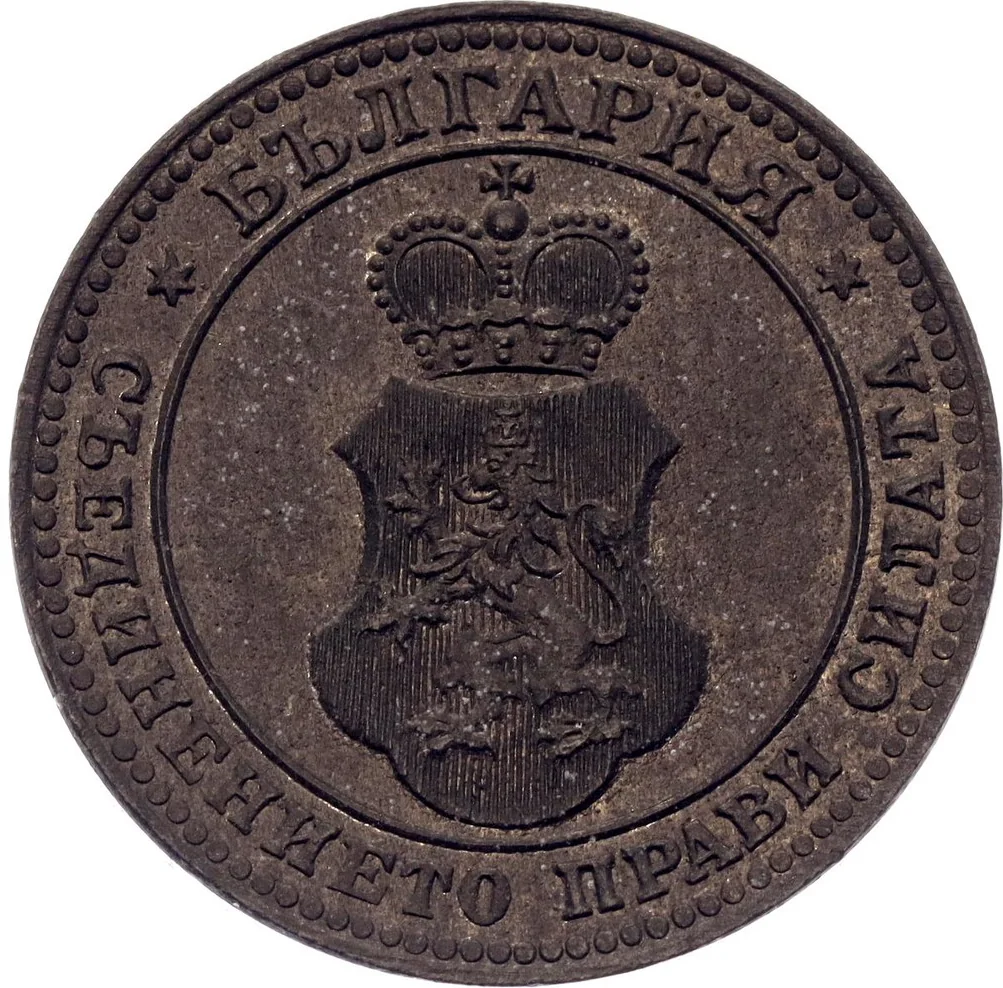
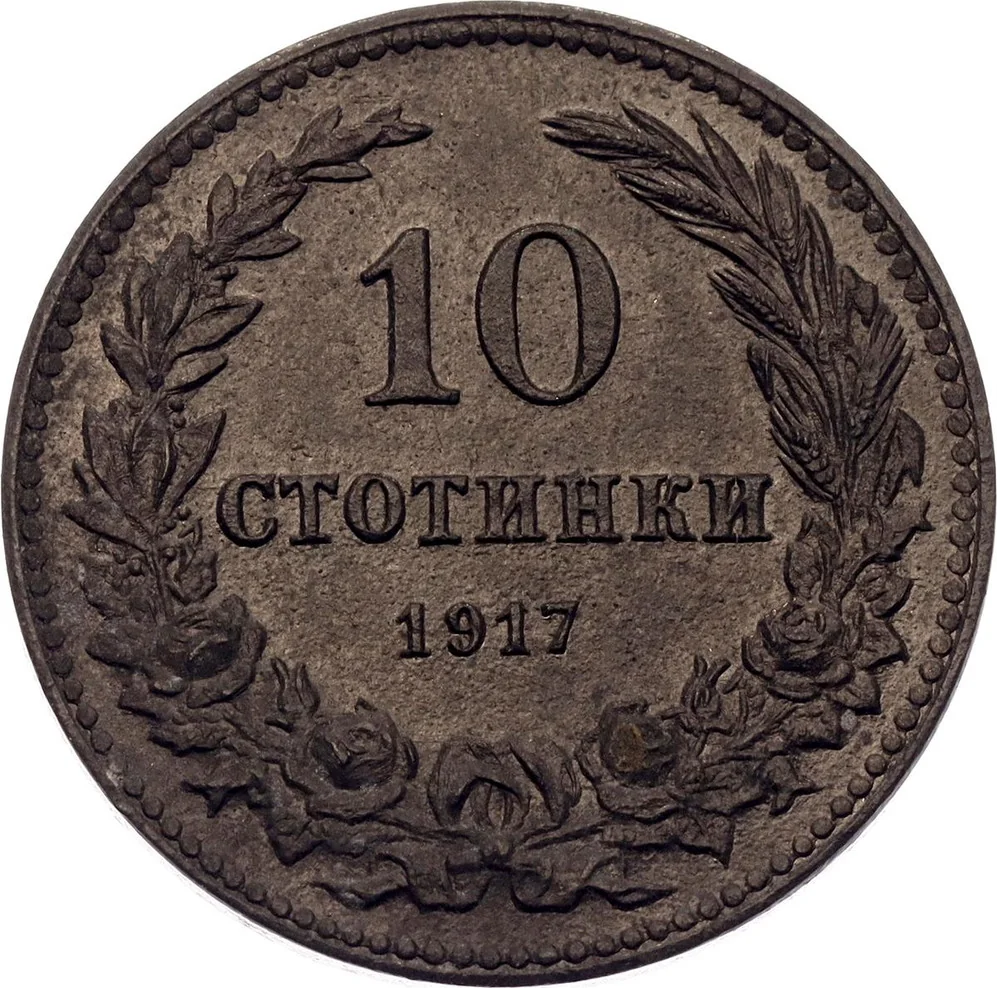
10 stotinki – Bulgaria
Add to wishlist
Bulgaria
Context
Year: 1917
Issuer: Bulgaria
Ruler: Ferdinand I
Currency:
(1881—1952)
Demonetized: Yes
Total mintage: 59,100,000
Material
References
KM: #
Numista: #10219
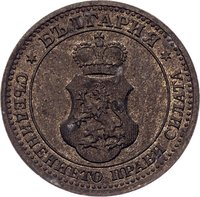
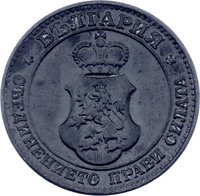
Obverse
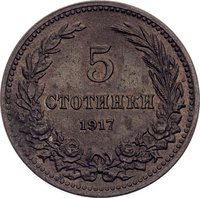
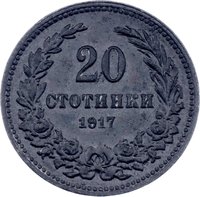
Reverse
Edge
Plain
Categories
| Symbols> Coat of Arms |
| Symbol> Wreath |
Mints
| Name | Mark |
|---|---|
| Kremnica | — |
Mintings
| Year | Mint Mark | Mintage | Quality | Collection |
|---|---|---|---|---|
| 1917 | — | — | Proof | |
| 1917 | — | 59,100,000 |
Historical background
In 1917, Bulgaria was in the third year of its participation in the First World War as part of the Central Powers. The national currency, the Bulgarian Lev, was under severe strain due to the immense economic demands of a protracted total war. The government, led by Tsar Ferdinand and Prime Minister Vasil Radoslavov, was financing the conflict primarily through borrowing from the Bulgarian National Bank and printing money, leading to a significant expansion of the money supply without corresponding economic output.
This monetary expansion resulted in rampant inflation and a sharp decline in the Lev's purchasing power. Prices for basic necessities like food and fuel skyrocketed, as agricultural production was crippled by the mobilization of manpower and livestock for the war effort. The situation was exacerbated by a crippling Allied naval blockade, which severed access to international markets and made it nearly impossible to import goods to alleviate domestic shortages. A thriving black market emerged where goods were traded at prices far beyond the official, state-controlled rates.
Consequently, the currency situation reflected a broader social and economic crisis. Wages failed to keep pace with inflation, leading to widespread impoverishment, malnutrition, and growing social unrest, particularly in urban areas. This economic distress directly fueled political disillusionment with the war and the government, sowing the seeds for the soldier uprisings and collapse that would characterize Bulgaria's exit from the war in the autumn of 1918. The wartime monetary policy fundamentally destabilized the Bulgarian economy, leaving a legacy of debt and devaluation that would challenge the nation long after the armistice.
This monetary expansion resulted in rampant inflation and a sharp decline in the Lev's purchasing power. Prices for basic necessities like food and fuel skyrocketed, as agricultural production was crippled by the mobilization of manpower and livestock for the war effort. The situation was exacerbated by a crippling Allied naval blockade, which severed access to international markets and made it nearly impossible to import goods to alleviate domestic shortages. A thriving black market emerged where goods were traded at prices far beyond the official, state-controlled rates.
Consequently, the currency situation reflected a broader social and economic crisis. Wages failed to keep pace with inflation, leading to widespread impoverishment, malnutrition, and growing social unrest, particularly in urban areas. This economic distress directly fueled political disillusionment with the war and the government, sowing the seeds for the soldier uprisings and collapse that would characterize Bulgaria's exit from the war in the autumn of 1918. The wartime monetary policy fundamentally destabilized the Bulgarian economy, leaving a legacy of debt and devaluation that would challenge the nation long after the armistice.
🌱 Common