

25 Cents – Netherlands Antilles
Netherlands
Context
Years: 1989–2023
Country: Netherlands 
Issuer: Netherlands Antilles
Ruler: Willem-Alexander
Currency:
(since 1828)
Demonetization: 31 March 2025
Total mintage: 41,573,700
Material
References
KM: #Click to copy to clipboard35
Numista: #2937
Value
Exchange value: 0.25 ANG
Inflation-adjusted value: 0.57 ANG
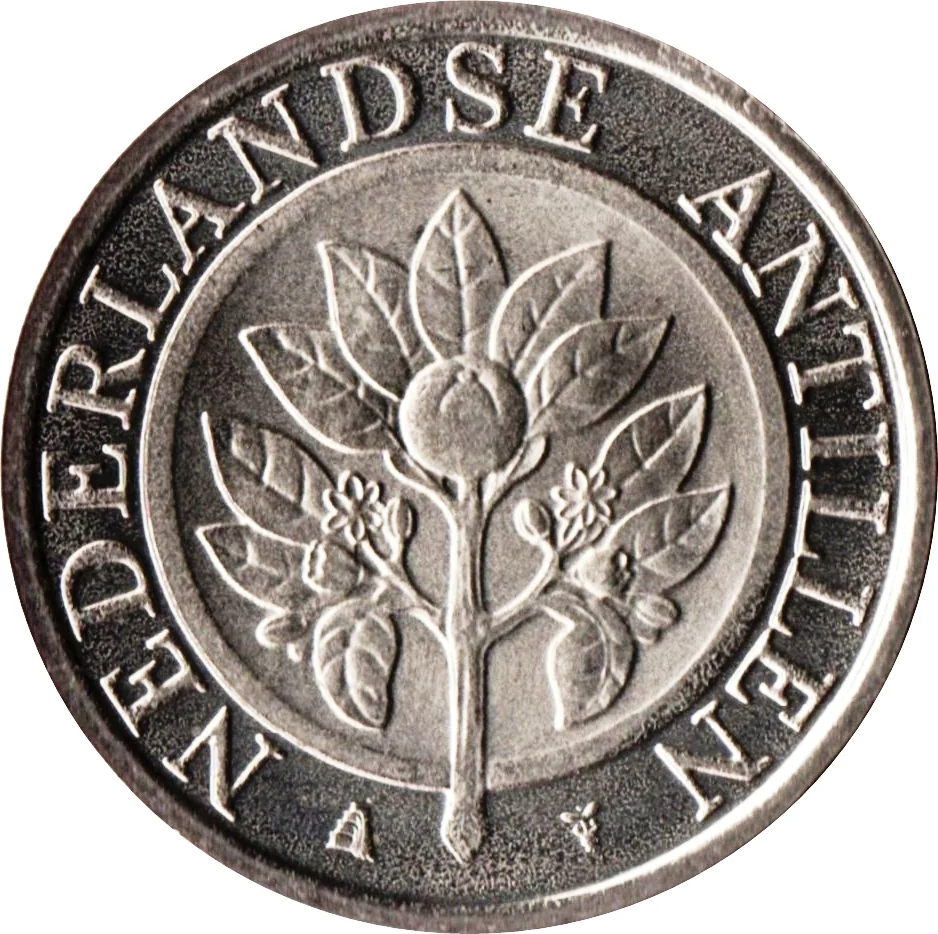
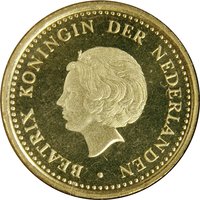
Obverse
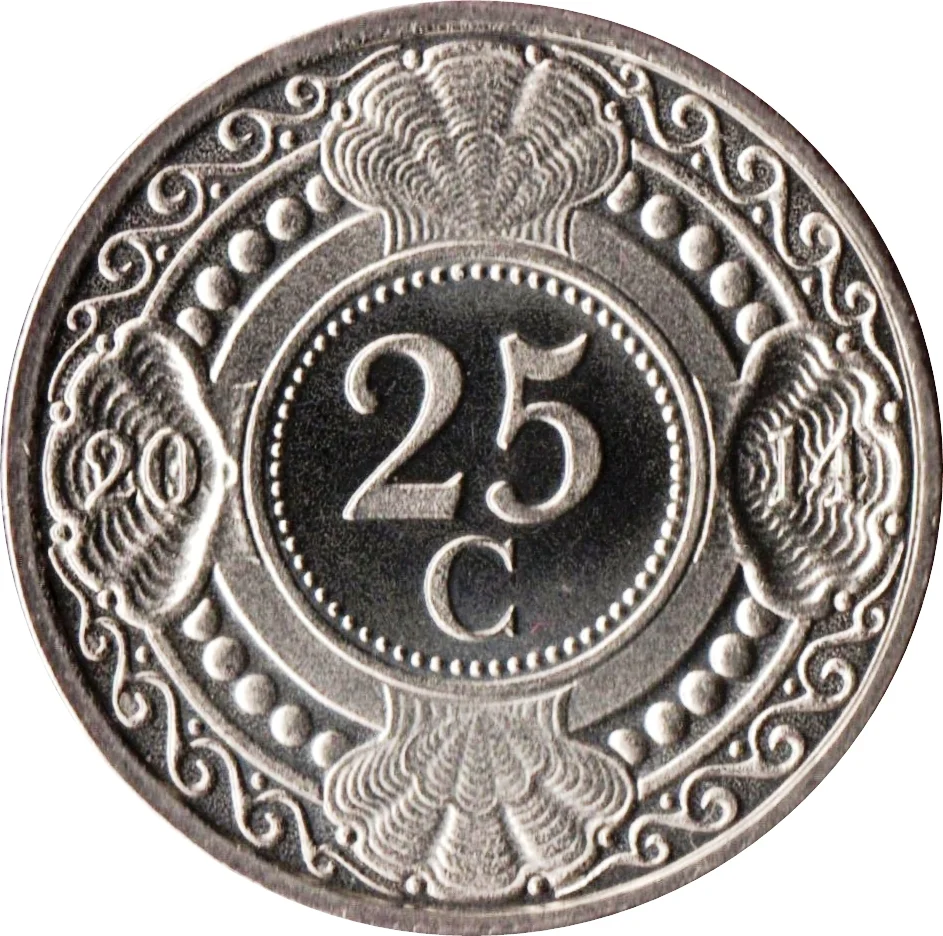
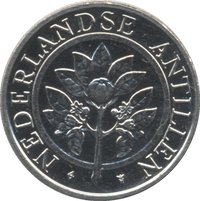
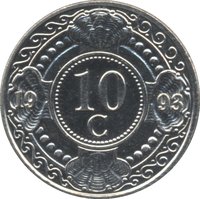
Reverse
Description:
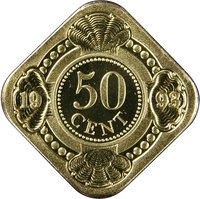
Face value in circled pearl, four shells linked by five dots.
Inscription:
25
c
2014
c
2014
Script: Latin
Edge
Reeded
Mints
| Name | Mark |
|---|---|
| Royal Dutch Mint | — |
Mintings
| Year | Mint Mark | Mintage | Quality | Collection |
|---|---|---|---|---|
| 1989 | — | 915,000 | ||
| 1990 | — | 1,811,000 | ||
| 1991 | — | 2,013,000 | ||
| 1992 | — | 898,000 | ||
| 1993 | — | 997,000 | ||
| 1994 | — | 997,000 | ||
| 1995 | — | 297,000 | ||
| 1996 | — | 420,000 | ||
| 1997 | — | 1,297,000 | ||
| 1998 | — | 2,007,000 | ||
| 1999 | — | 1,501,000 | ||
| 2000 | — | 5,000 | In sets | |
| 2001 | — | 5,000 | In sets | |
| 2002 | — | 6,000 | BU | |
| 2003 | — | 1,404,000 | ||
| 2004 | — | 1,502,100 | ||
| 2005 | — | 110,000 | ||
| 2006 | — | 102,000 | ||
| 2007 | — | 2,000 | BU | |
| 2008 | — | 992,000 | ||
| 2009 | — | 2,072,000 | ||
| 2010 | — | 17,988,100 | ||
| 2011 | — | 2,000 | BU | |
| 2012 | — | 227,000 | ||
| 2013 | — | 2,000 | BU | |
| 2014 | — | 4,000,000 | ||
| 2015 | — | 1,500 | In sets | |
| 2016 | — | — | ||
| 2023 | — | — |
Historical background
In 1989, the Netherlands Antilles operated under a unique monetary arrangement, utilizing the Netherlands Antillean guilder (ANG), which was pegged to the United States dollar at a fixed rate of 1.79 ANG to 1 USD. This peg, established in 1971, provided crucial stability for the federation's open, tourism-dependent economy and its significant offshore financial sector. The currency was issued by the central bank of the Netherlands Antilles (the Bank van de Nederlandse Antillen), and its value was backed by substantial foreign exchange reserves, primarily in USD, ensuring confidence in its fixed exchange rate regime.
The monetary situation was intrinsically linked to the political relationship with the Netherlands. As an autonomous country within the Kingdom of the Netherlands, the Netherlands Antilles relied on a financial guarantee from The Hague. This "Kingdom guarantee" acted as an ultimate safeguard, promising Dutch support to maintain the currency peg in the event of a severe balance of payments crisis. This arrangement provided an additional layer of credibility but also underscored the territory's economic dependency on the European metropolis.
Economically, the fixed peg successfully controlled inflation and facilitated trade and investment flows, particularly with the United States and Venezuela. However, it also meant the islands forfeited independent monetary policy, as interest rates were largely dictated by U.S. Federal Reserve decisions to maintain the peg. Furthermore, the system's stability was periodically tested by large fiscal deficits within the Antillean government and vulnerabilities in the offshore banking sector, requiring ongoing discipline and cooperation with Dutch authorities to maintain equilibrium.
The monetary situation was intrinsically linked to the political relationship with the Netherlands. As an autonomous country within the Kingdom of the Netherlands, the Netherlands Antilles relied on a financial guarantee from The Hague. This "Kingdom guarantee" acted as an ultimate safeguard, promising Dutch support to maintain the currency peg in the event of a severe balance of payments crisis. This arrangement provided an additional layer of credibility but also underscored the territory's economic dependency on the European metropolis.
Economically, the fixed peg successfully controlled inflation and facilitated trade and investment flows, particularly with the United States and Venezuela. However, it also meant the islands forfeited independent monetary policy, as interest rates were largely dictated by U.S. Federal Reserve decisions to maintain the peg. Furthermore, the system's stability was periodically tested by large fiscal deficits within the Antillean government and vulnerabilities in the offshore banking sector, requiring ongoing discipline and cooperation with Dutch authorities to maintain equilibrium.

🌱 Very Common