

Obverse
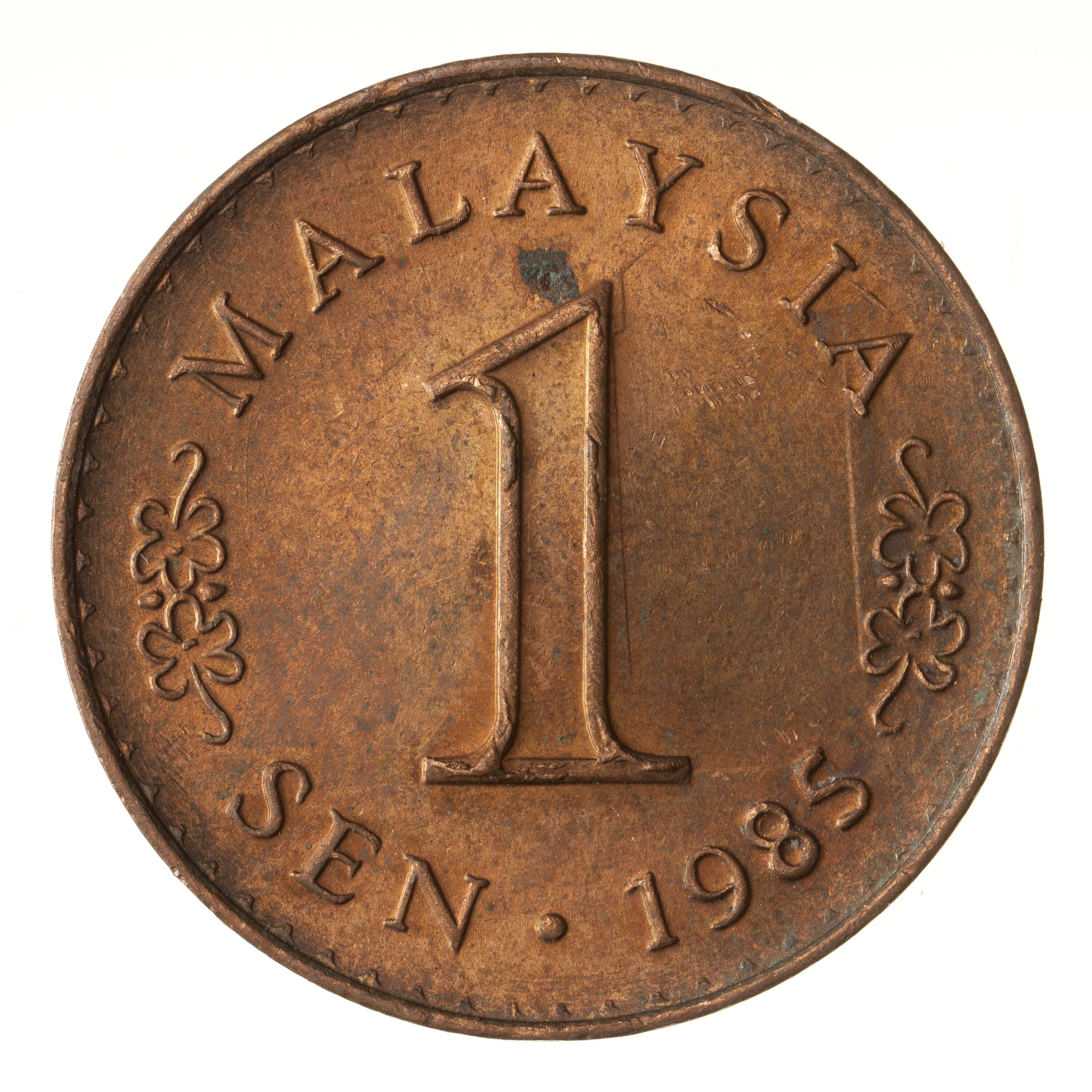
Description:
Country name
Value – Date
Value – Date
Inscription:
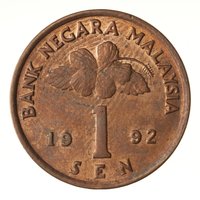
MALAYSIA
1
SEN · 1978
1
SEN · 1978
Translation:
MALAYSIA
1
SEN · 1978
1
SEN · 1978
Script: Latin
Engraver: Geoffrey Colley
Reverse
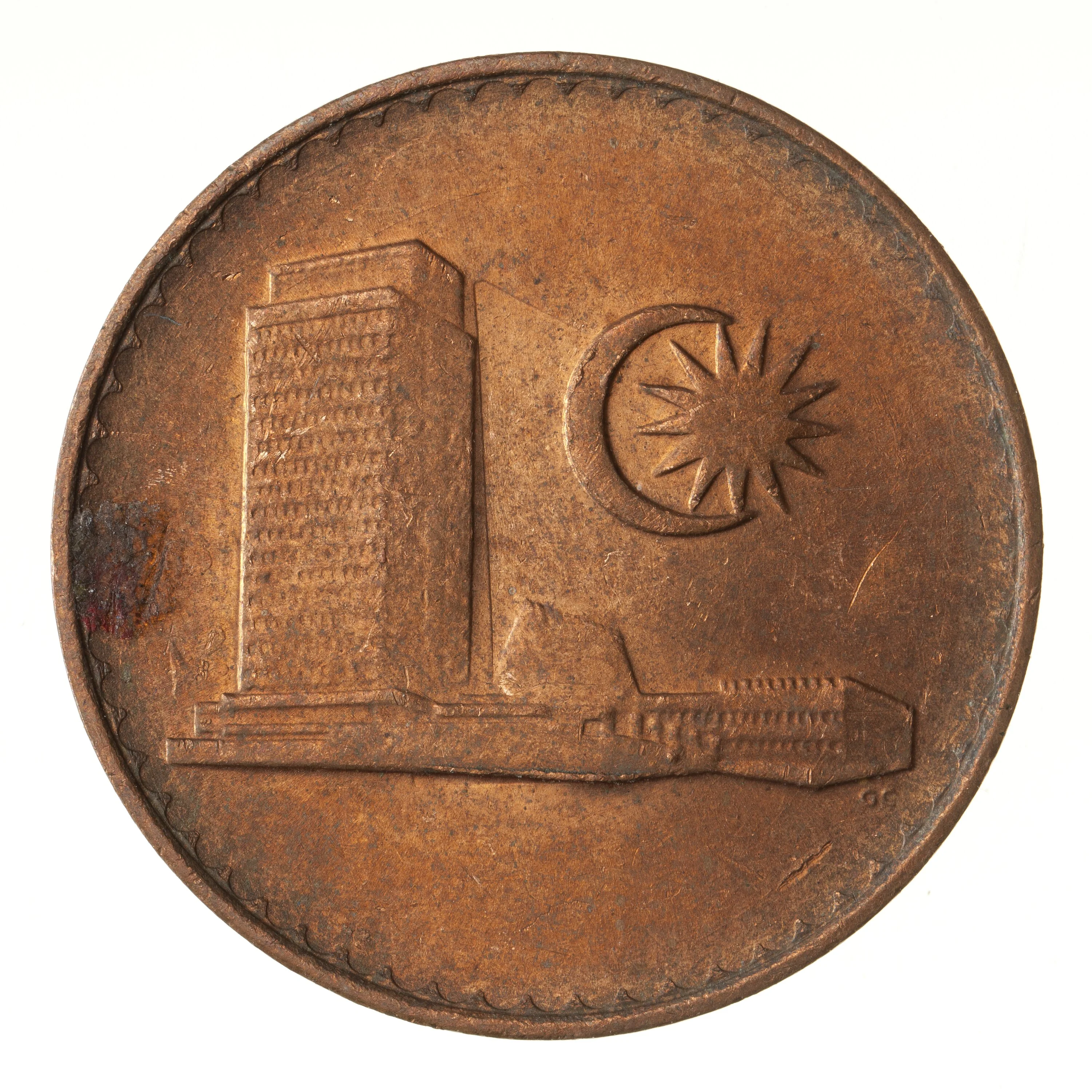
Description:
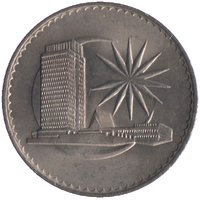
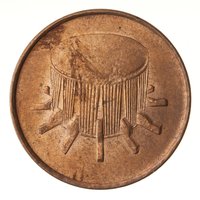
Parliament House with the flag's crescent to its right.
Inscription:
GC
Script: Latin
Engraver: Geoffrey Colley
Edge
Smooth, Steel core partly visible
Categories
| Building> Governmental building |
| Symbol> Moon |
Mints
| Name | Mark |
|---|---|
| Shah Alam | — |
Mintings
| Year | Mint Mark | Mintage | Quality | Collection |
|---|---|---|---|---|
| 1973 | — | — | ||
| 1976 | — | 27,406,103 | ||
| 1977 | — | 21,751,468 | ||
| 1978 | — | 30,843,905 | ||
| 1979 | — | 15,713,562 | ||
| 1980 | — | 16,150,902 | ||
| 1981 | — | 24,633,307 | ||
| 1982 | — | 37,295,136 | ||
| 1983 | — | 19,333,233 | ||
| 1984 | — | 26,267,290 | ||
| 1985 | — | 52,401,608 | ||
| 1986 | — | 48,920,034 | ||
| 1987 | — | 35,284,103 | ||
| 1988 | — | 56,748,750 |
Historical background
In 1973, Malaysia's currency situation was fundamentally shaped by its recent departure from the Sterling Area and the global collapse of the Bretton Woods system. Following the float of the British pound in 1972, Malaysia (along with Singapore and Brunei) had severed the traditional link to sterling, which had underpinned its currency for decades. In its place, the nations established a new, managed float for their respective dollars, pegged to the US dollar within a narrow band. This shift was a strategic move to reduce exchange rate vulnerability and assert greater monetary sovereignty in a changing international financial landscape.
The year was dominated by significant international monetary turbulence, most notably the final transition to a system of floating exchange rates among major currencies following the US's abandonment of the gold convertibility of the dollar in 1971. Despite this global volatility, the Malaysian ringgit, then known as the Malaysian dollar, demonstrated notable stability in 1973 due to its managed peg. This stability was crucial for the domestic economy, which was experiencing strong growth driven by high commodity prices for key exports like rubber, tin, and palm oil. The currency regime provided a buffer against external shocks, allowing for continued economic planning and investment.
However, underlying pressures were building. The first oil price shock in late 1973, while initially boosting Malaysia's export earnings, would soon introduce new inflationary pressures and complex balance-of-payments dynamics for the following year. Furthermore, the continuation of the Interchangeability Agreement with Singapore and Brunei meant that the Malaysian ringgit remained at par and freely interchangeable with the Singapore dollar, a monetary union that would persist until 1973 gave way to 1974, when Malaysia began to reconsider this arrangement in light of its own evolving economic priorities. Thus, 1973 stands as a year of relative calm and successful navigation between two eras, setting the stage for the independent monetary policies that would define the subsequent decade.
The year was dominated by significant international monetary turbulence, most notably the final transition to a system of floating exchange rates among major currencies following the US's abandonment of the gold convertibility of the dollar in 1971. Despite this global volatility, the Malaysian ringgit, then known as the Malaysian dollar, demonstrated notable stability in 1973 due to its managed peg. This stability was crucial for the domestic economy, which was experiencing strong growth driven by high commodity prices for key exports like rubber, tin, and palm oil. The currency regime provided a buffer against external shocks, allowing for continued economic planning and investment.
However, underlying pressures were building. The first oil price shock in late 1973, while initially boosting Malaysia's export earnings, would soon introduce new inflationary pressures and complex balance-of-payments dynamics for the following year. Furthermore, the continuation of the Interchangeability Agreement with Singapore and Brunei meant that the Malaysian ringgit remained at par and freely interchangeable with the Singapore dollar, a monetary union that would persist until 1973 gave way to 1974, when Malaysia began to reconsider this arrangement in light of its own evolving economic priorities. Thus, 1973 stands as a year of relative calm and successful navigation between two eras, setting the stage for the independent monetary policies that would define the subsequent decade.
🌱 Very Common